Even if a tenant is responsible for a fire, if both the tenant and the building owner have insurance contracts with the same insurer, the insurer cannot claim from the tenant the insurance payout made to the building owner, according to a Supreme Court ruling.
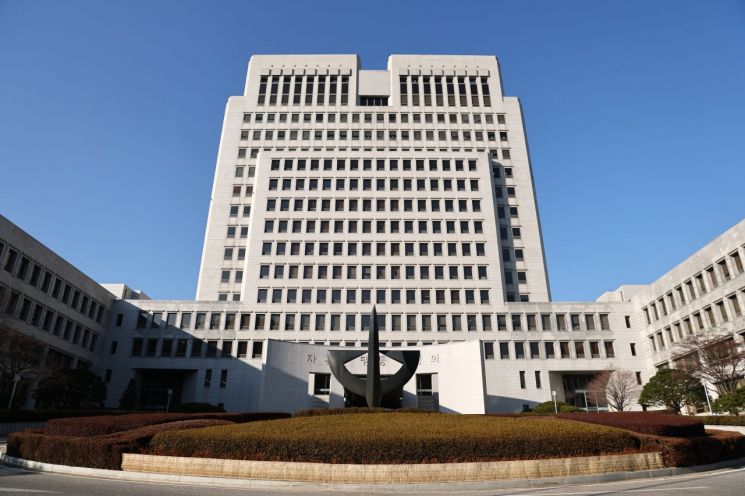
According to the legal community on December 29, the Supreme Court's Third Division (Presiding Justice Noh Kyungpil) overturned a lower court ruling that partially sided with Meritz Fire & Marine Insurance in its recourse claim lawsuit against a building tenant, and sent the case back to the Seoul Central District Court.
Mr. A, who leased a building to operate a comprehensive food distribution mart, suffered damages of about 690 million won in a fire at the store in August 2022. Mr. A had signed a liability insurance contract with Meritz Fire & Marine Insurance, which included fire insurance and third-party property liability. The insurer for the owner's insurance contract held by the building owner was also Meritz Fire & Marine Insurance.
The building owner was compensated for virtually all losses, receiving 490 million won through the tenant insurance policy held by Mr. A, and 200 million won through the owner's insurance policy. In 2023, Meritz Fire & Marine Insurance filed a lawsuit against Mr. A, seeking to recover the 200 million won paid out under the owner's insurance policy through the insurer's right of subrogation.
The court of first instance dismissed the plaintiff's claim. However, the appellate court reversed this decision, ruling that if the fire was caused by the tenant's fault, Meritz Fire & Marine Insurance could hold Mr. A liable for the 200 million won paid under the owner's insurance policy.
The Supreme Court's decision was different. The bench stated, "The plaintiff becomes both the creditor and debtor of the claim for damages, resulting in a situation similar to confusion, where the right to receive compensation and the obligation to pay compensation coexist and thus the right is extinguished." The court further explained, "Allowing the exercise of the insurer's right of subrogation would result in a circular lawsuit, which goes against litigation efficiency," and therefore overturned the appellate court's ruling and remanded the case to the Seoul Central District Court.
© The Asia Business Daily(www.asiae.co.kr). All rights reserved.

















