Soaring Value of On-Site Jobs Amid AI Expansion
High Income and Job Security Draw Attention
"Potential for AI Replacement" Determines the Winners
As artificial intelligence (AI) spreads and white-collar (office) jobs are rapidly being restructured, the so-called "blue-collar (field worker) billionaire" phenomenon is emerging, particularly in the United States, where wages for manual laborers are soaring. As AI begins to replace tasks such as document creation, analysis, accounting, and administrative work, the value of occupations that require human hands and on-site judgment is being newly recognized. There is analysis that blue-collar jobs-such as plumbers, electricians, and construction technicians, which were once shunned-are now rising to high-income brackets, and that the fortunes of professions are being determined by their "potential for AI replacement."
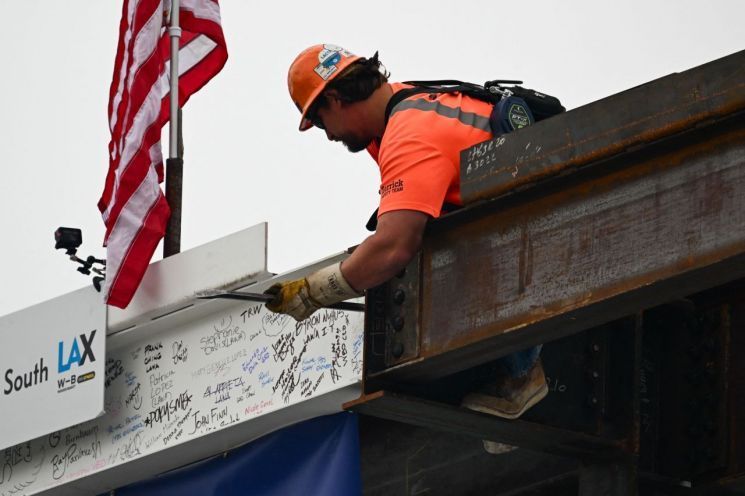
Areas AI Cannot Replace...The Resurgence of On-Site Technical Jobs
Recently, Japan's Asahi TV focused on the structural changes occurring in blue-collar occupations in the United States. Asahi TV analyzed that, unlike office jobs that can be replaced by AI, technical positions requiring skilled manual work and immediate on-site judgment are much slower to automate. As a result, these jobs are being reclassified as high-income occupations.
Asahi TV introduced a notable example: a person named Mai, who switched from working as a corporate accountant in the United States to becoming a plumber. A graduate of the prestigious University of California, Berkeley, Mai was responsible for accounting at a company, but after conflicts with her boss, she decided to resign and, at the suggestion of an acquaintance, began working as a plumber-a field in which she had no prior experience. Having never even handled a screw before, she suffered severe physical pain for several months at first, but now reports a high level of job satisfaction.
Hourly Wage Tripled..."The Era of Manual Labor Is Returning"
While working as an accountant, her hourly wage was about 4,000 yen (approximately 37,000 won), but after switching to plumbing, her hourly wage jumped to 12,000 yen (about 110,000 won), nearly tripling. She said that although the physical demands are high, her working hours have decreased, and her sense of satisfaction from creating something with her own hands has grown. Mai emphasized, "AI can think for you, but it cannot replace the work done directly on-site," adding, "The era of manual labor is returning."
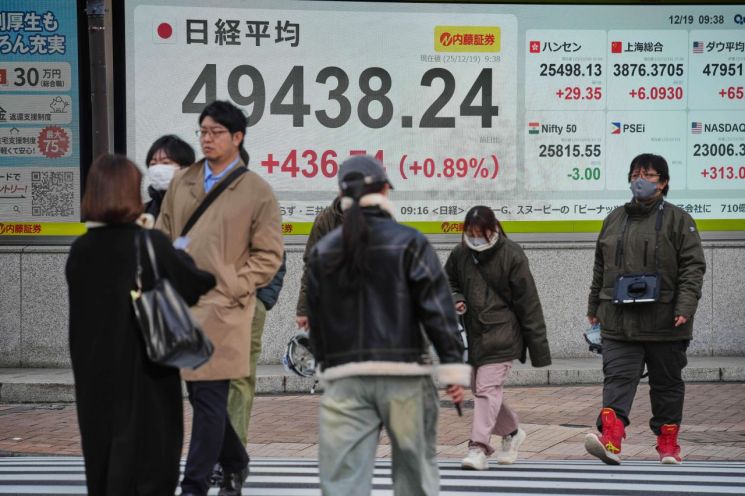
Kashimura Yu, Senior Researcher at Dai-ichi Life Research Institute, said, "There is a high possibility that a similar situation will emerge in Japan within a few years," and predicted, "Wages for white-collar workers may stagnate or face downward pressure." He stated, "AI's intelligence has already surpassed that of the average human," and added, "Jobs that involve handling materials and documents in front of a computer will be most affected." However, he also noted that since Japan has strict regulations on dismissing regular employees, changes are more likely to take the form of personnel transfers and job reassignments rather than large-scale layoffs as seen in the United States.
© The Asia Business Daily(www.asiae.co.kr). All rights reserved.
![Clutching a Stolen Dior Bag, Saying "I Hate Being Poor but Real"... The Grotesque Con of a "Human Knockoff" [Slate]](https://cwcontent.asiae.co.kr/asiaresize/183/2026021902243444107_1771435474.jpg)
















