Proactive Environmental Administration Encompassing
Carbon Neutrality, Resource Circulation, and Ecotourism
Geochang County in South Gyeongsang Province successfully implemented a variety of environmental policies throughout 2025, with the goal of realizing a “Greater Leap Forward for Geochang and an Era of Happiness for Residents.” These efforts laid a solid foundation for improving the quality of life for its citizens.
In particular, the county was recognized for its outstanding achievements in objective indicators, such as being selected as the top institution in the evaluation of waste treatment facility operations and management, and ranking first in the province for collecting and distributing water pollution emission charges. Based on these results, Geochang County reviews the major accomplishments in each sector achieved this year in its pursuit of “pristine nature” and a “pleasant living environment.”
◆ Accelerating the Realization of a ‘Carbon-Neutral City’ through Resident Participation and Infrastructure Development
Last year, the county declared its vision to become a “2050 Carbon-Neutral City” and has been implementing various climate response strategies, aiming to reduce greenhouse gas emissions by 76.8% by 2034.
This year, by distributing 213 electric vehicles and supporting the early scrapping of 343 old diesel vehicles, the county reduced carbon emissions by a total of 1,500 tons. Additional initiatives, such as replacing construction equipment engines and promoting eco-friendly boilers, also had tangible effects in reducing emissions of fine dust and nitrogen oxides.
Participation in the carbon neutrality points program increased significantly. The county focused on on-site promotional efforts, including visits to schools and towns as well as operating booths at local events.
As a result, the cumulative number of participants rose by 607 from the previous year, reaching 6,597. Electricity savings amounted to 1.13 million kWh, and carbon reduction reached approximately 541.7 tons-an increase of 28% compared to last year.
Management of air pollutant emission facilities was also strengthened. Over the past three years, the violation rate was dramatically reduced from 24.3% to 6.8%. Through advance guidance and regular inspections, particularly targeting small businesses, the county effectively blocked pollutant emissions at the source.
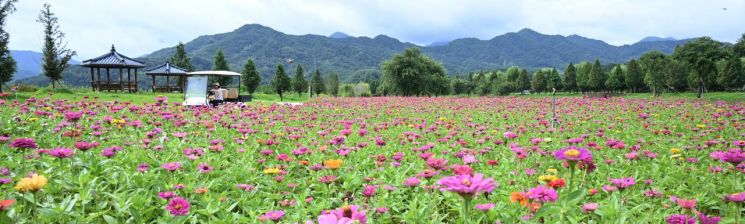
◆ Achieving ‘Top National Excellence’ in Waste Treatment Facility Operation and Management Evaluation
Geochang County established a long-term plan for waste treatment facilities through 2035, reinforcing the public nature of waste management. By expanding public sorting and incineration facilities and increasing landfill capacity, the county is building a “resident-friendly complex” and preparing future-oriented systems, such as minimizing direct landfill, increasing recycling rates, and producing renewable energy using incineration heat.
As a result of these efforts, on November 27, the county was selected as the top facility among 51 incineration facilities with a capacity of less than 48 tons per day in the “2025 Waste Treatment Facility Operation and Management Evaluation,” organized by the Ministry of Climate, Energy and Environment and conducted by the Korea Environment Corporation. The county received the Minister’s Award, a plaque certifying it as the best facility, and a prize of 3 million won.
◆ Normalizing the Use of Reusable Containers
The county has also taken the lead in creating eco-friendly funeral and festival cultures free of single-use products. Since 2023, it has supplied reusable containers to four private funeral halls, reducing more than 800,000 single-use items annually. The county also developed and distributed its own shared cup, “Ttosseu,” to 28 cafes and at festival venues, encouraging private sector participation. This year, it supported about 8,000 shared cups at 21 festivals.
This year, in particular, a reusable container rental and collection system was established at major local festivals such as the “Geochang Hanmadang Grand Festival” and the “Gamak Mountain Flower & Star Journey.” As a result, 710,000 reusable containers were used, 14.85 tons of waste were reduced, and approximately 49.9 tons of carbon emissions were cut, marking significant achievements.
◆ Supplying Clean Water and Blocking Water Pollution at the Source
Through the Nakdong River Basin Resident Support Project, Geochang County secured approximately 670 million won to provide supplies for senior centers and organize village welfare events, increasing resident satisfaction.
Additionally, by being selected for a contest project supporting the cost of collecting sewage sludge from unprocessed areas, the county provided free cleaning for 365 septic tanks in areas near the dam. In preparation for future projects, it also secured 24 million won from the water system fund for 2026.
In the comprehensive guidance and inspection of environmental pollutants, the county inspected about 150 facilities, including 74 integrated emission businesses, resulting in 17 administrative actions and 11 fines, thereby significantly strengthening pollutant discharge management.
Furthermore, by enhancing the collection of pollution samples and odor capture, the county secured 33.23 million won (as of September 24) in water pollution emission charge grants, ranking first in the province and contributing to securing resources for expanding water quality improvement projects.
◆ ‘One-Stop’ System from Preventing to Compensating for Wildlife Damage
The county established a wildlife management system encompassing prevention, response, and compensation, thereby strengthening its on-site response capabilities.
This year, preventive facility support projects, such as wire fences and bird repellents, provided 324 million won to 82 farms. A damage prevention team of 37 members was operated, capturing 451 wild boars and 2,083 water deer to prevent further damage.
The county also provided compensation for crop damage (up to 5 million won) and personal injury (up to 10 million won), contributing to the stability of farm management. The county plans to continue support projects that residents can tangibly experience.
◆ Geochang Iris Garden: Emerging as a Hub of Ecotourism in Korea
Since its opening in 2021, Geochang Iris Garden has welcomed over 2 million cumulative visitors, establishing itself as an ecotourism destination.
This year, the county operated 134 sessions of 11 different garden experience programs, attracting about 2,000 participants. The introduction of healing programs also greatly expanded the scope of operations.
Through events such as the “Spring in Geochang ON” festival, a summer water park, and an autumn chrysanthemum garden event, the garden is evolving into a year-round cultural complex. The county is also pursuing an ecotourism cultural complex project and an organic complex development project to expand garden infrastructure, targeting completion by 2027.
In particular, through the Korea Garden Expo scheduled for next year, the county aims to lead the popularization of garden culture and create a healing and experiential garden space, striving to become a “national garden that everyone wants to visit.”
A county official stated, “This year, we achieved meaningful changes across all environmental sectors, from practicing carbon neutrality to waste management and ecotourism,” adding, “We will continue to create a pleasant living environment that residents can truly experience through sustainable environmental policies.”
© The Asia Business Daily(www.asiae.co.kr). All rights reserved.
![Clutching a Stolen Dior Bag, Saying "I Hate Being Poor but Real"... The Grotesque Con of a "Human Knockoff" [Slate]](https://cwcontent.asiae.co.kr/asiaresize/183/2026021902243444107_1771435474.jpg)















