180 Tons Incinerated In-House, Remaining 130 Tons to Be Handled
Through Contracts With Private Service Providers
On December 29, Goyang Special City in Gyeonggi Province (Mayor Lee Donghwan) announced that it is making every effort to minimize inconvenience to citizens by proactively responding to the ban on direct landfilling of household waste at the Sudokwon Landfill, which will take effect on January 1, 2026. The city is preparing stable waste disposal measures and establishing a resource circulation system.
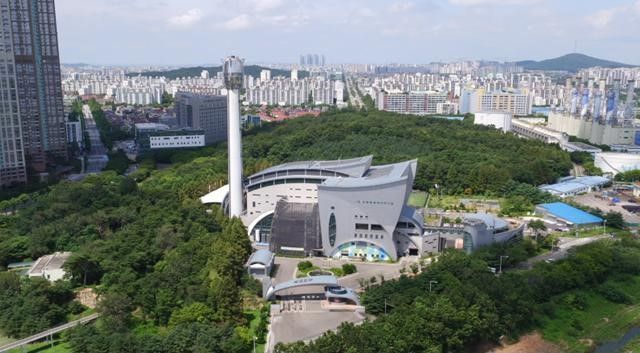
Currently, Goyang City generates an average of about 310 tons of household waste per day. Of this, approximately 180 tons are stably processed at the Goyang Environmental Energy Facility, the city’s public incineration plant.
This facility enables the city to process more than half of its total household waste internally, serving as the foundation for maintaining waste management self-sufficiency even after the direct landfill ban is implemented.
Goyang City has also prepared proactive measures for the approximately 130 tons of household waste generated daily that exceed the capacity of its own incineration facility.
The city has secured a waste processing system by placing advance orders for private processing services. The current contracts are being executed in a joint venture format involving four to five companies.
This approach has established a distributed processing network, allowing for immediate alternative processing even if an issue arises with a specific company or facility, thereby further enhancing the stability of waste management. The city expects that, through efficient operation of its own facilities and linkage with private processing facilities, the impact of the direct landfill ban will be minimal.
As a result of continuously implementing policies to reduce food waste, the city has reduced food waste by an annual average of about 3,300 tons, totaling 9,809 tons over the past three years.
Specifically, food waste generated from households and small restaurants in the city decreased significantly from 88,499 tons in 2021 to 78,690 tons in 2024.
Furthermore, as of 2025, the city has distributed 1,292 RFID-based pay-as-you-throw bins (including those provided by the city and installed by construction companies) to improve the waste disposal environment. The city has also established an institutional foundation mandating the installation of RFID bins in new apartment complexes. In addition, large-scale food waste reduction machines have been installed in cafeterias at seven public institutions within the city to reduce food waste at the source.
Alongside these measures, the city is producing and distributing promotional materials on reducing food waste and is running the "Zero Leftover Day" campaign in public office cafeterias to spread a culture of reduction throughout the public sector, thereby working to improve awareness.
 Goyang City Makes Every Effort to Minimize Citizen Inconvenience in Preparation for Ban on Direct Landfilling of Household Waste. Goyang Special City...
Goyang City is also actively promoting waste reduction policies through recycling revitalization in preparation for the direct landfill ban on household waste.
The city conducts about 80 annual "On-site Waste Reduction Education" sessions, with participation from around 2,000 people, targeting institutions such as apartment management offices, daycare centers, kindergartens, and elementary schools that wish to participate, in order to spread a culture of proper waste separation and disposal.
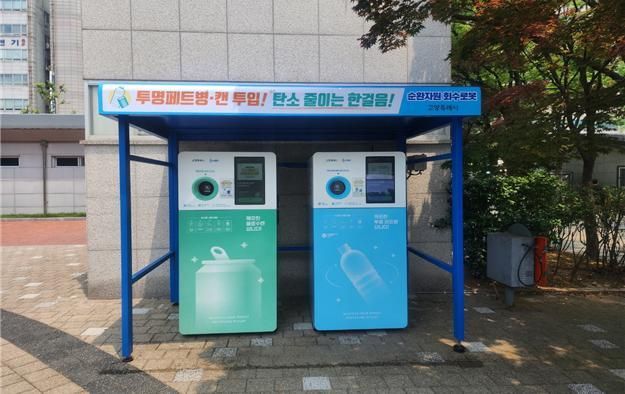
Additionally, the city operates citizen participation incentive programs such as the "Resource Circulation Store" and "Recyclable Resource Collection Robots" to collect high-quality recyclables. The number of Resource Circulation Stores has expanded from one in 2021 to 15 in 2025, and the number of collection robots has increased from two to 11, with approximately 15,000 users to date. These efforts have contributed to increased collection of recyclables and reduced carbon emissions.
A city official stated, "We are doing our utmost to ensure that the ban on direct landfilling of household waste does not cause inconvenience to citizens," and appealed, "We ask all citizens to actively help reduce the volume of household waste generated."
The city plans to continue responding stably to the direct landfill ban policy through waste management policies centered on resource circulation and to strive for the creation of a pleasant urban environment.
© The Asia Business Daily(www.asiae.co.kr). All rights reserved.
![Clutching a Stolen Dior Bag, Saying "I Hate Being Poor but Real"... The Grotesque Con of a "Human Knockoff" [Slate]](https://cwcontent.asiae.co.kr/asiaresize/183/2026021902243444107_1771435474.jpg)
















