Announced at the Presidential Office briefing on the 28th
Vice Minister Kang replaced after just over five months
Urgent issues: GTX project funding and aviation safety
Jisun Hong, Deputy Mayor of Namyangju City in Gyeonggi Province, was appointed as the 2nd Vice Minister of the Ministry of Land, Infrastructure and Transport on December 28. The newly appointed Vice Minister Hong, originally from Donghae, Gangwon Province, passed the local civil service exam and previously served as Director General for Urban Housing, Director General for Railroads, Ports and Logistics, and Director General for Construction in Gyeonggi Province.
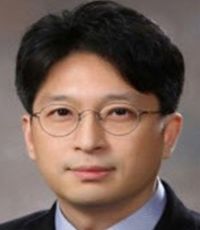 Jisun Hong, 2nd Vice Minister of the Ministry of Land, Infrastructure and Transport. Presidential Office
Previously, former Vice Minister Kang Heeup, who was appointed from within the ministry in July this year, was replaced after just five months. Both inside and outside the ministry, the reaction has been somewhat unexpected. Some consider it unusual that a current deputy mayor of a local government has been selected as a vice minister of a central government ministry. Lee Guyoun, Senior Presidential Secretary for Public Communication, commented on the appointment, saying only, "There are quite a few issues that have accumulated in the field, and we made this personnel change to enhance policy execution," without providing further details.
For ministers and vice ministers of central government ministries, there is no fixed term as they are political appointees, but they typically serve for about one to two years. Since the launch of the Ministry of Land, Infrastructure and Transport in 2013, the shortest-serving vice minister was Lee Sangkyung, a professor at Gachon University, who served as the first 1st Vice Minister under the current administration for about four months. He offered his resignation amid controversy over gap investment, and it was immediately accepted. Kim Kyungwook, former 2nd Vice Minister and former CEO of Incheon International Airport Corporation, served for about seven months during the Moon Jae-in administration, but his case was different as he stepped down to run in the 21st general election.
The 2nd Vice Minister of the Ministry of Land, Infrastructure and Transport is responsible for transportation and logistics policies. In the case of balanced regional development, which is a key initiative of the Lee Jaemyung administration, the construction of wide-area transportation infrastructure such as roads, railways, and aviation is crucial, so the ministry is taking the lead. Not only is the national transportation network being refined, but each region is also working on plans for high-speed rail and national road networks connecting major local hubs. The 2nd Vice Minister is also responsible for overseeing airports, including Gadeokdo New Airport, where the developer has withdrawn, as well as Saemangeum and Daegu-Gyeongbuk New Airport.
The ministry is also reviewing policies to strengthen the competitiveness of the advanced mobility industry, such as autonomous driving. This is because various types of infrastructure are essential for implementing and demonstrating these technologies, especially to facilitate active private-sector research and development. Policies related to future modes of transportation, such as drones and urban air mobility, as well as the integration of high-speed railways (KTX and SRT)-a recent presidential campaign pledge of President Lee Jaemyung for which a roadmap was recently finalized-also fall under the jurisdiction of the 2nd Vice Minister.
© The Asia Business Daily(www.asiae.co.kr). All rights reserved.
![Clutching a Stolen Dior Bag, Saying "I Hate Being Poor but Real"... The Grotesque Con of a "Human Knockoff" [Slate]](https://cwcontent.asiae.co.kr/asiaresize/183/2026021902243444107_1771435474.jpg)















