This year, 84 companies were newly listed on the KOSDAQ market, while 38 companies were delisted.
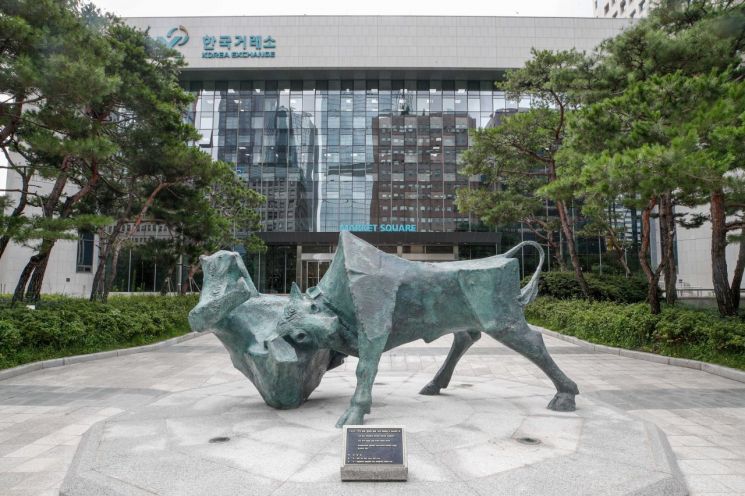
According to the KOSDAQ Market Division of the Korea Exchange on December 28, a total of 84 companies (excluding SPACs) were newly listed on the KOSDAQ market this year. This is a slight decrease compared to the previous year (88 companies). The number of general companies increased to 49 from 46 last year, while the number of technology companies decreased slightly to 35 from 42 in the previous year. For Special Purpose Acquisition Companies (SPACs), the number of listings dropped by 15 compared to last year due to decreased demand for listings.
Despite the decrease in the number of listed companies this year, the total public offering amount increased compared to the previous year, with the market capitalization based on offering prices reaching 15.3 trillion won, the highest since 2021. Newly listed companies raised approximately 2.5 trillion won through KOSDAQ market IPOs.
This year’s KOSDAQ IPOs saw a significant influx of strong and small-to-medium-sized companies, which successfully settled into the market after listing, driving qualitative growth. Five companies with a corporate value of over 500 billion won (based on offering price) were listed this year, the highest since 2011.
The average public offering amount and corporate value (market capitalization based on offering price) per newly listed company increased by 12.5% and 17.0%, respectively, compared to the previous year.
The number of companies that surpassed a market capitalization of 1 trillion won in the year of their listing also reached an all-time high this year. As their business potential was highlighted after listing, 11 companies, including AimedBio, Orum Therapeutics, and Algenomics, surpassed a market capitalization of 1 trillion won in the year of their listing. In particular, AimedBio exceeded 4 trillion won, ranking 12th in the KOSDAQ market by market capitalization.
This year, the average subscription competition ratio reached 1,128 to 1, the highest since 2021, and 87% of IPO prices were set at the upper end of the price band.
Regarding the stock price three months after listing, last year it fell below the market return, whereas this year it recorded an excess return of 40.6%.
This year also saw an increase in the entry of advanced industry companies. The number and proportion of listed companies in key sectors for the nation’s future competitiveness-artificial intelligence (AI), bio, semiconductors, and defense-expanded. The number of AI companies listed, especially those focused on AI application services (API), increased significantly, emerging as a new growth engine. The number of AI company listings rose from three each in 2023 and 2024 to eight this year.
In the bio sector, more than 20 bio companies, including large biotech firms and advanced biotech companies applying super-gap technology special cases, were listed for the second consecutive year, achieving both quantitative and qualitative growth. Since 2024, the entry of bio companies into the market has been expanding again, with an average market capitalization of 833.9 billion won, leading this year’s IPO market. Notably, seven new drug development technology companies were listed, the highest since 2018, and among them, three succeeded in technology transfers worth over 1 trillion won.
With the recovery trend in the semiconductor market, the entry of semiconductor companies, which had decreased last year, turned to an increase this year. Notably, companies with growth potential across the domestic semiconductor value chain-including design, materials, equipment, and components-were evenly listed, rather than being limited to certain segments.
With the global status of K-defense rising, IPOs of strong small-to-medium-sized companies in the defense and aerospace sectors continued to expand. The number increased from two in 2023 to three last year, and to four companies this year.
The first listing of a global technology company was also achieved. With the entry of UK-based deep tech company Terraview Holdings, the listing of foreign companies resumed after four years, and with the first entry of a UK-based company, the KOSDAQ market further diversified its national composition. For the first time in six years since the introduction of the foreign company technology special listing system (July 2019), a pure foreign technology company strategically chose the KOSDAQ market. A Korea Exchange official explained, "This demonstrates that the KOSDAQ market is a platform for realizing strategic value, such as recognizing the high value of deep tech companies and serving as a bridgehead for entering the Asian market."
The exit of insolvent companies expanded. The KOSDAQ market decided to delist a total of 38 companies this year, about 2.5 times the average of the past three years. Of these, 15 companies were delisted for formal reasons, 2.1 times the three-year average, and 23 companies were delisted for substantive reasons, about three times the three-year average.
The average period required for delisting (from the occurrence of the reason to the final delisting decision) for the 23 companies delisted for substantive reasons this year was 384 days, which is about 21% (105 days) shorter than the three-year average of 489 days. In particular, due to recent system improvements, the average period for delisting or delisting decisions for companies in the second half of this year (261 days) was shortened by 48% compared to the first half (497 days). The number of companies delisted without a grace period was 11, a 2.2-fold increase compared to the three-year average (five companies).
The Korea Exchange plans to faithfully fulfill the role of the KOSDAQ market as a "cradle of deep tech companies" centered on advanced industries that will lead innovation in the Korean economy. A Korea Exchange official stated, "To support the realization of national strategic goals, such as becoming one of the top three AI powers and securing super-gap bio technology, we will strengthen connections with government policies and upgrade listing review standards by industry, such as AI and aerospace, in line with advanced technology trends, to meticulously assess the value and growth potential of core technologies."
In addition, the Exchange plans to establish a strict and swift exit system for insolvent companies to ensure thorough investor protection. The official added, "By adding substantive review reasons for technology special case companies, we will strengthen the review of companies that distort the essential purpose of the special listing system, and by expanding dedicated organizations and personnel for substantive delisting reviews, we will reinforce the verification of the feasibility and implementation performance of improvement plans submitted by companies under review."
© The Asia Business Daily(www.asiae.co.kr). All rights reserved.

















