German Egyptologist Took Bust Abroad in 1912
Calls for Repatriation Grow After Grand Egyptian Museum Opens
Recently, with the opening of the Grand Egyptian Museum in Cairo, the demand for the repatriation of the bust of Queen Nefertiti has intensified once again.
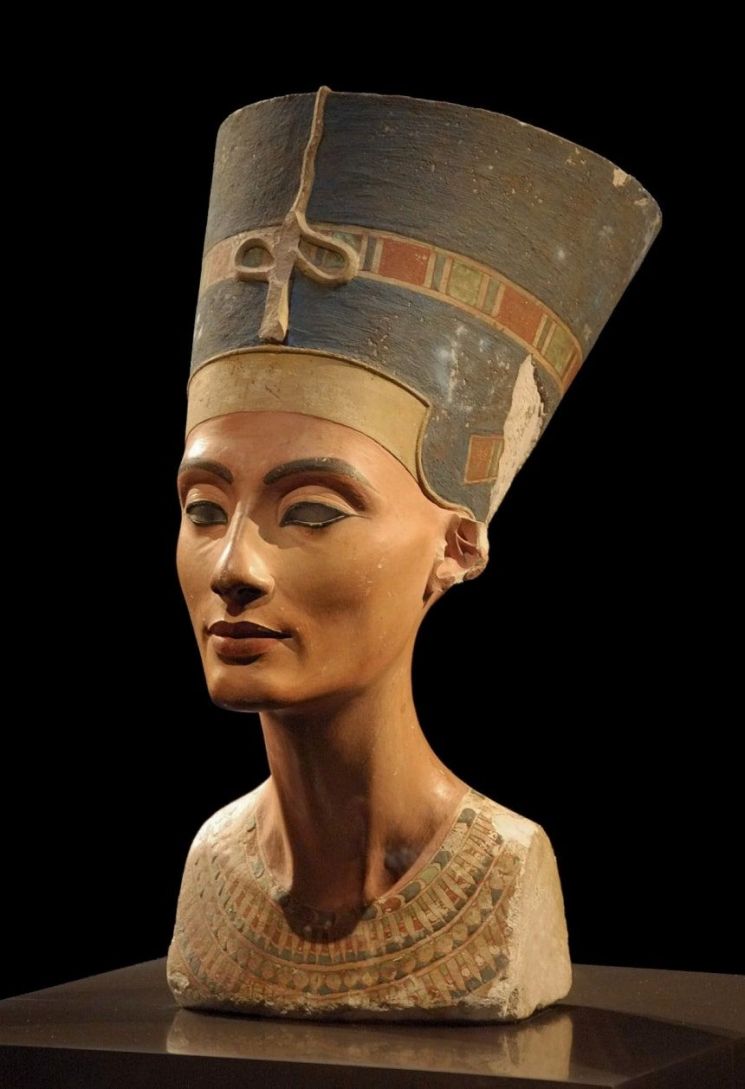
On December 26 (local time), The Washington Post (WP) reported that, as the Grand Egyptian Museum opened, calls for the return of the bust of Queen Nefertiti-considered the most beautiful among existing Egyptian artifacts-have resurfaced. Nefertiti was the principal wife of Pharaoh Amenhotep IV (Akhenaten) of the New Kingdom, who first introduced monotheism to ancient Egypt. Although little is known about Nefertiti’s life, the faint smile and serene gaze captured in the bust have captivated people around the world.
The issue, however, is that the bust of Nefertiti is not in Egypt but in Germany. In 1912, German Egyptologist Ludwig Borchardt excavated the bust at the Tell el-Amarna site, about 320 kilometers south of Cairo, and brought it to Germany. Since 2009, the bust has been displayed at the Neues Museum in Berlin.
The German side has claimed that there were no legal issues in the process by which the bust of Nefertiti was brought to Germany. However, WP pointed out that there are grounds for controversy. Although British authorities, who were colonizing Egypt at the time, stipulated that any discovered artifacts should be split equally between Egypt and the foreign party, Borchardt allegedly deceived the French official responsible for enforcing this rule to take the bust of Nefertiti. WP further explained that Borchardt was aware he was supposed to relinquish the bust, and after bringing it to Germany, he did not release it to the public for ten years-circumstances that support the claim of unauthorized removal.
Zahi Hawass, former Minister of Antiquities of Egypt, emphasized the push for the repatriation of the Nefertiti bust, stating, "These countries have plundered the Nile," and, "Now it is time for them to return something to us." Hawass argued that countries refusing to return Egyptian artifacts have cited Egypt’s lack of capacity to preserve them, but with the opening of the Grand Museum, it will be difficult to maintain such claims. He added, "Especially given recent thefts at the Louvre Museum, it is hard to assert that European museums are safer than the Grand Egyptian Museum."
The Neues Museum has expressed reluctance to return the bust, citing the difficulties of transportation. Friederike Seyfried, Director of the Neues Museum, said, "The environment of a partner museum is not the issue," and explained, "Even if any museum in the world could provide the best conditions, all I can say is, 'It is impossible because it is too fragile and could be damaged.'"
Foreign media have pointed out that the bust of Nefertiti is the signature artifact of the Neues Museum, drawing hundreds of thousands of visitors each year, and is essentially the face of the museum, making it unlikely that the museum would easily agree to return it.
© The Asia Business Daily(www.asiae.co.kr). All rights reserved.
![Clutching a Stolen Dior Bag, Saying "I Hate Being Poor but Real"... The Grotesque Con of a "Human Knockoff" [Slate]](https://cwcontent.asiae.co.kr/asiaresize/183/2026021902243444107_1771435474.jpg)















