Expansion of Withdrawals from Top Universities in Early Admissions
"Impact of Multiple Admissions and Preference for Medical Schools"
In the 2026 academic year early admission process, the number of additional admissions at Seoul National University, Yonsei University, and Korea University increased significantly compared to the previous year. As more students who were admitted to multiple top universities chose to enroll elsewhere, the scale of additional admissions reached its highest level in recent years, particularly among top-tier universities.
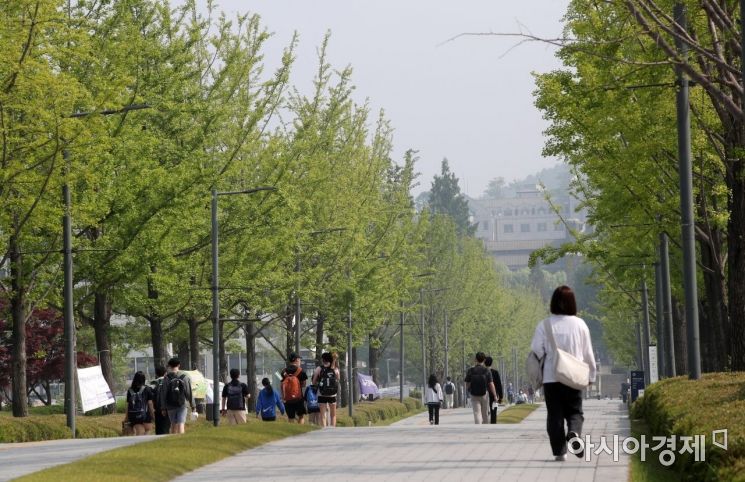 In the 2026 academic year early admission, Yonsei University additionally admitted 2,099 students, accounting for 94.8% of the total recruitment quota.
According to an analysis by Jongro Academy on December 25, the total number of final additional admissions at the three universities amounted to 4,667, representing 65.5% of the recruitment quota. This figure is 626 higher than the 4,041 additional admissions in the 2025 academic year, marking the largest increase in five years since the 2022 academic year.
By university, Yonsei University and Korea University saw particularly notable increases in additional admissions. Yonsei University admitted 2,099 additional students, accounting for 94.8% of its recruitment quota, while Korea University admitted 2,380 students, representing 88.1%. In contrast, Seoul National University admitted only 188 additional students, or 8.5%, which was a slight decrease in number compared to the previous year.
At Seoul National University, the School of Advanced Convergence Studies had a relatively large number of additional admissions, followed by the College of Pharmacy, the College of Liberal Studies, the Department of Economics, and the College of Business Administration. However, there were no additional admissions in some natural science departments, including the Pre-Medical Program, as well as in many humanities departments.
At Yonsei University, additional admissions were widespread across both humanities and natural sciences. Departments such as the School of Integrated Humanities and Social Sciences, the Department of Business Administration, and the Underwood International College in the humanities, as well as the Department of Electrical and Electronic Engineering, the School of Advanced Computing, and the Department of Mechanical Engineering in the sciences, all admitted additional students exceeding their recruitment quotas.
Korea University also recorded high ratios of additional admissions in major humanities departments such as the College of Business Administration, the Department of Economics, and the Department of Political Science and International Relations, as well as in natural science departments such as the Department of Electrical and Electronic Engineering, the Department of Computer Science, and the Department of Mechanical Engineering.
Admissions experts attribute this trend to changes in applicants' strategies. In the humanities, there is a stronger tendency to prioritize university prestige over departmental fit, while in the sciences, the continued preference for medical schools has led to increased multiple admissions and more students declining enrollment at top universities.
Jongro Academy stated, "The scale of additional admissions in the early admission process could also impact the regular admission landscape," adding, "There is a possibility that the admission cutoffs for universities and departments may fluctuate significantly."
© The Asia Business Daily(www.asiae.co.kr). All rights reserved.
![Clutching a Stolen Dior Bag, Saying "I Hate Being Poor but Real"... The Grotesque Con of a "Human Knockoff" [Slate]](https://cwcontent.asiae.co.kr/asiaresize/183/2026021902243444107_1771435474.jpg)















