"Immigration System and Border Reinforcement Act"
Passed Canadian House of Commons on December 11
Anti-immigration Sentiment Spreads in Europe as Well
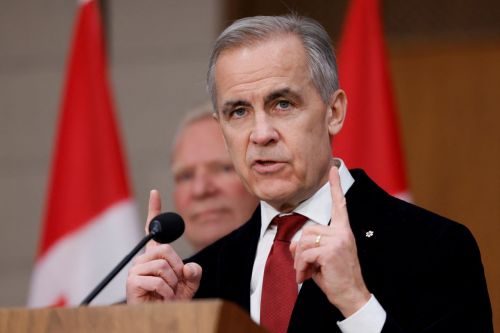
Canada is moving to significantly strengthen its refugee screening process with the introduction of the "Immigration System and Border Reinforcement Act." As the neighboring United States intensifies its deportation of immigrants, even Canada-which had previously been considered friendly toward refugees, along with several European countries-is now seen as closing its doors.
The Guardian reported on the 23rd (local time) that the "Immigration System and Border Reinforcement Act," which includes numerous changes related to border security, passed the Canadian House of Commons on December 11 and is now awaiting Senate approval.
This bill stipulates that asylum applications submitted more than one year after entry, or applications made more than 14 days after crossing the U.S. land border, will be referred to a pre-removal risk assessment by an immigration officer, rather than to the Immigration and Refugee Board. In effect, this makes it much more difficult for applicants to receive a formal refugee review.
Legal and human rights experts have criticized the procedure, arguing that it has a high rejection rate and does not guarantee a fair hearing. In particular, they point out that maintaining the "Safe Third Country Agreement" in a context where the United States pursues a hardline deportation policy ignores the current reality.
Audrey Macklin, a professor of immigration and refugee law at the University of Toronto, criticized the time limit on applications, noting that there are various reasons why someone might not be able to apply for asylum immediately. Idil Atak, a professor of refugee and human rights law at Toronto Metropolitan University, also described the bill as "a significant step backward in terms of refugee protection."
Some observers worry that Canada is backtracking on its refugee protection principles out of concern for the United States, particularly the Trump administration, and that this could negatively impact its international image and compliance with international agreements. Professor Atak argued that the new measures appear to be an attempt to appease U.S. President Donald Trump under the pretext of strengthening the border, especially as Canada has yet to reach a trade agreement with the United States.
This trend has also been observed in Europe. According to Reuters and other sources, Shabana Mahmood, the UK Home Secretary, announced a reform plan for the immigration and asylum system in the House of Commons last month, under the name "Restoring Order and Control."
As the financial burden from the surge in refugees and immigrants combines with economic slowdown, anti-immigration sentiment has spread, prompting the United Kingdom, Germany, France, and others to tighten asylum qualifications and introduce regulations to expedite removals and deportations. In the context of election-driven vote management, not only right-wing but also left-wing and centrist governments are joining the trend of restricting immigration.
The Organisation for Economic Co-operation and Development (OECD) stated in its "International Migration Outlook" published in early November that "after a record increase in refugees and migrants in 2022-2023, Europe began implementing stricter immigration controls," and analyzed that "in particular, changes in the political environment after elections are driving shifts in immigration policies across countries."
© The Asia Business Daily(www.asiae.co.kr). All rights reserved.

















