Top Seller Is Cost-Effective Whisky in the 20,000-Won Range, While Revenue Leader Is High-Aged Single Malt
Curiosity-Driven Consumption Fades as Mainstream Brands Like The Balvenie and The Macallan Return
With Mid-Priced Products Disappearing, Polarization Between Affordable and Premium Whiskies Becomes Entrenched
The domestic whisky market is increasingly being divided into "whiskies for frequent drinking" and "whiskies that generate profit." In daily life, affordable whiskies suitable for highballs are driving consumption, while demand for gifts is concentrated on established premium brands. This year's whisky sales rankings clearly demonstrate that this polarization in consumer behavior has become a fundamental market order, rather than a temporary trend.
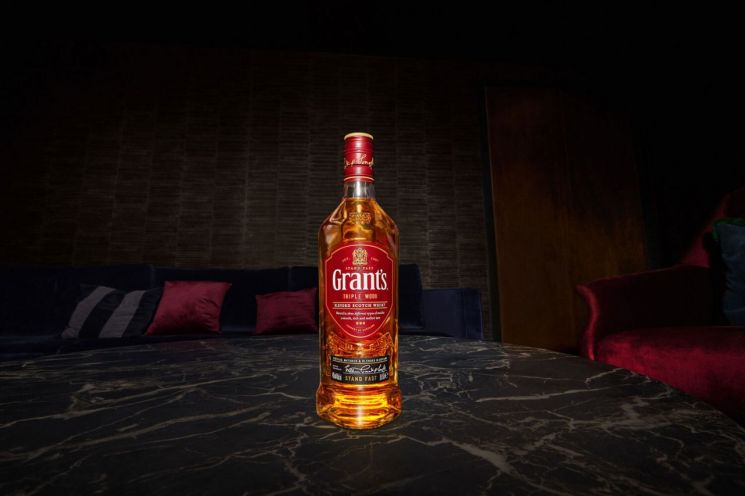
Grant's Takes Top Sales Spot, the Standard of the Highball Era
According to Wine & More on December 25, the best-selling whisky this year was "Grant's Triple Wood." Grant's Triple Wood is a Scotch blended whisky aged in three types of casks-virgin oak, American oak, and bourbon refill-known for its smooth and rich flavor. In particular, its large 1-liter bottle can be purchased for around 20,000 won, making it recognized as a "cost-effective and alcohol-efficient" whisky.
A representative from Wine & More explained, "Grant's Triple Wood is an outstanding product in terms of both value and versatility. It's great as a base for highballs and can also be enjoyed neat without burden. It is the product that most clearly illustrates the polarization of the whisky market." In fact, demand for whiskies dedicated to highballs has been steadily increasing across convenience stores, large supermarkets, and liquor specialty stores.
Besides Grant's Triple Wood, most of the top-selling products were also accessible whiskies priced around 50,000 won. Notable examples include "Suntory Kakubin," "Monkey Shoulder," "Jameson Standard," and "Glenfiddich 12 Year." These products are commonly praised for their suitability for highballs and their high satisfaction relative to price.
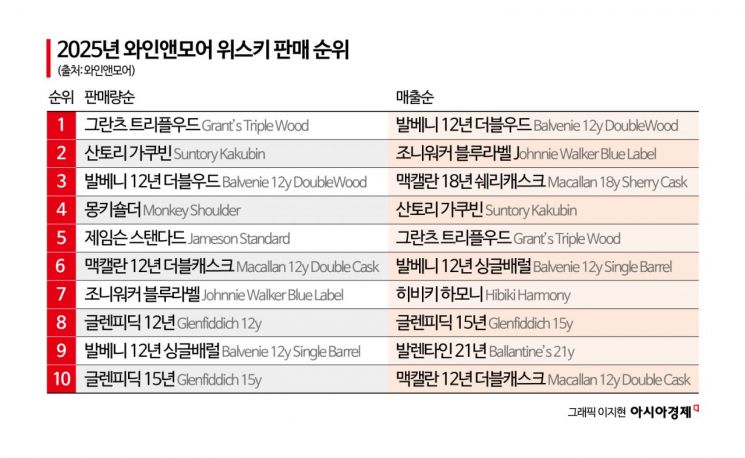
Balvenie Tops Revenue Chart, the Return of 'Fail-Proof Consumption'
However, the revenue rankings told a different story. "The Balvenie 12 Year DoubleWood" claimed the top spot, followed by "Johnnie Walker Blue Label," "The Macallan 18 Year Sherry Cask," "Hibiki Harmony," and "Ballantine's 21 Year." Most of the top ten were filled with premium and aged products, confirming that "profitable whiskies" still belong to the high-end lineup.
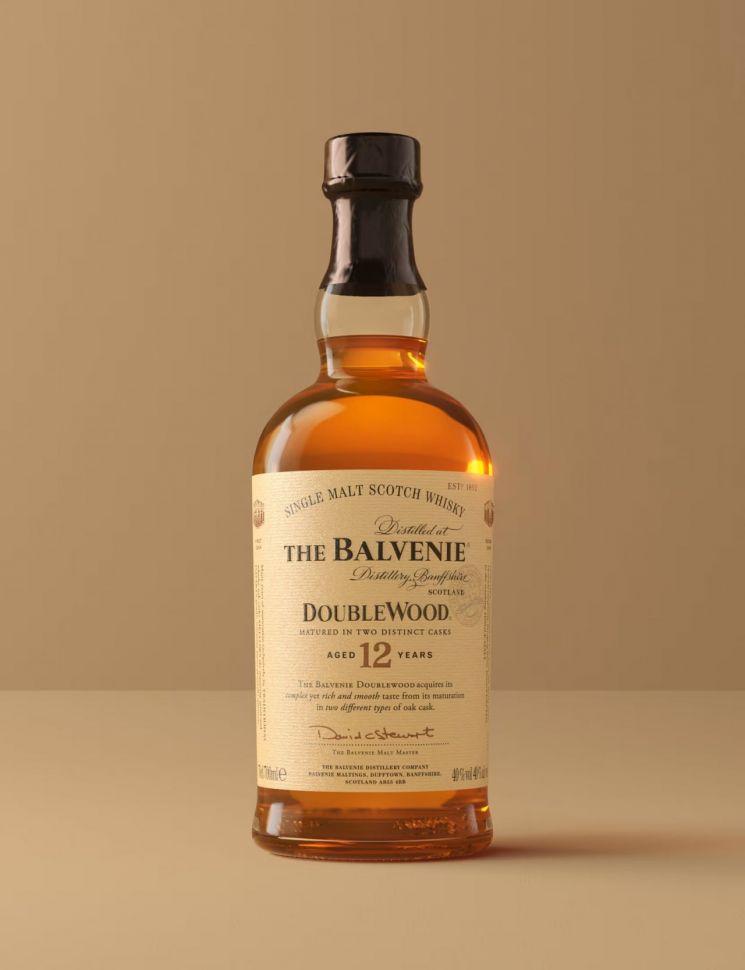
In particular, The Balvenie 12 Year DoubleWood is a prime example of pent-up demand being released all at once, as the supply shortages that lasted for several years were resolved this year. Wine & More commented, "The Balvenie was one of the most anticipated products among enthusiasts, and as soon as stable supply resumed, sales quickly recovered. It best exemplifies this year's whisky trend of 'fail-proof consumption.'"
Experimental Consumption Disappears, Mainstream Returns... Polarization Becomes Entrenched
Another notable trend in this year's rankings is the disappearance of previously popular brands such as "Ardbeg," "GlenAllachie," and American bourbons from the top spots. Until last year, consumers actively explored a variety of styles, including peaty Islay single malts, sherry cask-forward Speyside single malts, and sweet American bourbons with vanilla and caramel notes.
This year, however, traditional mainstream brands like The Balvenie, The Macallan, Johnnie Walker, and Hibiki have reclaimed the center of the market. This shift indicates that, amid high inflation and economic uncertainty, consumers are avoiding adventurous choices with the risk of failure and are instead opting for proven brands, reflecting a turn toward conservative consumption.
The most significant keyword defining the whisky market in 2025 is undoubtedly "consumer polarization." Boosted by the highball trend, sales of ultra-affordable and value-oriented whiskies have increased further, while demand for premium products-such as high-aged Japanese whiskies and Scottish premium malts priced in the hundreds of thousands of won-has remained steady. In contrast, so-called "mid-priced" products in the 50,000 to 100,000 won range are gradually losing their presence.
This structure shows that whisky is no longer a beverage consumed evenly across mid-price ranges, but has become a category completely split between everyday and special-occasion consumption. In daily life, low-priced products like Grant's and Kakubin are chosen, while on special occasions or as gifts, high-priced products such as The Balvenie, The Macallan, and Johnnie Walker Blue Label are preferred, solidifying this dual structure.
Next year, the whisky market is more likely to undergo adjustment and restructuring rather than growth. High inflation, economic slowdown, and the rising trend of low-alcohol and health-conscious consumption are all at play, making whisky increasingly a "selectively consumed" drink. The scarcity premium, which was formed as demand far outstripped supply, is expected to be significantly diluted.
Amid these changes, market polarization is likely to intensify even further. Whiskies dedicated to highballs are expected to become even more affordable and absorb mass consumption, while premium whiskies will likely continue to be chosen mainly from established brands. A Wine & More representative noted, "Just a few years ago, it was difficult to sell The Balvenie or The Macallan simply because there was not enough supply, but now such situations will be rare. The trend of sales concentrating on popular products is expected to continue into 2026."
© The Asia Business Daily(www.asiae.co.kr). All rights reserved.
![Clutching a Stolen Dior Bag, Saying "I Hate Being Poor but Real"... The Grotesque Con of a "Human Knockoff" [Slate]](https://cwcontent.asiae.co.kr/asiaresize/183/2026021902243444107_1771435474.jpg)


















