Government and Automotive Industry Collaboration
743 Billion Won to Be Invested
in Three Core Technologies Including Autonomous Driving Algorithms
Amid intensifying competition in autonomous driving technology, a public-private collaboration model in South Korea is set to launch next year. In a global landscape dominated by the United States and China, both leading the autonomous driving industry, the "M.AX (Manufacturing AI Transformation) Alliance"-which is spearheading a nationwide transition to artificial intelligence (AI)-plans to drive the development of "K-Autonomous Driving."
According to industry sources on December 26, the M.AX Alliance will invest a total of 74.3 billion won next year in three core future vehicle technologies: AI autonomous driving algorithms, automotive semiconductors, and software-defined vehicle (SDV) platforms. The "AI Future Vehicle Alliance," one of the alliance's ten divisions, will focus on building an ecosystem for future vehicles centered on autonomous driving. Anchor companies such as Hyundai Motor Company, HL Mando, Hyundai Mobis, and LG Electronics are participating, along with AI technology firms like Autonomous A2Z.
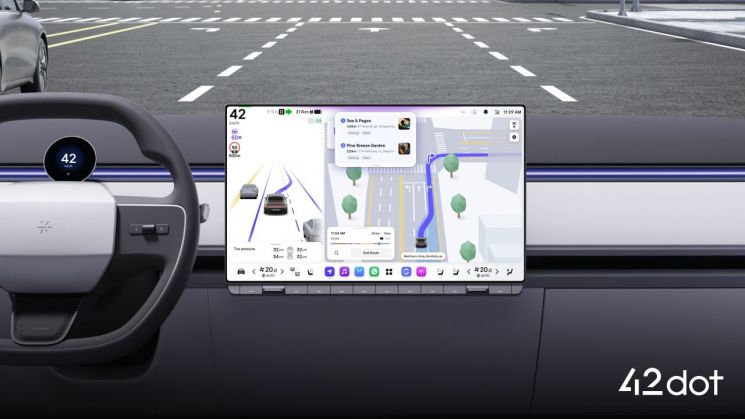
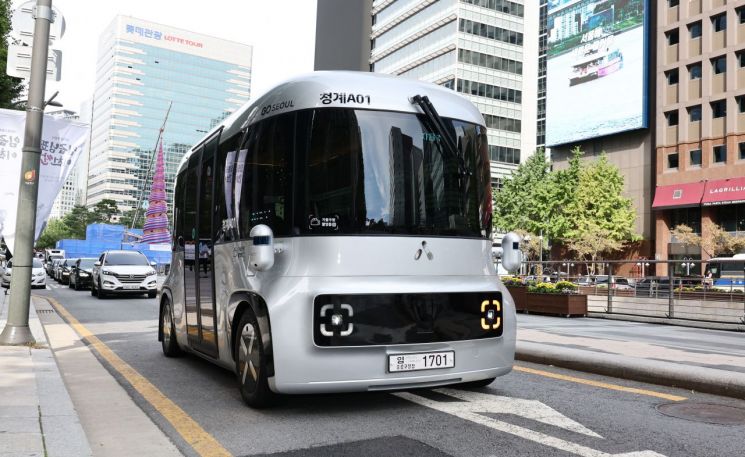
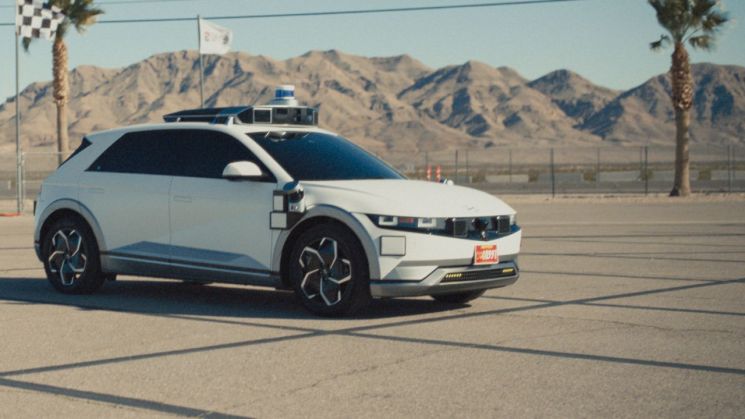
Hyundai Motor Company is currently developing autonomous vehicles with the goal of commercializing them by 2027. Through Motional, it is developing and testing autonomous driving technology, while also working to secure its own autonomous driving platform "PLEO" and autonomous driving technology "ATRIA AI."
Notably, on December 24, Hyundai Motor Group Chairman Chung Euisun visited 42dot's Pangyo headquarters and test-drove an IONIQ 6-based autonomous vehicle. After witnessing a demonstration of a test vehicle equipped with 42dot's E2E-based autonomous driving system "ATRIA AI," Chairman Chung expressed his intention to "continue to encourage and actively support 42dot's development achievements."
At Kia's 80th anniversary event on December 5, Chairman Chung commented on the competitiveness of autonomous driving technology, stating, "Chinese companies and Tesla are performing well, so we are somewhat behind in the field of autonomous driving," and added, "Although Motional is working hard in the United States, there may be a gap." He further emphasized, "Going forward, safety will be more important than the gap itself," and said, "We will focus on safety."
With Chairman Chung pledging continued support for 42dot, there is speculation that autonomous driving technology development centered on 42dot will proceed as planned. 42dot aims to unveil its first vehicle, the "SDV Pace Car," which incorporates all the technologies it has developed so far, in August next year.
In addition, GM Korea has entered the autonomous driving technology race by launching the Escalade IQ equipped with "Super Cruise," a Level 2 autonomous driving feature. Super Cruise allows for hands-free driving, provided the driver keeps their eyes on the road. Tesla has also recently introduced its supervised Full Self-Driving (FSD) system in South Korea. FSD also requires the driver to keep their eyes on the road and operates only on highways and arterial roads where high-definition maps have been built.
An industry official stated, "In the United States, instead of comprehensive government-level regulations, a flexible and decentralized regulatory environment led by local governments is characteristic, while China has strongly led the industry by investing massive capital and infrastructure under national policy strategies." The official added, "Now that we have established a public-private strategy for autonomous driving development, we expect not only technological progress but also swift institutional support."
Meanwhile, the United States, which has adopted a negative regulatory approach, and China, which is building a state-led ecosystem, are fiercely competing in autonomous driving technology.
Waymo is operating commercial robotaxi services based on Level 4 fully autonomous driving in major cities including Phoenix, Arizona, San Francisco, Los Angeles, and Austin. Tesla has established a robotaxi subsidiary, obtained a license in Texas, and secured the legal foundation to operate driverless robotaxi services throughout the state, including Austin. Pilot operations of the robotaxi service began in Austin, Texas, in June.
Chinese company Baidu, with its "Apollo" robotaxi, plans to expand its service area by mapping all of China with high-definition maps, targeting 65 cities by 2025 and 100 cities by 2035. Baidu also plans to provide robotaxi services with Uber in the Middle East and Asia, and will begin services in Europe next year. WeRide and Pony.ai are preparing to launch pilot robotaxi operations beyond China, in Singapore and the Middle East, respectively.
© The Asia Business Daily(www.asiae.co.kr). All rights reserved.
![Clutching a Stolen Dior Bag, Saying "I Hate Being Poor but Real"... The Grotesque Con of a "Human Knockoff" [Slate]](https://cwcontent.asiae.co.kr/asiaresize/183/2026021902243444107_1771435474.jpg)

















