KDDX Project: "Evaluation Committee to Decide Based on Priorities"
Participation Using Illegally Obtained Information Is an Ethical Issue Only
Lee Yongcheol, Commissioner of the Defense Acquisition Program Administration (DAPA), stated regarding the plans for the Korean Next-Generation Destroyer (KDDX) project, "Whether a company that has leaked military secrets will receive a penalty in the bidding process can vary depending on the situation." Currently, both HD Hyundai Heavy Industries and Hanwha Ocean are participating in the KDDX project. His remarks are being interpreted as suggesting that HD Hyundai Heavy Industries, which has leaked military secrets, may not necessarily be penalized, which is likely to spark controversy.
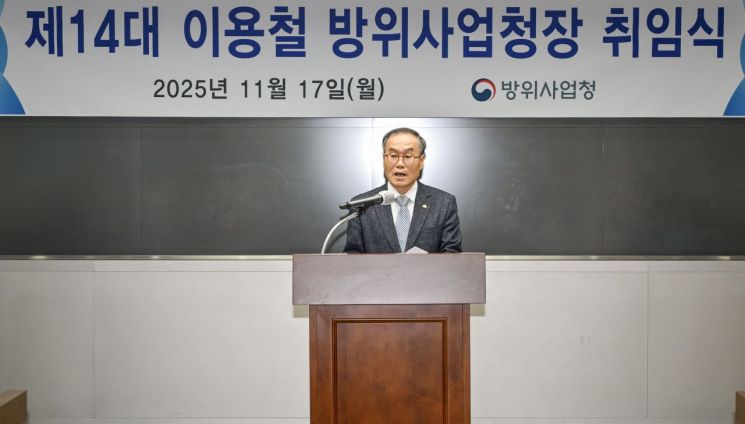
On the morning of the 24th, during a briefing at the Ministry of National Defense in Yongsan-gu, Seoul, Lee Yongcheol said, "There is a question of whether it is ethical for a company to participate in a project using illegally obtained military secrets," and added, "How much of a security penalty will be applied is a matter for the evaluation committee to decide when the participating companies submit their proposals." He continued, "There are comparative considerations depending on the project," and "the speed and fairness of the project are not fixed and can change." This means that whether a penalty is applied to a company that has leaked military secrets may differ depending on the project.
"Comparative considerations mean selection criteria vary by project"
The competitive bidding method recently decided by DAPA is relatively simple. Previously, DAPA evaluated naval ship bids on a 100-point scale: price (20 points) and technology (80 points), with most outcomes determined by decimal point differences. However, the fact that HD Hyundai Heavy Industries may be penalized due to a conviction for leaking military secrets, which Hanwha Ocean raised as an issue, is a variable. Originally, this penalty was to be applied for only three years, from November 2022, when the first conviction was finalized, until November of last year. However, in September, DAPA announced, "After additional legal review, we determined that the case finalized in 2023 should be considered separately," and stated, "An additional penalty of 1.2 points will be applied until the end of next year."
President Lee's intention to eradicate defense industry corruption is being contradicted
President Lee Jaemyung has also issued a stern warning regarding the leakage of military secrets. On December 5, in response to a participant's request to eradicate corruption in the defense and military supply sectors, President Lee instructed DAPA, "I've heard some strange things about giving preferential contracts to those who have been convicted of leaking military secrets. Please check thoroughly." Although he did not specify a particular company, his remarks were directly aimed at HD Hyundai Heavy Industries, whose nine employees were convicted for illegally photographing and sharing KDDX concept design materials from Daewoo Shipbuilding & Marine Engineering (now Hanwha Ocean) on the company network. Commissioner Lee's remarks on this day could be interpreted as being in direct opposition to President Lee's intentions. DAPA has so far insisted on awarding the KDDX contract through preferential negotiation, citing the urgency of the program's deployment. On the other hand, by advocating for competitive bidding instead of preferential negotiation, they have also allowed defense companies that violated military law to participate in the project.
DAPA delays projects until penalties are lifted, despite urgent need for modernization
This was the case with the Type 1 submachine gun for special operations. In June 2020, Dasan Machineries was selected as the preferred negotiation partner for the project. However, within less than a month, the Defense Counterintelligence Command conducted a search and seizure, citing suspicions that Dasan Machineries had leaked military secrets related to firearms development. The leak was confirmed to be true. A former executive of Dasan Machineries was found to have provided the company with military secrets, such as requirements for machine guns and sniper rifles discussed or decided at the Joint Chiefs of Staff meetings between 2015 and 2020, in exchange for bribes. Those involved were convicted, and the project was halted in June 2021.
Companies that leaked military secrets are proceeding with projects without hesitation
DAPA has repeatedly emphasized the urgent need to replace the 40-year-old K-1A submachine guns used by special forces. However, after the project was halted, it was not resumed until the sanction period for Dasan Machineries ended, and a new announcement was made in April this year. Regarding this, Commissioner Lee said, "The Type 1 submachine gun for special operations was before my tenure, so I am not familiar with the details," and added, "Even then, comparative considerations between speed and fairness would have been made."
Within and outside the military, there are growing calls to strengthen punishments for defense companies that leak military secrets.
In contrast, advanced countries strictly handle the leakage of secrets by defense companies. The United States has separate legislation for the defense industry, namely the 'DoD 5000 Series' defense procurement regulations. These regulations include the Department of Defense's acquisition management policies, principles, and guidelines for protecting critical program information. The organizational structure is also robust. The Defense Security Service (DSS) and the Defense Technology Security Administration (DTSA) under the Department of Defense are dedicated to responding to the leakage of defense secrets. In particular, to guard against hacking, the Department of Defense established the Defense Counterintelligence and Security Agency (DCSA) in 2019, which is responsible for personnel vetting and preventing the leakage of defense information.
Attorney Lee Hyungseop, a former military judge advocate, said, "It is necessary to strengthen the effectiveness of the law by expanding the scope of espionage charges to reflect diplomatic and security realities and by easing the requirements for proving violations of the Defense Industry Technology Protection Act."
© The Asia Business Daily(www.asiae.co.kr). All rights reserved.
![Clutching a Stolen Dior Bag, Saying "I Hate Being Poor but Real"... The Grotesque Con of a "Human Knockoff" [Slate]](https://cwcontent.asiae.co.kr/asiaresize/183/2026021902243444107_1771435474.jpg)















