Grand Prize at Gyeongbuk Environmental Awards for Two Consecutive Years
Sustainability Proven Through Policy Achievements
Uiseong County reaffirmed its status as a leading local government in responding to the climate crisis and overall environmental administration by winning the grand prize at the "2025 Gyeongbuk Environmental Awards," hosted by North Gyeongsang Province, for the second consecutive year.
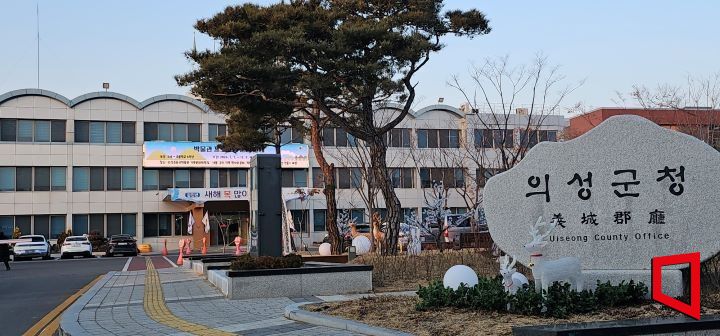
Uiseong County (Governor Kim Jusu) announced that it received the highest honor, the Grand Prize, at the awards ceremony held on the 22nd.
The Gyeongbuk Environmental Awards comprehensively evaluate the achievements and sustainability of environmental policies among cities and counties in the province. This year’s evaluation consisted of a first-round quantitative assessment and a second-round qualitative assessment.
Uiseong County achieved perfect scores in all 18 detailed indicators across four categories in the first-round quantitative assessment: ▲practicing carbon-neutral lifestyles, ▲environmental management status, ▲institutional evaluation for World Water Day, and ▲joint government evaluation. The county then received the highest score in the second-round qualitative assessment, which evaluated policy effectiveness and potential for dissemination, ultimately being selected as the grand prize winner.
In particular, the county’s achievements in the carbon neutrality sector stood out. Uiseong County faithfully implemented the public sector greenhouse gas target management system, operated eco-friendly refill stations, and continuously expanded resident participation programs such as "Jeans is Bag," "Recycle 2Day," support for community environmental clubs, and the carbon-neutral Naver Band. These efforts were recognized for establishing a model for carbon neutrality in daily life.
The county also received high marks for environmental restoration and disaster response. It promoted an 8.5 billion won ecological corridor restoration project to transform areas damaged by illegally abandoned waste into nature-healing spaces, while simultaneously carrying out natural environment conservation projects such as restoring the habitat of the endangered Red-spotted Apollo butterfly, which was damaged by large-scale wildfires.
Notably, Uiseong County established appropriate procedures and standards for processing 102,034 tons of waste generated during wildfire disasters, creating an institutional model that other local governments nationwide can refer to in similar disaster situations.
The county systematically expanded its waste management infrastructure as well. By expanding the Dain landfill facility (16 billion won) and constructing a new resource recovery center (7.1 billion won), it established a stable and efficient waste management foundation, thereby strengthening the basis for medium- and long-term environmental administration.
Uiseong County also delivered outstanding results in water management. In the "World Water Day Institutional Evaluation," it was recognized for improving the water quality of the Nakdong River and managing total pollution loads. The expansion of public livestock manure treatment facilities (19.1 billion won) demonstrated policy achievements in both water quality improvement and fostering the water industry.
Governor Kim Jusu stated, "Maintaining our policy direction for climate change response and environmental conservation, even in the face of major wildfire disasters, has led to these meaningful results," adding, "We will continue to advance Uiseong County’s environmental policies so that they can serve as a nationally recognized model in practice."
© The Asia Business Daily(www.asiae.co.kr). All rights reserved.
![Clutching a Stolen Dior Bag, Saying "I Hate Being Poor but Real"... The Grotesque Con of a "Human Knockoff" [Slate]](https://cwcontent.asiae.co.kr/asiaresize/183/2026021902243444107_1771435474.jpg)
















