Recognized for Achievements in Disaster Response, Budget Savings, and Environmental Improvement
Field-Oriented Proactive Administration Leads to Tangible Benefits for Citizens
An administrative case in which Gwangju City quickly conducted investigations at the site of heavy rain damage, leading to the declaration of a special disaster area, and recycled waste asphalt concrete discarded during road repairs to simultaneously reduce the budget, environmental impact, and citizen inconvenience, has been selected as one of Gwangju’s outstanding proactive administrative cases for the second half of the year. It is being evaluated as a result of prioritizing on-site decisions over formalities, which led to administrative achievements.
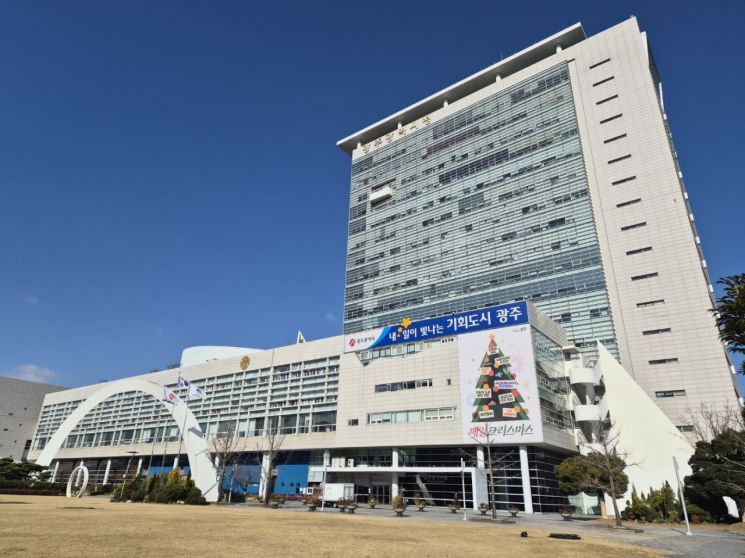
On December 24, Gwangju City announced that it had held the third Proactive Administration Committee meeting at City Hall and selected five administrative achievements with high public impact in the second half of the year as 'Outstanding Proactive Administrative Cases.' This evaluation focused on cases that advanced to the final round after performance verification and preliminary screening of nine cases submitted through citizen and department recommendations.
Among the outstanding cases, Park Seunghyun, an officer in the Department of Natural Disasters, was recognized for 'Leading the Declaration of a Special Disaster Area Based on Heavy Rain Damage Investigation.' At the time of large-scale damage caused by heavy rainfall, a prompt damage assessment and the operation of an emergency support team in each district led to the declaration of a special disaster area. This secured national funding and reduced the burden on local finances, earning high praise. The simultaneous implementation of recovery efforts and mid- to long-term measures such as flood prevention was also acknowledged as an achievement.
Another outstanding case was the 'Promotion of Waste Asphalt Concrete Recycling' by Kim Jinsu, an officer at the General Construction Headquarters. The city improved regulations to allow the recycling of waste asphalt concrete generated during road repairs and introduced a paid and free supply system, saving hundreds of millions of won annually in waste disposal costs. By recycling approximately 24,000 tons of waste asphalt concrete, the city achieved greenhouse gas reduction, and the budget savings were reinvested in road repairs, resulting in fewer potholes and enhanced citizen safety.
Encouragement awards were given for the following cases: ▲ Hosting and organizing the 2025 Museum and Art Museum Expo ▲ Administrative innovation based on artificial intelligence (AI) ▲ Promoting investment by relaxing regulations in industrial complexes. The Museum and Art Museum Expo was recognized for being fully funded by the national government and increasing the participation of local cultural institutions. The AI administrative innovation case was noted for enhancing both administrative efficiency and citizen convenience. The case of relaxing industrial complex regulations was highlighted for resolving business difficulties through coordination with relevant agencies.
Outstanding proactive public officials selected this time will receive a mayoral commendation and special personnel benefits. Gwangju City plans to continue its field-oriented administration by establishing proactive administrative action plans and spreading best practices.
Lee Byungcheol, Director of Planning and Coordination, stated, "This is the result of digging deep into field problems without being confined to established frameworks," adding, "We will foster a culture where public officials who actively solve citizens’ difficulties are recognized and rewarded."
© The Asia Business Daily(www.asiae.co.kr). All rights reserved.
![Clutching a Stolen Dior Bag, Saying "I Hate Being Poor but Real"... The Grotesque Con of a "Human Knockoff" [Slate]](https://cwcontent.asiae.co.kr/asiaresize/183/2026021902243444107_1771435474.jpg)















