Rare, Fully Intact Whale Fossil Discovered in Korea
Concretions Noted for Their Rarity and Aesthetic Value
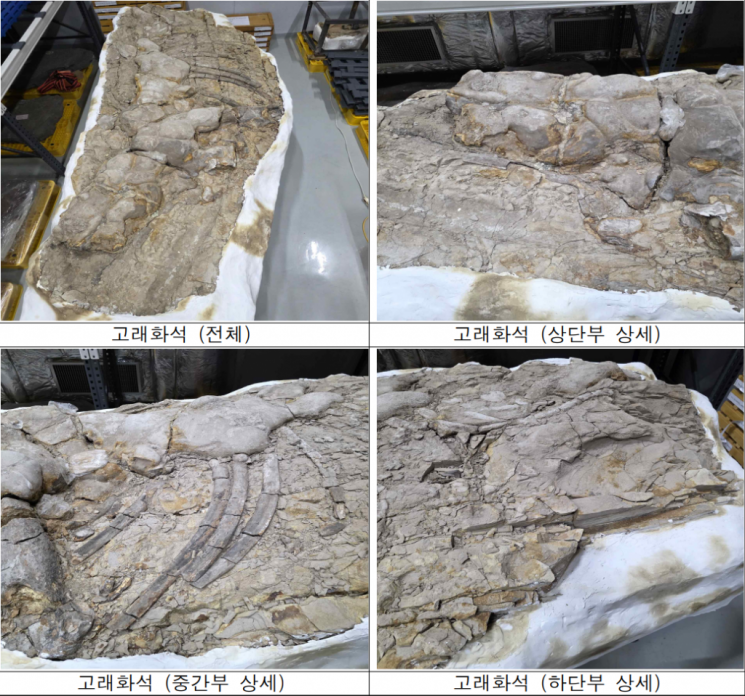
The Cenozoic Duho Formation whale fossil and concretions discovered in Pohang will now be managed as natural monuments.
The National Heritage Administration announced on the 24th that it has designated the "Pohang Cenozoic Duho Formation Whale Fossil" and the "Pohang Cenozoic Duho Formation Concretions" as natural monuments.
The whale fossil was discovered in 2008 at a construction site in the Jangnyang residential development district in Pohang. It was preserved as a complete specimen within the sedimentary rock of the Duho Formation from the Neogene period of the Cenozoic era.
This is a rare, fully intact fossil in Korea and is the largest Cenozoic whale fossil found in the country. It is also the first fossil of the suborder Mysticetes (baleen whales) to be identified in Korea. It is currently stored at the Natural Monument Center in Daejeon.
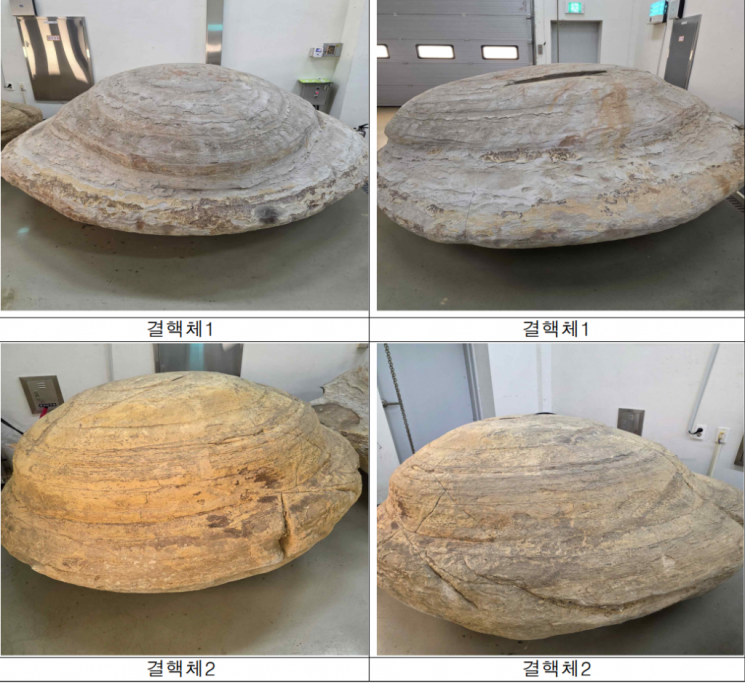
The concretions, which were designated together, consist of two specimens discovered in 2019 at an apartment construction site in Uhyun-dong, Pohang. Due to their large size and well-preserved form, they are considered highly rare and possess significant aesthetic value.
Concretions are hard masses formed when minerals precipitate between sediment particles, and they serve as important clues for reconstructing the geological environment of the time.
An official from the National Heritage Administration stated, "Both of these heritage items have high academic and natural history value, making their preservation necessary."
© The Asia Business Daily(www.asiae.co.kr). All rights reserved.
![Clutching a Stolen Dior Bag, Saying "I Hate Being Poor but Real"... The Grotesque Con of a "Human Knockoff" [Slate]](https://cwcontent.asiae.co.kr/asiaresize/183/2026021902243444107_1771435474.jpg)

















