Six Cultural Assets, Including "Yeongsan Hoesangdo" and "Shinjung Eomgyeong Meditation Album," Designated as Treasures
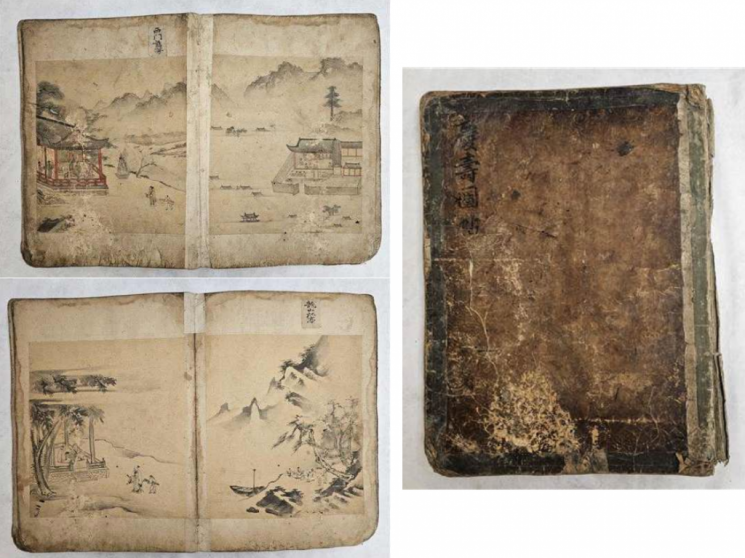
Six cultural assets, including a longevity banquet painting (Gyeongsuyeondo) from the Joseon Dynasty, Buddhist paintings from the Goryeo and Joseon periods, Buddhist scriptures, and a temple bell, have been simultaneously elevated to the status of Treasures.
The National Heritage Administration announced on the 24th that it has designated the following as Treasures: "Shinjung Eomgyeong Meditation Album," "Yeongsan Hoesangdo," "The Lotus Sutra, Volume 3," "Gurye Hwaeomsa Temple Bronze Bell," "Goryeo Suwol Gwaneum Bosaldo," and "Yeongsan Hoesangdo of Yeongchuk Temple."
The "Shinjung Eomgyeong Meditation Album," held by the Goryeong Shin clan, is an album of calligraphy and paintings created in 1601 by the sons of Shinjung Eom to celebrate their father's 80th birthday and commemorate the longevity banquet. It is the only original Gyeongsuyeondo painting known to exist today.
The album contains the seal script calligraphy "Gyeongsu Mijeong" and "Gyeongsu Dochup" by Heo Mok, four paintings titled "Gyeongsuyeondo," "Seomun Gumo-do," "Yongsan Gangjeong-do," and "Nujeong Hanil-do," as well as the regular script calligraphy "Guryeong Haksan" by Han Ho. It also includes poems written by Lee Hangbok, Kim Hyunseong, Lee Deokhyeong, and Lee Sanhae, making it a valuable resource for studying the calligraphy, painting, and literature of the mid-Joseon period.
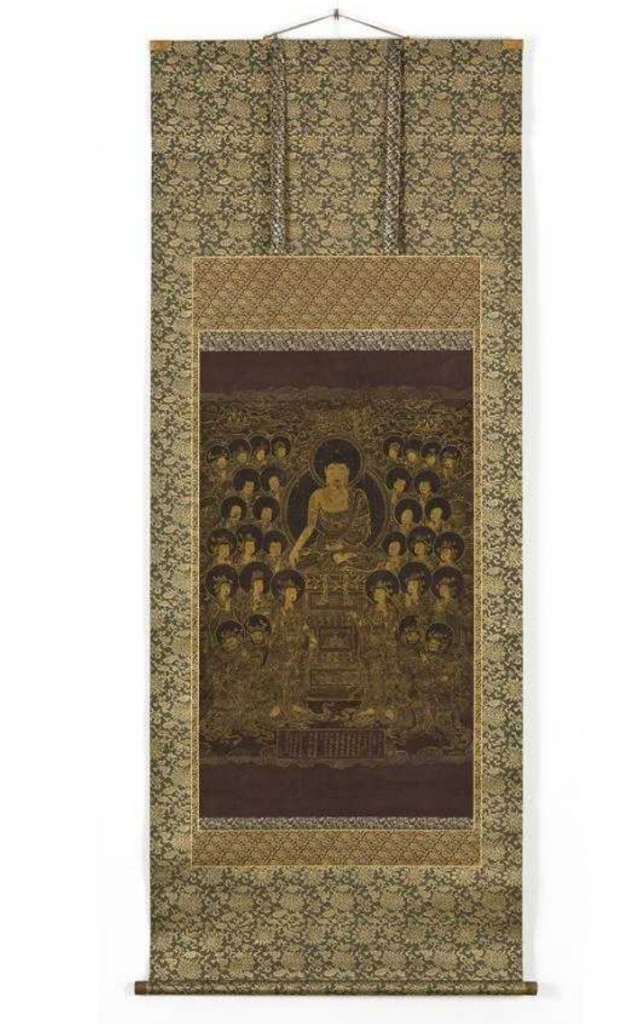
The "Yeongsan Hoesangdo," privately owned, is a Buddhist painting created in the 15th year of King Myeongjong's reign (1560) at the request of Queen Munjeong, wishing for the longevity of the royal family and the prosperity of its descendants. Painted with gold powder on silk, it depicts Shakyamuni Buddha preaching the Lotus Sutra. The work embodies the Buddhist painting style of the 16th century, with its concise halos, radiant auras, and well-proportioned figures.
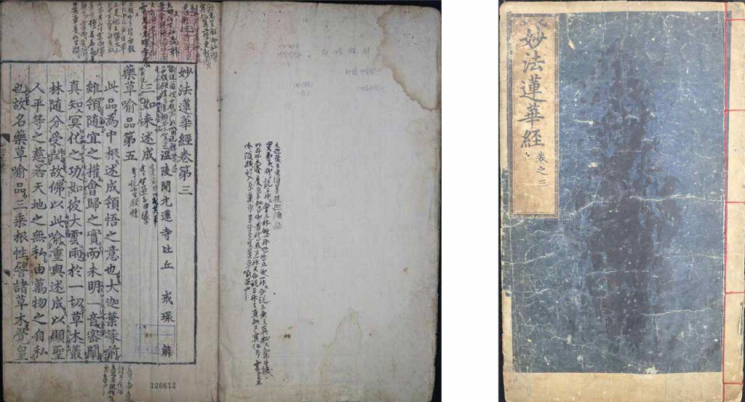
"The Lotus Sutra, Volume 3," held by Keimyung University Dongsan Library, is a metal-type printed edition produced in the 32nd year of King Sejong's reign (1450) by royal command, with Prince Anpyeong and Prince Geumseong overseeing its printing on Korean paper using Chojugabin type. Although 33 copies were printed, very few survive today, and the Keimyung University copy is the only known extant copy of this particular volume. The text is annotated throughout with Hangul and Gugyeol, making it a valuable resource for Korean linguistics.
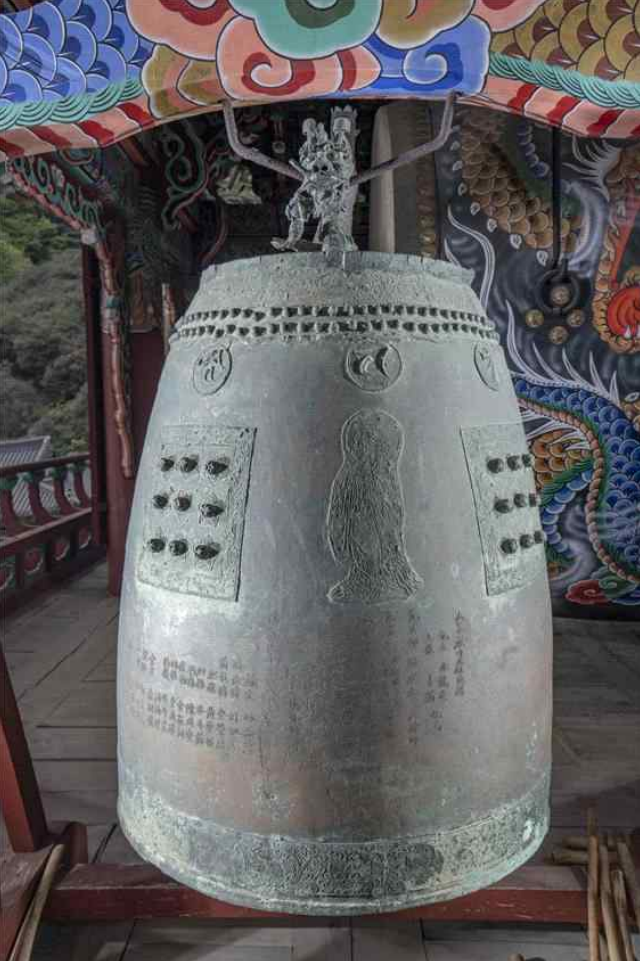
The Gurye Hwaeomsa Temple Bronze Bell was cast in the 37th year of King Sukjong's reign (1711) by master bell-maker Yoon Jongbaek. The shoulder and crown of the bell are decorated with lotus motifs, and images of monks are placed within the petals to depict the scene of "rebirth in a lotus flower." As a large-scale bell from the late Joseon period, it is notable for its excellent casting condition.
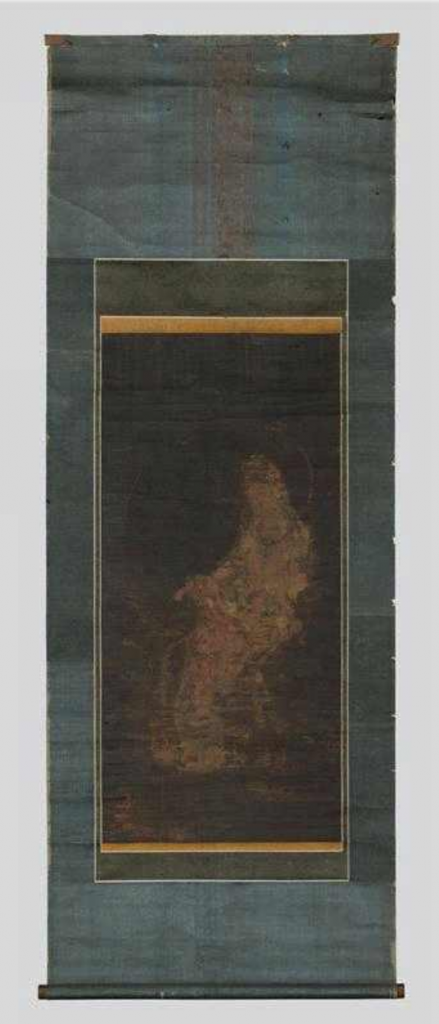
The "Goryeo Suwol Gwaneum Bosaldo," held by the National Museum of Korea, depicts Sudhana (Seonjae Dongja) paying homage to Avalokiteshvara Bodhisattva. The painting is distinguished by its dynamic and intricate patterns within the delicate robes, subtle coloration, and sophisticated use of gold pigment. With only six such works known to exist in Korea, it is considered extremely rare.
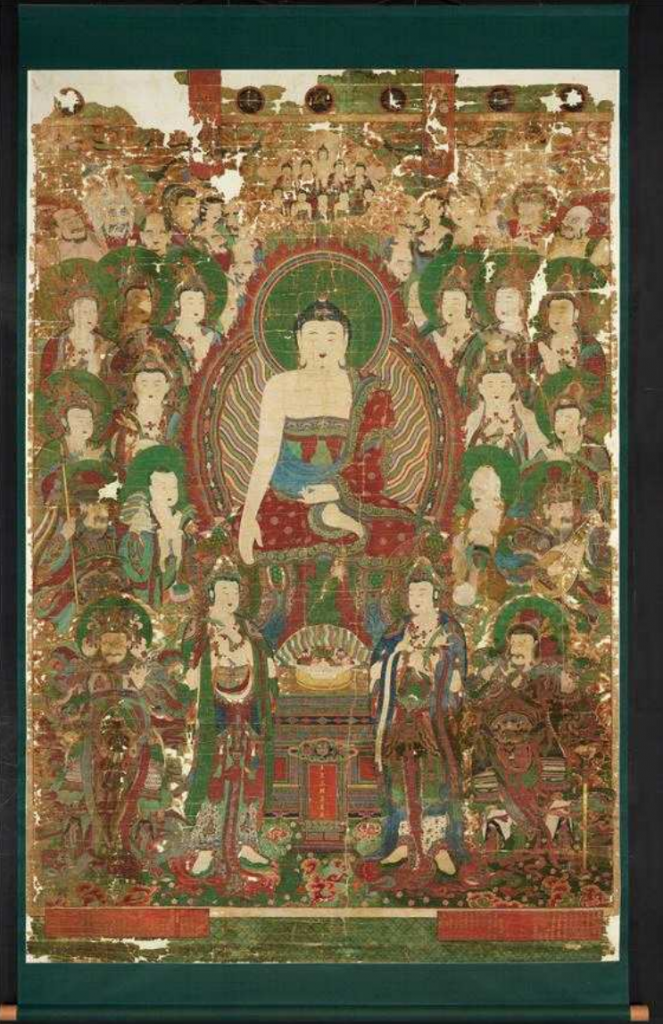
The "Yeongsan Hoesangdo of Yeongchuk Temple," also held by the National Museum of Korea, is a Buddhist painting created by Hyesik in the 18th year of King Yeongjo's reign (1742). The elegant depiction of fine lines and stable color palette exemplify the characteristics of Buddhist paintings from the Yeongnam region in the early 18th century. The inscription refers to the group of Buddhist painters as "Bisuhwe," illustrating the organized activities of Buddhist artist collectives in the late Joseon period.
© The Asia Business Daily(www.asiae.co.kr). All rights reserved.



















