USTR Announces Results of Section 301 Investigation
Immediate Tariff Hike Deferred Despite "Unfair Practices" Finding
Additional Tariff Rate Set at 0%, Increase Planned for 2027
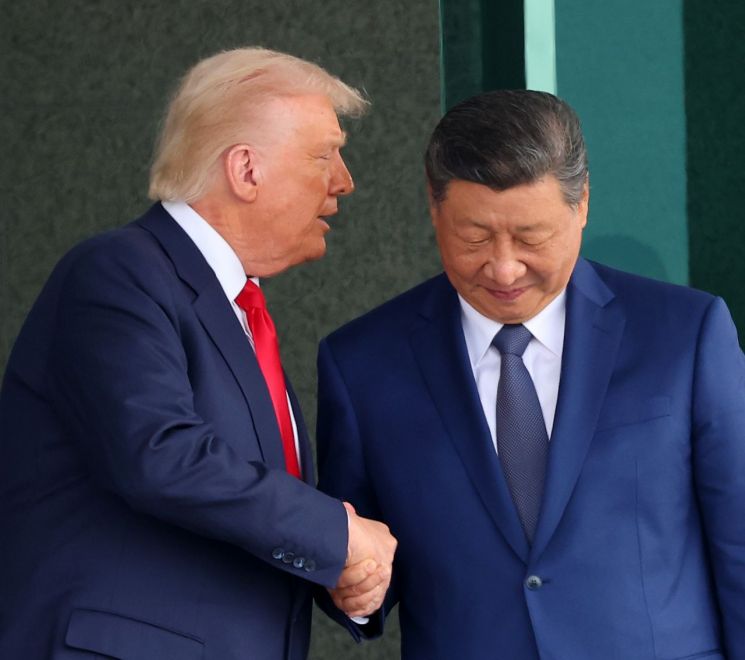
The Donald Trump administration has decided to temporarily postpone the imposition of additional tariffs on Chinese semiconductors. This move is interpreted as an effort to maintain the 'trade war truce' that was tentatively agreed upon during the U.S.-China summit in October.
On December 23 (local time), the United States Trade Representative (USTR) published the results of its Section 301 investigation in the Federal Register, focusing on the policies and practices China has pursued to secure dominance in the semiconductor industry.
The USTR concluded that measures, including tariffs, are necessary regarding Chinese semiconductors. However, it set the immediate additional tariff rate at 0%. Instead, the USTR announced plans to increase the tariff rate starting June 23, 2027, which is 18 months from now, and stated that the specific rate hike will be disclosed at least 30 days before the tariffs take effect.
This measure follows the Section 301 investigation into Chinese semiconductors initiated by the USTR in December of last year, during the final days of the previous Joe Biden administration. Section 301 of the Trade Act allows the administration to take retaliatory actions such as tariffs if it determines that the policies or practices of a foreign government are unfair or discriminatory and harm U.S. trade. The USTR concluded that China's semiconductor industry development strategy is unfair and places burdens or restrictions on U.S. commercial activities, making a government-level response possible.
The USTR assessed that China has employed "increasingly aggressive and broad non-market policies and practices" in the semiconductor industry for decades, resulting in "significant disadvantages for American companies, workers, and the U.S. economy."
Specifically, the USTR cited large-scale state subsidies, forced technology transfers from foreign companies, intellectual property (IP) infringement, opaque regulations, wage suppression, and state-led industrial policies that disregard market principles as problematic practices.
However, the decision to set the additional tariff rate at 0% and to delay its implementation for 18 months appears to be influenced by the current 'truce phase' in which the U.S. and China are continuing trade negotiations.
On October 30, the leaders of both countries held a summit in Busan and reached a trade agreement that included the U.S. lowering tariffs on Chinese fentanyl, China suspending rare earth export controls for one year, and resuming imports of American soybeans. This agreement temporarily eased tensions, and both sides have since shifted toward minimizing unnecessary conflict and managing their relationship in a stable manner.
However, while the imposition of additional tariffs has been postponed, Chinese semiconductors are already subject to significant tariff burdens. The first Trump administration imposed a 25% tariff on Chinese semiconductors due to concerns over China's unfair technology policies, and the Biden administration raised this rate last year, resulting in a 50% tariff being applied starting this year.
© The Asia Business Daily(www.asiae.co.kr). All rights reserved.
![Clutching a Stolen Dior Bag, Saying "I Hate Being Poor but Real"... The Grotesque Con of a "Human Knockoff" [Slate]](https://cwcontent.asiae.co.kr/asiaresize/183/2026021902243444107_1771435474.jpg)















