KDCA Releases "2024 Severe Injury and Mass Casualty Statistics"
Severe Disability Rate Among Survivors Reaches 31%... Adolescent Addiction and Female Suicide a Growing Concern
Last year, 4 to 5 out of every 10 patients who suffered severe trauma survived, but 75% of these survivors were left with disabilities. More than 3 out of every 10 survivors were in a vegetative state or suffered from severe disabilities.
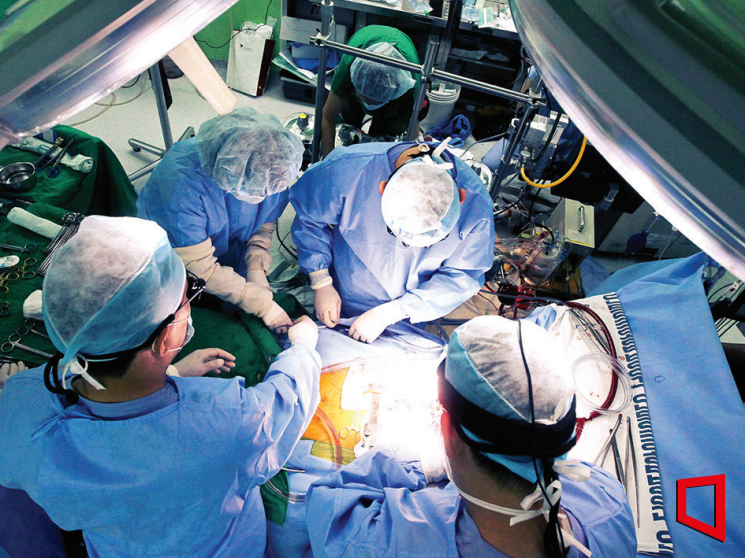
According to the "2024 Severe Injury and Mass Casualty Statistics" analyzed by the Korea Disease Control and Prevention Agency (KDCA) and released on December 24, a total of 8,170 patients suffered severe trauma in South Korea last year. By gender, men accounted for 73.1%, overwhelmingly higher than women at 26.9%. By age group, those in their 60s made up the largest proportion at 22.1%.
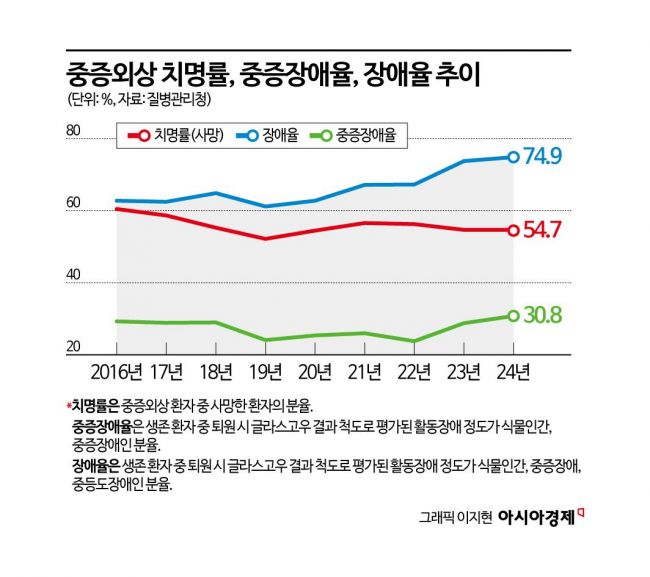
The "fatality rate" (mortality rate) for severe trauma patients was 54.7%, showing a steady decrease from 60.5% in 2016. However, the "disability rate," which refers to the proportion of survivors who developed disabilities, reached 74.9%, a significant increase from 62.8% in 2016 and the highest level since statistics began. In particular, the "severe disability rate," which refers to those classified as being in a vegetative state or with severe disabilities, had decreased to 23.8% in 2022, but rose again to 28.8% in 2023 and 30.8% in 2024.
The main causes of severe trauma were transportation accidents and falls/slips. The proportion of transportation accidents, which was 59.6% in 2016, decreased to 47.8% in 2024, while falls and slips increased from 33.5% to 44.5% over the same period. The KDCA analyzed that social factors such as changes in living environments and an increase in the elderly population contributed to this trend.
The locations where severe trauma occurred are also changing. The proportion of cases occurring on roads and in traffic areas decreased to 47.4%, while those occurring at home or in residential facilities increased to 26.5%. The most commonly injured body regions in cases of severe trauma were the head (41.6%), chest (33.4%), and lower limbs (13.5%), in that order.
The proportion of severe trauma patients transported to regional trauma centers was 46.9%, more than tripling from 15.0% in 2016. The increase in patients being transferred from regional emergency medical centers to regional trauma centers highlights the growing role and importance of trauma centers in managing severe trauma cases.
There were 16,715 cases of "non-traumatic severe injuries"-those caused by poisoning, burns, suffocation, and similar incidents-last year. The leading cause among these was poisoning (70.7%), with the majority resulting from intentional self-harm or suicide (65.6%).
In particular, 73.4% of non-traumatic injuries among women were due to self-harm or suicide, significantly higher than the rate among men (57.5%). Additionally, the rate of poisoning among teenagers surged from 47.4% in 2015 to 76.9% in 2024, underscoring the urgent need for addiction education and programs to prevent medication misuse among adolescents.
Im Seungkwan, Commissioner of the KDCA, stated, "The fatality rate for severe trauma patients has decreased due to the strengthening of the emergency medical system, but to address the rising disability rate, policy improvements are needed to support post-survival treatment, rehabilitation, and disability management. Social attention and countermeasures are also crucial for issues such as adolescent addiction and self-harm among women."
This survey is a national-level statistic produced by the KDCA in cooperation with the National Fire Agency, based on medical records of severe injury patients transported by 119 emergency services, to determine the scale and regional characteristics of severe trauma. Detailed statistical data can be found on the KDCA's National Injury Information Portal, and the raw data will be released in January next year.
© The Asia Business Daily(www.asiae.co.kr). All rights reserved.


















