Sharp Decline in Student Donations and Aging Population
Blood Reserves Drop to Just 2.3 Days
Recently, Mr. Kim (45), whose father was admitted to the intensive care unit, was shocked when the hospital informed him that there was a shortage of Rh+ type A blood. He could not believe that even the most common blood type among Koreans was difficult to obtain. Kim said, "I explained the situation on an online community and requested designated blood donations," adding, "With surgery approaching, I was left helpless, worried that a lack of blood could lead to something going wrong."
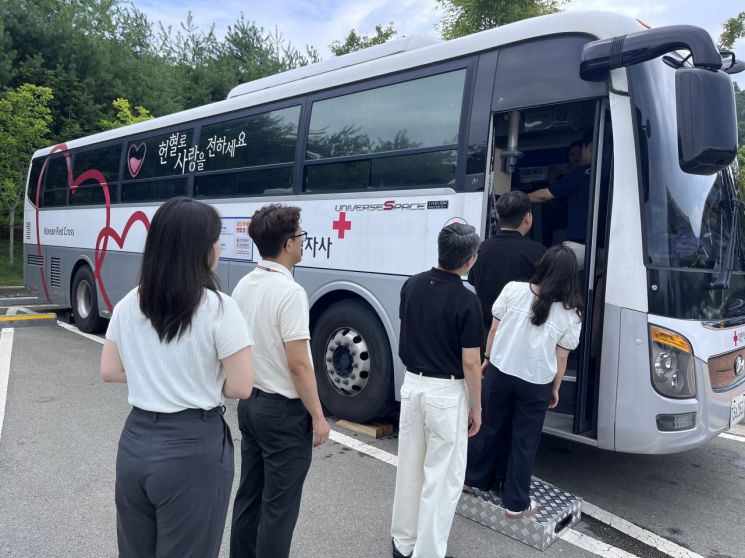
Recently, the combination of low birth rates, an aging population, and a decline in blood donations among younger generations has put the blood supply under severe strain. The end of the year is considered the most challenging period for blood supply, as student group donations decrease due to winter vacation, and the situation is further aggravated by cold waves and infectious disease outbreaks.
According to the status board at the Blood Services Headquarters of the Korean Red Cross on December 24, as of 3 p.m. the previous day, the nationwide average number of days of blood reserves was 3.3 days, and the actual reserve of transfusable blood in medical settings had dropped to 2.3 days. This is a further decline compared to the same time on December 15 (3.5 days and 2.7 days, respectively). Normally, a blood reserve of more than 5 days is classified as 'adequate,' while less than 3 days is considered a 'caution' level. The current stockpile is barely enough to last even three days.
As the blood shortage continues, it has become common for patients' families to search for donors themselves through 'designated blood donations.' A staff member at a hospital in Seoul said, "There have been cases where surgeries for critical patients were nearly postponed due to a shortage of platelets. It is frequent for hospitals to ask patients' families to secure blood themselves when the hospital cannot obtain it. For patients without family, even the medical staff are at a loss."
The core reason for the supply crisis is the sharp decline in blood donations among younger generations. Last year, the number of donors in their teens and twenties was about 1.56 million, a 32% drop from approximately 2.3 million in 2015. Structural factors such as population decline have been compounded by changes in the college entrance system. Since the 2024 academic year, individual volunteer activities are no longer considered in college admissions, removing a key incentive for students to donate blood. In fact, the total number of actual blood donors (excluding duplicates) last year was only 1,264,525, the lowest since statistics began in 2005.
An official at the Blood Services Headquarters emphasized, "Recently, with an aging population and low birth rates, the number of people eligible to donate blood is decreasing, and there are increasing calls to abolish the 'blood donation age limit of 69.' If the age restriction is eased, we expect to see more participation in blood donation from healthy middle-aged and older adults."
© The Asia Business Daily(www.asiae.co.kr). All rights reserved.
![Clutching a Stolen Dior Bag, Saying "I Hate Being Poor but Real"... The Grotesque Con of a "Human Knockoff" [Slate]](https://cwcontent.asiae.co.kr/asiaresize/183/2026021902243444107_1771435474.jpg)















