Seoul Hosts 'Seoul International Didimdol Income Forum'
Robinson: "Expand the Public Sector... Public Assets Must Increase"
"Didimdol Income Focuses on Restoring Opportunity and Building Assets"
Oh Se-hoon: "Basic Income Is Nothing More Than Indi
"It will become an important link in the new social contract of modern society."
James Robinson, Professor at the University of Chicago and last year’s Nobel Laureate in Economic Sciences, described Seoul’s social welfare policy, Stepping Stone Income, as "a social contract that goes beyond the expansion of welfare or social insurance." He argued that it is a factor that can restore new asset distribution and social mobility, and will significantly supplement the national welfare system.
 Seoul Mayor Oh Se-hoon and James Robinson, a University of Chicago professor and 2024 Nobel Laureate in Economic Sciences, are applauding at the "2025 Seoul International Stepping Stone Income Forum" held on the 23rd at Dongdaemun Design Plaza in Jung-gu, Seoul. Photo by Kang Jin-hyung
On the morning of the 23rd, Professor Robinson attended the "2025 Seoul International Stepping Stone Income Forum" held at the DDP Art Hall, where he delivered a keynote speech on the theme "Inclusive Institutions: The Social Foundation for Sustainable Prosperity."
Stepping Stone Income is Seoul’s income security experiment that supplements the household income shortfall for households with less than 85% of the median income (and assets below 326 million won) compared to the median income. This policy is designed to provide more support to those with lower incomes, following a "more to the less, less to the more" principle. From July 2022 to June this year, the city provided Stepping Stone Income to a total of 2,076 households and will continue performance evaluation research through 2026.
At the forum, which was planned as part of this initiative, research related to Stepping Stone Income and new directions for welfare systems were discussed. Professor Robinson, in his lecture on "Economic Growth, Social Distribution, and the Role of Government in Welfare," predicted, "Stepping Stone Income will provide important implications for Koreans as they determine their social contract." He explained that, unlike existing welfare systems, it is a more flexible and inclusive framework that can respond to changes in modern society.
The core of Stepping Stone Income lies in its design, which allows recipients to maintain eligibility even if their income exceeds the threshold, so it does not reduce work motivation. Over the course of three years of income experiments, 8.6% of recipient households surpassed 85% of the median income and no longer needed Stepping Stone Income, and 31.1% of households saw an increase in earned income. Even just this year, the exit rate from the program among recipient households increased by 1.1 percentage points, and the proportion of households with increased earned income rose by 2.8 percentage points.
Professor Robinson pointed out that Korea’s public social welfare expenditure is at the level of Latin American countries and argued that the role of the public sector should be expanded. He also asserted that this should serve as a basis for increasing the assets of the people. He said, "Stepping Stone Income focuses not only on direct cash support but also on restoring opportunities and building assets," and expressed high expectations for its role in Korean society.
The forum also included a session to evaluate the overall outcomes of the Stepping Stone Income pilot project. In the first session, Professor Lee Jeongmin of Seoul National University noted that total household income among Stepping Stone Income recipients increased, with their average monthly household income being 250,000 won higher than that of non-recipients. Professor Lee interpreted this as leading to increased spending on essentials such as transportation and food, which in turn improved mental health and nutrition indices.
However, due to the income effect of receiving support, the average labor supply (employment status) of household heads over the entire support period decreased by 10.4 percentage points. He noted, however, that this indicates more time was allocated to activities that improve productivity, such as education, training, caregiving, and health management. As supporting evidence, Professor Lee pointed out that recipient households spent more on education, training, and medical expenses than comparison households, and explained that, in the long term, investment in human capital that can raise labor productivity also increased.
In the following session, Amy Castro, Associate Professor at the University of Pennsylvania, stated, "Care work is a serious issue that leads to material costs and social isolation, and income security can help alleviate these problems." She added, "Experimental results for groups such as released prisoners, parents, and children showed that income security improved mental and physical health, housing and financial stability, and had a positive impact on children's education."
During the panel discussion, Professor Park Myungho of Hongik University estimated the mid- to long-term fiscal requirements for nationwide implementation of Stepping Stone Income and proposed securing funding through expenditure restructuring and increased tax revenues. Kim Yubin, Director of Employment Policy Research at the Korea Labor Institute, stated that Stepping Stone Income is unlikely to reduce labor supply and emphasized the need to implement work incentives in parallel to encourage labor market participation.
Going forward, the Seoul Metropolitan Government plans to develop additional experimental models to expand Stepping Stone Income nationwide, study ways to establish a Stepping Stone Income-social service delivery system, enhance work incentives, and gradually secure welfare funding. Customized implementation models for local governments are also under discussion. According to the city’s internal research, integrating Stepping Stone Income with 36 existing welfare programs, such as basic livelihood security and the basic pension, would enable the creation of an efficient welfare system.
Seoul Mayor Oh Se-hoon stated, "Universal basic income, which distributes the same amount to everyone, is nothing more than indiscriminate welfare that abandons policy priorities," adding, "What we need now is not welfare that fosters dependency, but Stepping Stone Income, which strengthens people’s capabilities so they can take on new challenges."
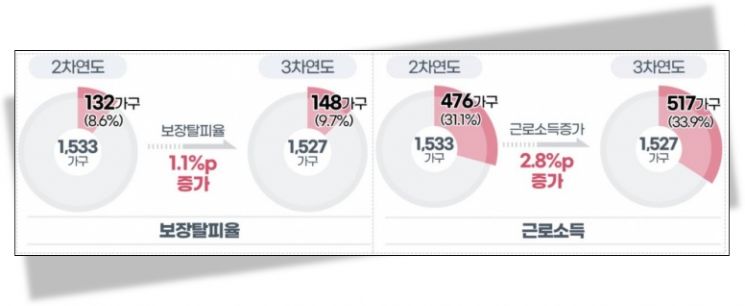 Changes Following the Application of Seoul City's Social Welfare Policy 'Didimdol Income'. Seoul City
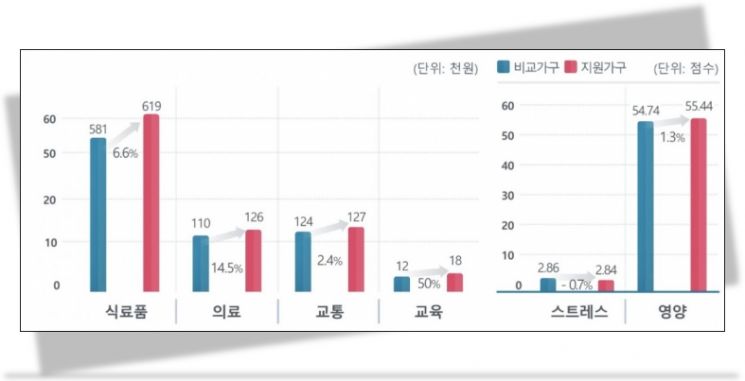 Changes Following the Application of Seoul City's Social Welfare Policy 'Didimdol Income'. Seoul City
© The Asia Business Daily(www.asiae.co.kr). All rights reserved.



















