Activation Allowed During Pilot Even If Facial Recognition Fails Due to Plastic Surgery
Official Launch in March Next Year... No Biometric Data Stored
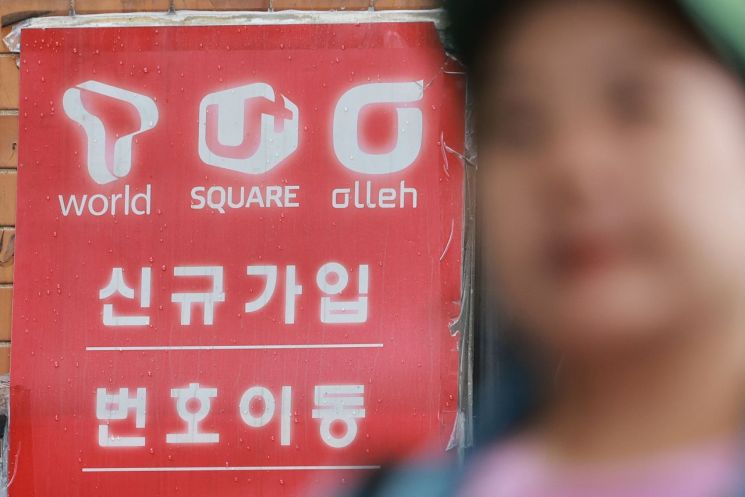
From now on, when activating a new mobile phone, presenting an ID card alone will no longer be sufficient; an additional procedure requiring direct facial verification will be introduced. In an effort to prevent burner phones used in voice phishing and financial fraud, the government is implementing facial authentication at the mobile service activation stage, thereby strengthening identity verification for both in-person and remote activations.
According to telecommunications authorities on December 23, the Ministry of Science and ICT began a pilot program on this day, adding a facial authentication process for the three major mobile carriers and MVNOs to reinforce identity verification during the mobile phone activation process.
This measure is a follow-up to the government-wide initiative to eradicate voice phishing and is a practical step to fundamentally block the activation of burner phones. Previously, the process involved verifying the authenticity of the user’s ID card by cross-checking with the issuing institution. Now, biometric authentication comparing the ID photo and a real-time photo of the user’s face has been added. The government expects that this will make it significantly more difficult to activate burner phones using stolen or forged IDs, rented identities, or personal information obtained through hacking. The use of photocopied IDs for activation will also be blocked.
With the introduction of facial authentication, procedures for both remote and in-person activations will be strengthened. For remote activations, after accessing the website or app, users will select a plan, enter USIM information, undergo real-name verification, then proceed with facial authentication and ID verification, followed by identity confirmation, input of subscription details, and finally activation. For in-person activations, after the physical ID is checked at the store, facial authentication and authenticity verification will be added as additional steps.
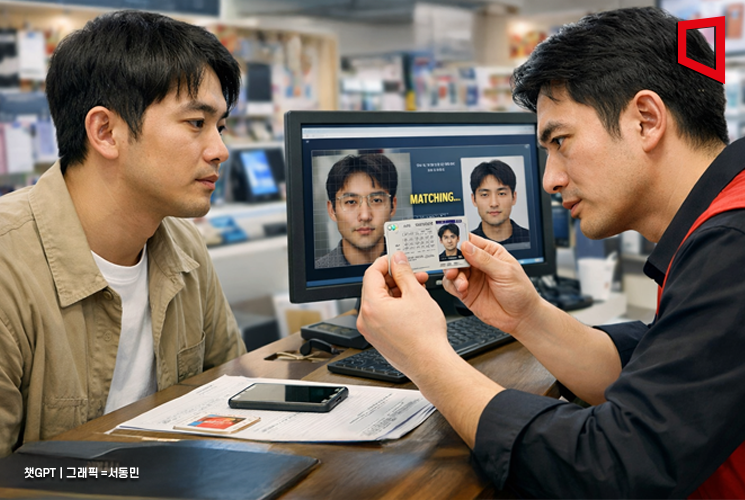
Facial authentication will be officially introduced on March 23 next year, with a three-month pilot period beforehand on certain MVNO remote channels and in-person channels of the three major carriers. The MVNO remote channels will be gradually expanded according to each operator’s readiness, with most expected to adopt the system by the end of January next year. During the pilot period, even if facial authentication fails, activation will exceptionally be allowed if all other procedures are completed successfully.
In practice, the system will be operated flexibly to account for various situations. According to the Ministry of Science and ICT, during the pilot period, activation will not be restricted solely due to facial authentication failure, even if it is difficult to determine a match between the ID photo and the actual face due to cosmetic surgery or other reasons. However, if users continue to have difficulty passing authentication even after the official launch, they may need to retake or reissue their ID photo. The government plans to analyze cases of authentication failure that occur in the field during the pilot period, including such instances, to improve the accuracy of the solution.
Facial authentication will be provided through the PASS app operated by the three major mobile carriers, and it can be used even without registering for the PASS app. In the authentication process, only the result of comparing the ID photo and the actual face is stored and managed; facial images or biometric data are not separately retained. Other biometric authentication methods, such as fingerprints, were not adopted due to privacy concerns, as they require third-party storage and verification of personal data.
The applicable work includes new activations, number portability, device changes, and ownership changes using resident registration cards and driver’s licenses. In the second half of next year, the system will be expanded to include national merit cards, disability registration cards, and foreigner registration cards. Along with the introduction of facial authentication, the Ministry of Science and ICT is also working to implement mandatory notification of the illegality and criminal risks associated with burner phones, as well as to strengthen the responsibility of mobile carriers for managing and supervising agencies and retail stores.
© The Asia Business Daily(www.asiae.co.kr). All rights reserved.
![Clutching a Stolen Dior Bag, Saying "I Hate Being Poor but Real"... The Grotesque Con of a "Human Knockoff" [Slate]](https://cwcontent.asiae.co.kr/asiaresize/183/2026021902243444107_1771435474.jpg)
















