Action Games Boost Cognitive Abilities
Avoid Overindulgence: "Challenge Yourself with New Games"
Research has shown that video games can slow brain aging and enhance cognitive abilities. However, the type of game and the amount of playtime are key factors.
The Washington Post reported on December 21 (local time) that several studies have found video games-especially action games-benefit brain health.
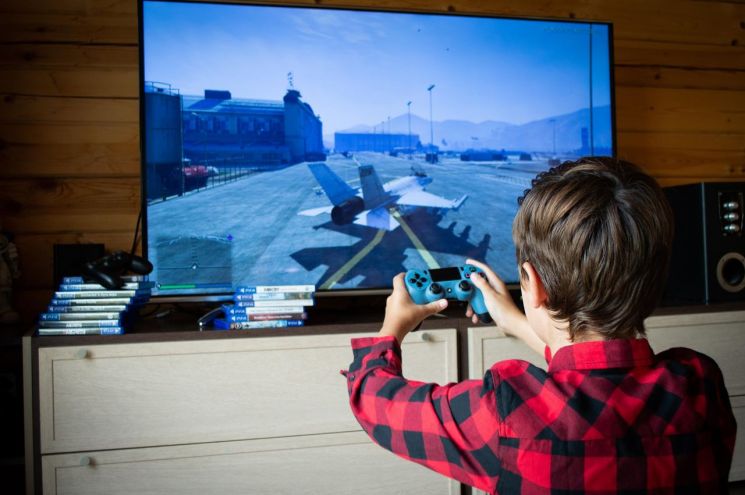
Aaron Seitz, a professor at Northeastern University, explained, "Video games require complex skills, which are beneficial for brain health." Unlike traditional brain games, which are simply structured, video games can improve overall cognitive abilities.
According to a study published in the journal NeuroImage by Dr. Carlos Coronel, a comparison of the brains of thirty-one frequent StarCraft II gamers and thirty-one non-gamers found that gamers' brains processed information more efficiently. The connectivity between brain regions essential for visual attention and executive function was superior in gamers.
This year, Dr. Coronel also reported in the journal Nature Communications that "the brains of experienced gamers age an average of four years more slowly than those of the general population." He explained that video games, much like creative hobbies such as music and art, help protect neural connections that are vulnerable to aging.
Even short periods of gaming proved effective. When twenty-four non-gamers played games for thirty hours over three to four weeks, the more complex StarCraft II was found to be better for brain health than the simpler Hearthstone.
However, it is essential to moderate playtime. Dr. Coronel emphasized, "Playing video games for hours on end is not good for brain health," and stressed the importance of finding a balance.
Since most studies have examined gaming sessions of 30 minutes to 1 hour, the effects of prolonged continuous play remain unknown. Professor Shawn Green of the University of Wisconsin pointed out, "If excessive gaming disrupts your life, it is obviously not beneficial for brain health."
It is also important to challenge yourself with new games rather than sticking only to familiar ones. Professor Green emphasized, "If you keep playing only a specific game you have mastered, it becomes useless for cognitive improvement. Even if it is bothersome or difficult, you need to try new things to keep your cognitive system strong."
© The Asia Business Daily(www.asiae.co.kr). All rights reserved.
![Clutching a Stolen Dior Bag, Saying "I Hate Being Poor but Real"... The Grotesque Con of a "Human Knockoff" [Slate]](https://cwcontent.asiae.co.kr/asiaresize/183/2026021902243444107_1771435474.jpg)
















