Boseong County in South Jeolla Province announced on December 22 that the Cultural Heritage Administration has designated the Yeonggwang Jeong clan's ancestral home in Bonggang-ri, Boseong as a National Folk Cultural Heritage.
This designation recognizes the site's comprehensive preservation of the region's history and folk culture from the late Joseon Dynasty through the modern era.
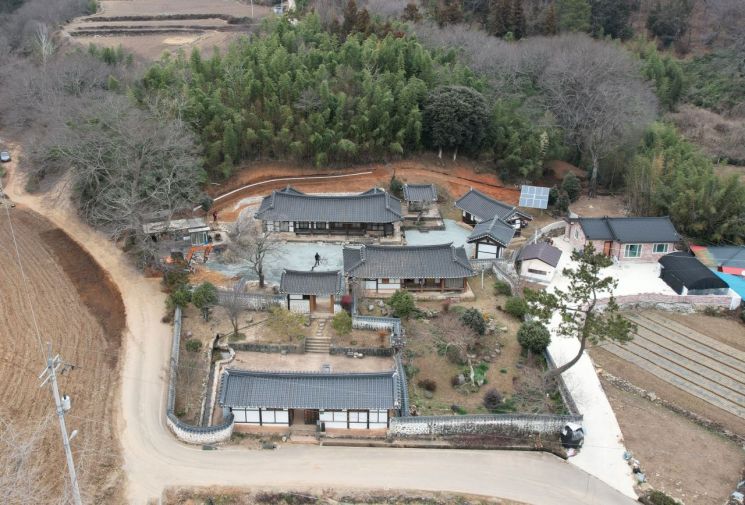 A view of the Yeonggwang Jeong Clan's ancestral home in Bonggang-ri, Boseong. Provided by Boseong County
The Yeonggwang Jeong clan's ancestral home is a residential heritage site that has been maintained and passed down through more than 400 years since Jeong Sonil (1609~) of the Yeonggwang Jeong clan settled in Bonggang-ri.
The site has been highly valued for its historical and social significance, serving as a living record of modern and contemporary history, including the anti-Japanese movement during the Japanese colonial period, national movements in the modern era, and various social events after liberation.
The grounds of the ancestral home are located at the spot known as the "head of the turtle" in the "Yeongguhahae" formation, which is regarded as an auspicious site in traditional Korean geomancy. Related to this, there are records of remarks by Doseon Guksa, a historical figure known for spreading geomantic beliefs.
It is interpreted that the fact that the descendant Jeong Dosam took the pen name "Gujeong" (meaning "Turtle Pavilion") and called the ancestral home "Geobukjeong" reflects how geomantic beliefs influenced the family’s identity and perception of the landscape.
The architectural layout features the main house and the men's quarters arranged in a parallel "II"-shaped formation with a courtyard in between, illustrating the typical style of traditional homes in the Honam region.
In particular, the recessed "U"-shaped main house is characteristic of Boseong's traditional residences, and its arrangement-with private and storage spaces at the rear-reflects the lifestyle and social context of its time.
Across the valley to the west of the ancestral home stands "Samuidang," which served as a center for classical Chinese education, hospitality for guests, and ancestral rites during the Japanese colonial period.
Additionally, in front of the home is the "Gwangju Lee Clan’s Gate of Filial Piety and Loyalty," which was erected in 1880 by royal order following a petition from the Honam Confucian scholars. This gate continues to convey the clan’s spirit of filial piety and folk traditions to this day.
The garden management methods centered around Samuidang, the axis leading toward Deukryangman Bay, and the garden created in the inner courtyard of the men's quarters all demonstrate traditional landscaping techniques that adapted to changes in the modern era. These elements have been recognized as important factors supporting the value of the ancestral home as a cultural landscape where architecture and the surrounding natural environment are harmoniously integrated.
A county official stated, "The Yeonggwang Jeong clan's ancestral home is a precious cultural heritage that embodies architecture, geomancy, folk traditions, and modern history. With its designation as a National Folk Cultural Heritage, we will actively seek ways to preserve, manage, and utilize it as a regional historical and cultural resource."
© The Asia Business Daily(www.asiae.co.kr). All rights reserved.

















