"Comprehensive Review Beyond Commercial Purpose:
Focus on Market Impact and Other Factors"
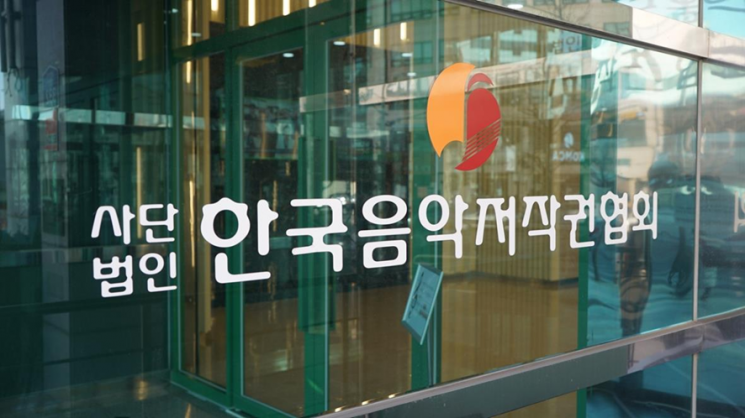
The Korea Music Copyright Association (KMCA) stated on December 22 that the "Guide to Fair Use under Copyright Law for Training Generative Artificial Intelligence (Draft)," prepared by the Ministry of Culture, Sports and Tourism and the Korea Copyright Commission, serves as an interpretation guideline for fair use, based on balancing the advancement of artificial intelligence (AI) technology and the protection of creators' rights, in response to some industry criticisms.
Previously, on December 4, the Ministry announced through the guide the criteria under which AI developers could be recognized for "fair use" when training data without the copyright holder's permission. According to the guide, commercial AI development, the use of entire works, and web crawling are generally not recognized as fair use.
In response, on December 17, the Innovation Venture Organizations Council, including the Korea Venture Business Association and the Korea Venture Capital Association, issued a statement requesting a review, arguing that the guide could dampen domestic AI development and hinder the growth of ventures and startups.
Regarding this, KMCA countered, stating, "The fair use criteria in the guide were not established for such purposes." The association further explained, "The guide is a reference document that organizes current fair use standards under copyright law based on case studies. It does not introduce new regulations or impose additional obligations on businesses." KMCA also noted that it had submitted suggestions to improve some expressions in the guide.
Some in the industry claim that the guide treats "commercial AI development" unfavorably. However, the guide specifies that fair use is not determined solely by whether the use is commercial or non-commercial. Instead, it requires a comprehensive consideration of factors such as the transformation and manner of use, the impact on the existing market for the work, and the nature of the copyrighted material.
KMCA explained that the guide includes provisions stating that even if the purpose is commercial, fair use can be recognized if the work is utilized in a sufficiently new way and does not harm the existing market for the work. This aligns with existing precedents and international trends in fair use interpretation, and does not present a mechanical standard such as "commercial purposes cannot be fair use."
KMCA made it clear that when copyrighted works are used for commercial AI development, creators must receive fair compensation corresponding to such use. The association emphasized that expanding the scope of fair use without discussing compensation, while utilizing works for profit, is inconsistent with the intent of the fair use system. Fair compensation for works is a fundamental right protected by law and the constitution.
KMCA also addressed industry claims that the use or temporary storage of entire works during AI training is technically unavoidable. The association stated, "Technical necessity and legal permissibility must be assessed separately," explaining that the guide is a document that organizes legal standards for fair use based on this premise.
Regarding criticism that the guide does not sufficiently reflect global trends in fair use, KMCA stated, "Copyright systems and legal frameworks differ by country, making direct comparison difficult."
KMCA pointed out that even in the United States, there is no precedent that comprehensively recognizes all AI training as fair use, and related lawsuits are being judged on a case-by-case basis. On the contrary, there is a growing trend overseas to resolve issues through consultation or licensing agreements with copyright holders. Europe and Japan also do not have fair use systems identical to Korea's, so the institutional premises are different.
Addressing concerns from some in the industry that the guide could increase legal uncertainty, leading to industrial stagnation and reduced investment, KMCA argued, "By clarifying the interpretation criteria of existing copyright law, the guide can actually increase the predictability of legal judgments and provide a more stable decision-making environment for businesses and investors."
KMCA also added, "Policies and interpretation standards related to domestic training data apply equally to both domestic companies and foreign companies conducting business in Korea. Therefore, concerns that this would undermine the global competitiveness of Korean companies are not persuasive."
© The Asia Business Daily(www.asiae.co.kr). All rights reserved.
![Clutching a Stolen Dior Bag, Saying "I Hate Being Poor but Real"... The Grotesque Con of a "Human Knockoff" [Slate]](https://cwcontent.asiae.co.kr/asiaresize/183/2026021902243444107_1771435474.jpg)















