JW Pharmaceutical announced on the 22nd that patients with hemophilia A who switched to preventive therapy with 'Hemlibra' (ingredient: emicizumab) showed improved joint health indicators and increased physical activity levels.
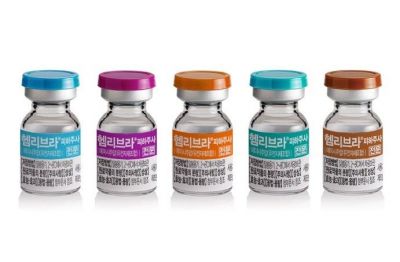
Hemlibra is an innovative new drug that mimics coagulation factor VIII, which is deficient in patients with hemophilia. Among treatments for hemophilia A, it is the only one that can be used by both patients who have developed antibodies (inhibitors) against existing therapies (factor VIII products) and those who have not. It is also characterized by its sustained preventive effect with a subcutaneous injection administered as infrequently as once every four weeks. In May 2023, health insurance coverage was expanded to include patients with severe, non-inhibitor hemophilia A aged one year and older. In October 2025, it was listed on the World Health Organization (WHO) Essential Medicines List (EML) and the Essential Medicines List for Children (EMLc).
The research team led by Professor Rebecca Kruse-Jarres of the Division of Hematology and Oncology at the University of Washington in the United States is conducting the 'BEYOND ABR Study' to evaluate changes in joint health and physical activity when patients with hemophilia A switch to Hemlibra.
The team presented interim analysis results in the form of a poster at the 67th American Society of Hematology (ASH 2025) Annual Meeting, which was held in Orlando, United States, for four days starting December 6 (local time). Unlike previous studies that primarily focused on reduction in bleeding episodes, the BEYOND ABR Study is notable for also observing joint function and physical activity.
This study included 136 patients with moderate to severe hemophilia A who did not have antibodies against factor VIII products.
A total of 88 patients were included in the analysis of the 'Hemophilia Joint Health Score (HJHS),' a joint health indicator. HJHS is an index in which healthcare professionals directly assess the function and movement of major joints such as the knees, ankles, and elbows. The total score is 120 points, with lower scores indicating better joint condition. The analysis showed that the average HJHS of patients improved by 2.8 points, from 10.1 points (indicating generally mild joint damage) before the switch to Hemlibra to 12 months after the switch. Among all patients, 23 (26.1%) showed an improvement of 4 points or more.
In addition, all 27 'target joints' (joints with recurrent bleeding) identified in 15 patients before the start of the study were no longer observed at the 12-month mark after switching to Hemlibra, and the absence of recurrent bleeding was maintained.
The study also showed improvements in physical activity levels. The research team used the International Physical Activity Questionnaire (IPAQ) to comprehensively assess patients’ walking and various intensities of physical activity. As a result, the proportion of patients classified as having 'low physical activity' according to the IPAQ decreased from 30.8% (32 out of 104 patients) before the switch to 23.4% (22 out of 94 patients) at the 12-month mark. Conversely, the proportion of patients in the 'high physical activity' category increased from 44.2% (46 out of 104 patients) before the switch to 52.4% (54 out of 103 patients) at the 3-month mark, and remained at 50.0% (47 out of 94 patients) at the 12-month mark.
The proportion of patients experiencing no bleeding also remained stable. Between weeks 25 and 48 after Hemlibra administration, 105 out of 134 patients (78.4%) reported no bleeding episodes requiring treatment. Additionally, at the 6-month mark after switching, 125 out of 130 patients (96.2%) responded that they preferred Hemlibra over their previous factor VIII prophylactic therapy.
JW Pharmaceutical plans to continue accumulating long-term observational data through follow-up and to expand the evidence base for establishing treatment strategies in actual clinical practice.
A JW Pharmaceutical representative stated, "This study presents interim analysis results confirming not only the preventive effect against bleeding but also changes in joint health and physical activity indicators in patients who switched from factor VIII prophylactic therapy to Hemlibra," adding, "It is meaningful as clinical evidence that can address concerns about joint condition and exercise performance, which are often considered when deciding to switch therapies."
© The Asia Business Daily(www.asiae.co.kr). All rights reserved.
![Clutching a Stolen Dior Bag, Saying "I Hate Being Poor but Real"... The Grotesque Con of a "Human Knockoff" [Slate]](https://cwcontent.asiae.co.kr/asiaresize/183/2026021902243444107_1771435474.jpg)
















