Due to the effects of high inflation and weakened consumer sentiment, it is forecasted that the domestic retail distribution market growth rate next year will remain at its lowest level in the past five years.
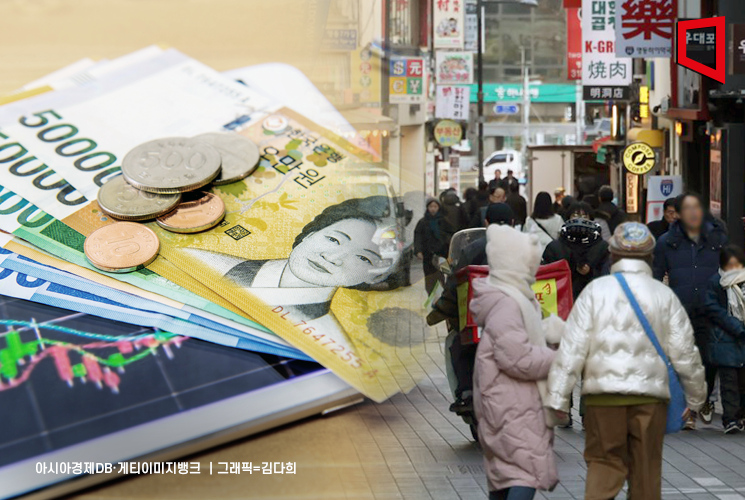
On December 21, the Korean Chamber of Commerce and Industry announced the results of its "2026 Distribution Industry Outlook Survey," conducted with 300 retail distribution companies nationwide. According to the survey, the domestic retail distribution market growth rate in 2026 is projected to stay at 0.6%. This projection is based on the Statistics Korea retail sales growth rate.
The main reason cited for the slowdown in growth was weakened consumer sentiment, chosen by 67.9% of respondents. This was followed by high inflation at 46.5%, intensified market competition at 34.0%, and household debt burden at 25.8%.
By business type, online shopping is expected to lead the overall market with a 3.2% year-on-year growth. This is attributed to the spread of consumer preferences prioritizing cost-effectiveness and practicality, as well as the enhancement of delivery services.
In contrast, offline channels are generally expected to underperform. Hypermarkets and supermarkets are each projected to see negative growth of -0.9%. This is due to a combination of intensified competition with online channels, increased small-quantity purchases as a result of the rise in single- and two-person households, and declining profitability driven by discount competition.
Department stores are projected to grow by 0.7%. Despite weakened consumer sentiment, it is analyzed that luxury consumption driven by rising asset values and demand for experiential content will be maintained to some extent. Convenience stores, despite demand for nearby consumption, are expected to grow only 0.1% due to rising labor and rental costs and intensified competition among stores.
Industry insiders cited "distribution of consumption coupons for livelihood recovery" as the top news in the distribution industry for 2025, with 44.7% of respondents selecting it. Continued sluggish domestic demand ranked second at 43.0%, followed by a slowdown in e-commerce growth at 38.3%. Consumption coupons were evaluated as having had a sales-boosting effect, particularly for neighborhood channels such as traditional markets and small- to medium-sized supermarkets.
Park Kyungdo, professor at Sogang University, stated, "In a stagnant domestic market and intensifying competitive environment, it is also important for the distribution industry to pioneer overseas markets through collaboration between large companies and small and medium-sized enterprises." He especially suggested, "Products linked to content, such as K-beauty and K-food, should serve as new growth engines in the Global South market."
Lee Heewon, Director of the Distribution and Logistics Promotion Institute at the Korean Chamber of Commerce and Industry, said, "It is necessary to restore weakened consumer sentiment and expand growth potential through policies to stimulate consumption, regulatory improvements in line with global standards, fostering high-tech industries centered on regional hubs, and building industrial infrastructure such as artificial intelligence (AI)."
© The Asia Business Daily(www.asiae.co.kr). All rights reserved.

















