Ministry of Health and Welfare to Provide Up to 1.5 Billion Won in Facility Funding for Regional Centers
Establishing 24-Hour Specialized Care Systems and Addressing Regional Healthcare Disparities
The government is moving to expand the number of cardiovascular and cerebrovascular disease centers in order to address regional disparities and strengthen emergency response for patients.
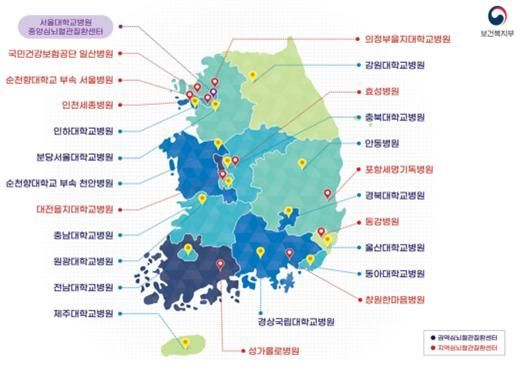
The Ministry of Health and Welfare announced on December 22 that it will accept new applications for regional and local cardiovascular and cerebrovascular disease centers until January 12 of next year, in accordance with the Act on the Prevention and Management of Cardiovascular and Cerebrovascular Diseases. This initiative aims to strengthen a "regionally integrated response system" so that patients with severe or emergency cardiovascular and cerebrovascular conditions can receive prompt treatment within their local area.
Currently, there is one central cardiovascular and cerebrovascular disease center (Seoul National University Hospital), 14 regional centers (in areas such as Gangwon, Daegu, Jeju, Gyeongnam, and Gwangju), and 10 local centers (in Seoul, Uijeongbu and Goyang in Gyeonggi Province, Incheon, Gyeongbuk, and others). Through this application process, the Ministry plans to designate one additional regional center and four additional local centers.
As major regional hubs, the regional cardiovascular and cerebrovascular disease centers are responsible for establishing a 24-hour specialized care system for severe and emergency cases, as well as for promoting and educating about prevention and management. Notably, Jeonnam has the highest incidence rate of cardiovascular and cerebrovascular diseases in the country, yet it does not have a regional center, resulting in the lowest local utilization rate for patients. According to statistics from the Korea Disease Control and Prevention Agency, the incidence rate of myocardial infarction in Jeonnam is 53.4 cases per 100,000 people, far exceeding Seoul's 34.9 cases. However, the local utilization rate for emergency myocardial infarction patients in Jeonnam is only 41.6%, which is less than half of Seoul's 89.6%.
In response, the government plans to designate a regional center at a medical institution in Jeonnam. The designated institution will receive up to 1.5 billion won (with 50% funded by the central government) for facilities and equipment, and 700 million won annually (50% central government funding) for operating expenses.
Four additional local cardiovascular and cerebrovascular disease centers will also be designated to provide an appropriate level of acute-phase specialized care within their communities. The target areas are eight cities and provinces, including Gwangju, Busan, and Daegu, where local centers have not yet been established.
Local cardiovascular and cerebrovascular disease centers are required to provide 24-hour acute emergency and specialized care for such diseases at an appropriate level within their region. Each designated institution will be supported with an annual operating budget of 125 million won (50% central government funding).
Eligible applicants are general hospitals that meet the designation criteria set forth in relevant laws and regulations. Selected institutions will retain their status for three years from the time of designation, after which re-designation will be determined through evaluation.
Lee Jungkyu, Director of Public Health Policy at the Ministry of Health and Welfare, stated, "By designating additional regional and local cardiovascular and cerebrovascular disease centers, we will not only achieve comprehensive acute-phase treatment within local communities but also further enhance access to medical care."
© The Asia Business Daily(www.asiae.co.kr). All rights reserved.
![Clutching a Stolen Dior Bag, Saying "I Hate Being Poor but Real"... The Grotesque Con of a "Human Knockoff" [Slate]](https://cwcontent.asiae.co.kr/asiaresize/183/2026021902243444107_1771435474.jpg)















