On December 21, Financial Services Commission Chairman Lee Eogwon stated that in order to stabilize the exchange rate, it is essential to first enhance the credibility and attractiveness of the domestic capital market, which would enable a virtuous cycle. He also reaffirmed a strong stance to continue identifying so-called “ruinous stock price manipulation cases” through the joint response team.
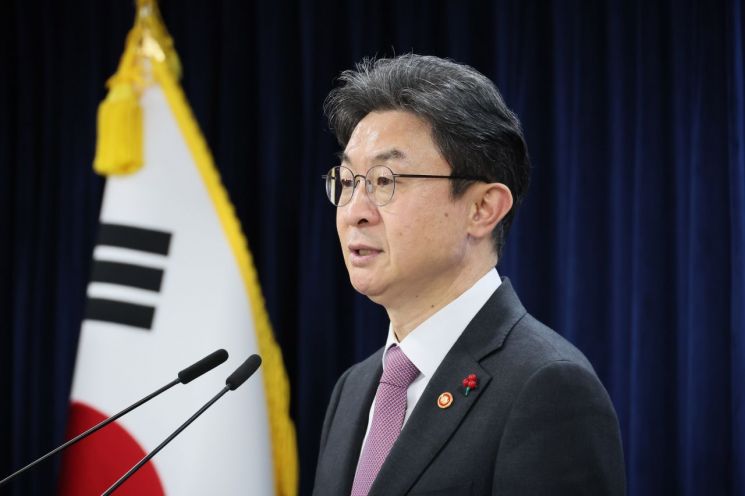
Appearing on KBS Sunday Diagnosis Live that morning, Chairman Lee addressed President Lee Jaemyung’s remarks during the Financial Services Commission’s work report on December 19, in which the president pointed out that distrust in the domestic stock market is impacting the foreign exchange market. Lee explained, “If the capital market becomes more attractive and foreign investors return, the exchange rate market can also achieve stability.” Previously, the government had come under scrutiny after identifying the increase in overseas investments by retail investors as one of the recent causes of the high exchange rate.
He also expressed a firm commitment to eradicating unfair practices in the capital market. Referring to the joint response team established with the Financial Services Commission, the Financial Supervisory Service, and the Korea Exchange, Lee mentioned that the team uncovered its first and second cases within two months of launch. He evaluated, “The fact that we took action as quickly as possible and stripped all financial gains sent a strong signal to the capital market.” He added, “We are currently monitoring cases three, four, and five,” indicating that further actions will be taken to demonstrate the consequences of stock price manipulation.
In addition, Chairman Lee emphasized that the stability of the capital market requires not only the growth of KOSPI but also the development of the early-stage venture market and KOSDAQ. He highlighted the importance of the “KOSDAQ Market Revitalization Policy” that was released last week.
He stated, “Since the KOSDAQ market is a cradle for nurturing innovative companies, we will provide ample opportunities for companies to go public while swiftly delisting insolvent firms.” He noted that while around 15 companies were delisted each year over the past three years, this year, 38 companies were delisted. He further commented, “The KOSDAQ market is a very high-risk and highly volatile market that can be susceptible to stock price manipulation, but we will make it a stable investment market through investments by pension funds.”
Regarding the National Growth Fund, which will invest 150 trillion won in advanced strategic industries over five years, Lee described it as “a national response tool to prepare for the global investment war.” Addressing concerns that the fund might lose momentum after the current administration, as was the case with the Green Growth Fund under the Lee Myungbak administration, the Unification Fund under the Park Geunhye administration, and the Korean New Deal Fund under the Moon Jaein administration, he stressed, “The National Growth Fund has a clear legal basis,” highlighting its distinction from previous policy funds.
He explained, “The 75 trillion won for advanced strategic industries is managed based on the Korea Development Bank Act, ensuring transparency in the management process and decision-making. While previous funds focused on indirect investment and loans, the current program includes direct equity investment, infrastructure investment and loans, ultra-low interest loans, and indirect investment, making it a large-scale comprehensive program.”
© The Asia Business Daily(www.asiae.co.kr). All rights reserved.
![Clutching a Stolen Dior Bag, Saying "I Hate Being Poor but Real"... The Grotesque Con of a "Human Knockoff" [Slate]](https://cwcontent.asiae.co.kr/asiaresize/183/2026021902243444107_1771435474.jpg)
















