Order to Address Abuse and Misuse of Prosecutorial Power
Lowering the Age for Juvenile Offenders... Considering Differentiated Traffic Fines
Investigating Collusion in Sanitary Pad Pricing... Proposing Tariff-Free Competition
Why Can't We Access
President Lee Jaemyung directly addressed deeply entrenched institutional and market inertia by raising issues such as the “1,000 won Choco Pie incident,” “sanitary pad prices,” “access to North Korean Rodong Sinmun,” “juvenile offenders,” and “traffic fines” during work briefings from the Ministry of Justice, Ministry of Unification, Fair Trade Commission, and Ministry of Gender Equality and Family. His message appears to signal a comprehensive review and improvement not only of grand narratives but also of standards for exercising public authority and the fairness of regulations and penalties that directly impact people’s daily lives. As a follow-up to these work briefings, attention is now focused on whether the Supreme Prosecutors’ Office will promptly revise standards for handling minor cases and appeals, the Fair Trade Commission will investigate the actual state of sanitary pad prices, the Ministry of Unification will improve access to North Korean materials, and the Ministry of Justice will review the juvenile offender and traffic fine systems.
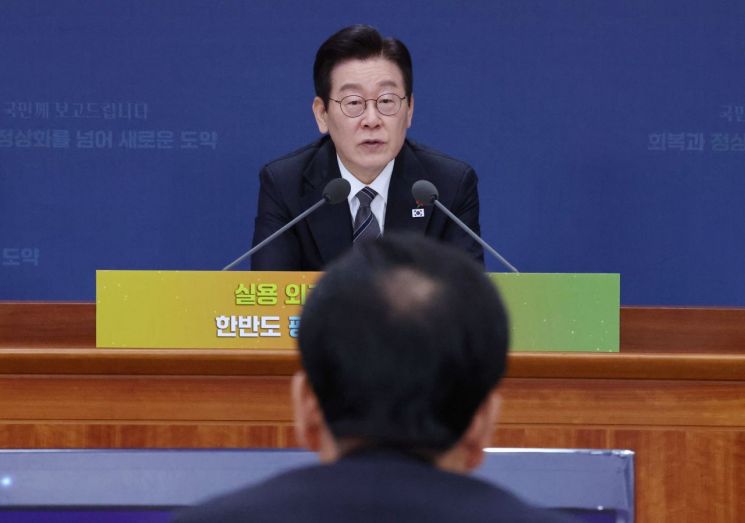
During the work briefing, President Lee asked the Supreme Prosecutors’ Office, “Why was there a prosecution in the 1,000 won Choco Pie case?” The “Choco Pie incident” refers to a case in Wanju County, North Jeolla Province, where an employee of a security subcontractor at a manufacturing company ate a Choco Pie (priced at 450 won) and a custard cake (600 won), both snacks for delivery drivers, from a logistics company’s refrigerator in January last year. He was prosecuted for theft and received a summary order of a 50,000 won fine in August of the same year.
However, because a confirmed theft conviction would disqualify the employee from working in the security industry under the Security Business Act, making future employment difficult, he requested a formal trial. The first-instance court recognized the theft charge and imposed a 50,000 won fine in April this year, which the employee immediately appealed. On November 27, the appellate court, based on testimony from delivery drivers and colleagues, found no intent and acquitted him. The Jeonju District Prosecutors’ Office did not appeal the verdict.
President Lee called for institutional improvements, suggesting, “If a crime is so minor that prosecution is not warranted, shouldn’t there be an alternative way to handle such cases?” His concerns extended beyond “prosecution” to the practice of “appeals.” President Lee noted, “For prosecutors, filing an appeal may be routine, but for the defendant, it is extremely distressing. In essence, it is a form of violence.” He urged a review of internal standards and accountability structures, as mechanical and habitual prosecution and appeals practices place excessive burdens on individuals.
Koo Jahyun, Deputy Prosecutor General at the Supreme Prosecutors’ Office, responded, “The Choco Pie case has prompted us to reflect on how to handle minor crimes. We are now considering how to exercise prosecutorial discretion in line with public expectations and are preparing guidelines for minor offenses.” Minister of Justice Jeong Seongho added, “The public may perceive this as abuse or misuse of prosecutorial power. We will review the matter.”
Lowering the Age for Juvenile Offenders and Differentiating Traffic Fines... Targeting Effectiveness and Fairness
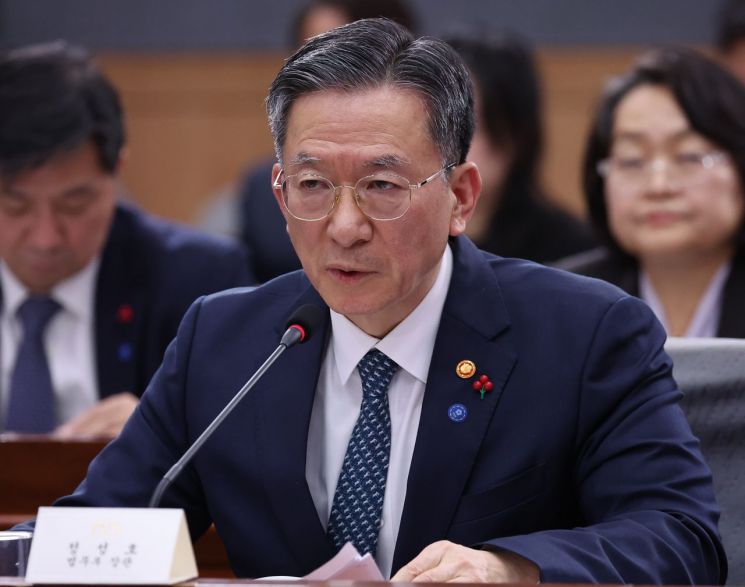
The issue of fairness in penalties was also raised. President Lee pointed out that “traffic fines may be effective deterrents for ordinary citizens, but for those with substantial financial means, receiving ten fines of 50,000 or 100,000 won each has little impact, so they repeatedly violate the law.” He highlighted the disparity in the effectiveness of penalties based on wealth and instructed a review of differentiated fines to ensure fairness. President Lee had previously pledged to introduce a tiered fine system during the Democratic Party’s 2017 presidential primary and the 2022 presidential election.
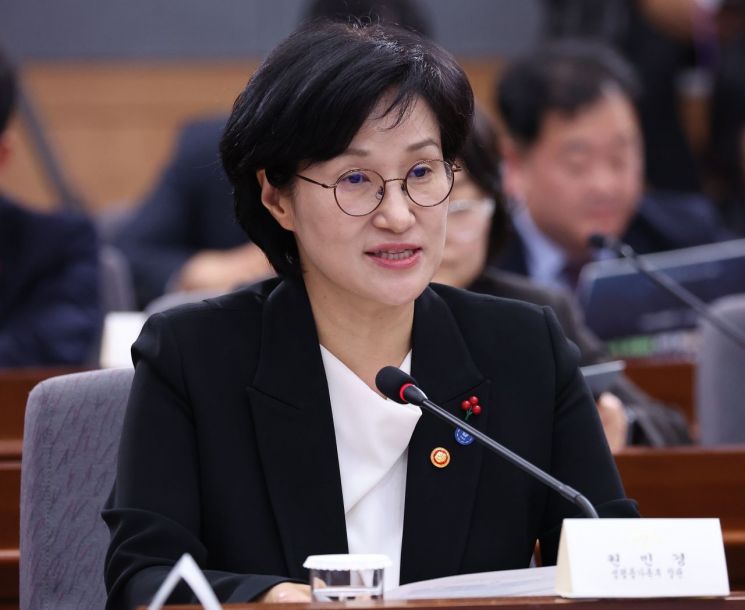
Regarding the age standard for juvenile offenders, President Lee remarked, “These days, there are even videos of young people saying, ‘I’m a juvenile offender, so I can do whatever I want,’ and causing trouble.” He proposed that the issue of lowering the age be placed on the Cabinet meeting agenda for review. Minister Jeong Seongho responded, “A bill to lower the age for juvenile offenders from under 14 to under 12 has been introduced in the National Assembly, but there are divided opinions.” On the other hand, Minister Won Minkyoung expressed, “We need to consider this from the perspective of youth protection and development, so careful deliberation is required.” The Ministry of Justice sees the need to lower the age for certain crimes, while the Ministry of Gender Equality and Family advocates caution from a protection and growth perspective, indicating that further social debate and consensus will be necessary.
"Sanitary Pads Are 39% More Expensive"... Investigating Collusion and Considering Measures to Promote Competition
During the Fair Trade Commission’s work briefing on the same day, the issue of sanitary pad prices was also specifically addressed. President Lee asked whether an investigation had been conducted, noting, “It is said that sanitary pads in our country are extremely expensive on average,” and added, “Perhaps due to monopoly or oligopoly, they are reportedly 39% more expensive than in other countries.” His question was based on a May 2023 survey by the Women’s Environmental Network, which compared the prices of 462 types of sanitary pads in Korea and 66 types in 11 countries (Japan, Singapore, the United Kingdom, France, Germany, Italy, Spain, the Netherlands, Canada, Australia, and the United States), finding that domestic sanitary pads were on average 39.05% more expensive than those abroad. In response, Fair Trade Commission Chairman Joo Byungki said, “We have conducted some investigations. We will look into it further.”
Concerns about sanitary pad prices continued during the Ministry of Gender Equality and Family’s work briefing. President Lee commented, “It seems that domestic companies are going too far,” and questioned whether companies were “taking excessive profits by abusing their monopoly positions.” When Minister Won Minkyoung explained that taxes may affect prices, President Lee asked, “Don’t other countries have such taxes?” and expressed skepticism, saying, “I doubt that is actually the case.”
He also suggested considering measures to lower prices, such as allowing tariff-free imports to encourage competition. President Lee stated, “If the selling price is excessively high compared to production costs, perhaps we should allow overseas imports without tariffs to foster real competition. If so many people are buying directly from abroad, it suggests that prices are being set unfairly.”
Why Can't We Read the North Korean Rodong Sinmun? "It Belittles the Public"... Moving Away from a Control-Centric Structure
During the Ministry of Foreign Affairs and Ministry of Unification work briefings, the issue of access to North Korean media was discussed. President Lee criticized the structure that “only prevents the public from viewing” North Korean sites such as the Rodong Sinmun, questioning whether this restriction is based on the assumption that people might be swayed by propaganda and become communists. He argued that this “greatly underestimates the public’s level of awareness.” By raising the issue of moving away from a control-centric approach to North Korea-related information, President Lee suggested that allowing access would “actually provide an opportunity for people to accurately understand the realities of North Korea and realize ‘that’s not the way to go.’”
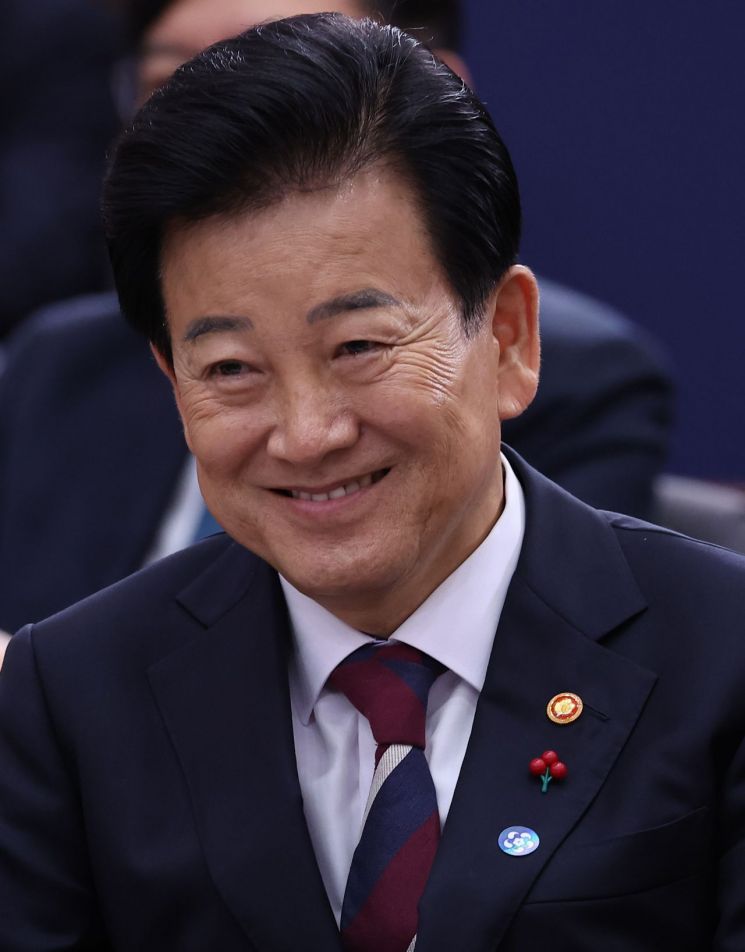
When Minister Jeong Dongyoung responded, “The Ministry of Unification supports allowing access, but the National Intelligence Service restricts it under special material guidelines based on the National Intelligence Service Act,” President Lee reiterated, “This is a real problem. It would be best to follow the principle.”
© The Asia Business Daily(www.asiae.co.kr). All rights reserved.
![Clutching a Stolen Dior Bag, Saying "I Hate Being Poor but Real"... The Grotesque Con of a "Human Knockoff" [Slate]](https://cwcontent.asiae.co.kr/asiaresize/183/2026021902243444107_1771435474.jpg)


















