Gyeonggi Province and 14 Lawmakers Including Park Jung Co-host Forum
All-out Efforts to Reflect in the 5th National Railway Network Construction Plan
Proposing 40 Projects Including GTX G and H Lines and Gyeonggi Southern Metropolitan Railway
Aiming to Ease Commuting Burdens
Gyeonggi Province is accelerating the establishment of a transportation system centered on the railway network to address the traffic congestion in the Seoul metropolitan area.
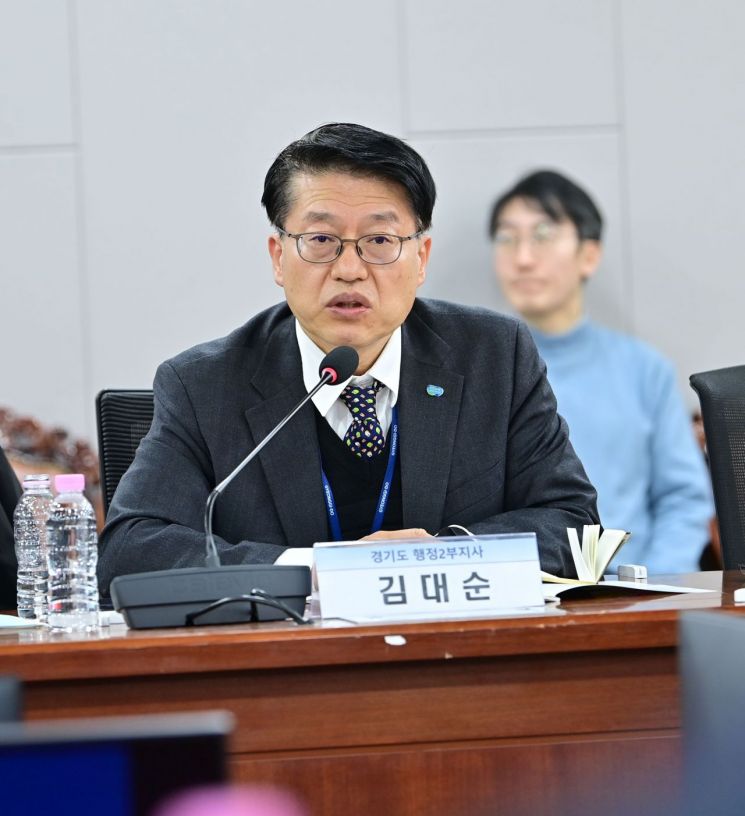 Kim Daesoon, Deputy Governor for Administration of Gyeonggi Province, is giving a greeting at the policy forum "Improvement of Gyeonggi Metropolitan Transportation Network - Focusing on the Railway Network" held on the 19th at the National Assembly Members' Office Building, Seminar Room 2. Provided by Gyeonggi Province
On December 19, Gyeonggi Province held a policy forum titled "Improvement of Gyeonggi Metropolitan Transportation Network - Focus on Railway Network" at Seminar Room 2 of the National Assembly Members' Office Building, jointly organized with 14 members of the National Assembly, including Assemblyman Park Jung. The forum was organized to share the direction of Gyeonggi Province's metropolitan transportation policy and to strengthen legislative and administrative collaboration so that the province's key projects can be reflected in the "5th National Railway Network Construction Plan," which will be finalized next year.
Assemblyman Park Jung stated, "Railways will drive regional development by expanding the labor market, which is currently centered on Seoul, to the entire metropolitan area. The 5th National Railway Network Construction Plan is not just a roadmap but the starting line for regional development, and expanding the national budget for railways is essential for its smooth implementation."
Kim Daesoon, Deputy Governor for Administration of Gyeonggi Province, said, "Railways are more than just a means of transportation; they are key infrastructure that can reshape the spatial structure of the metropolitan area and resolve regional imbalances. Establishing a metropolitan transportation system centered on the railway network is an essential task to reduce the commuting burden of Gyeonggi residents and improve their quality of life."
Jang Jaemin, Professor at Dankook University, presented on "Gyeonggi Metropolitan Transportation Improvement Measures for Shortening Commute Times and Balanced Regional Development," noting, "On average, about 5.6 million people commute daily using metropolitan transportation. Although new towns are spreading and the influx into Seoul is increasing, the supply of railways is not keeping pace. The concentration of metropolitan buses in city centers leads to congestion and longer travel times, so it is urgent to establish a more stable and efficient railway-centered transportation network."
He also proposed expanding high-speed railways in northern Gyeonggi (KTX extension to Paju, SRT extension to Uijeongbu), accelerating the GTX A to C lines, expanding the D to F and GTX Plus (G and H) lines, and promoting the East-West Gyeonggi Southern Line (Semiconductor Line). He emphasized the importance of proactively constructing railways in line with the pace of new town development, improving accessibility through the expansion of urban railways, and making strategic choices and focusing efforts to ensure inclusion in the 5th National Railway Network Construction Plan.
Ko Taeho, Director of the Railway Policy Division of Gyeonggi Province, who participated as a panelist, explained the current status of Gyeonggi Province's railway policy, stating, "Gyeonggi Province is continuously working to expand a railway network that encompasses high-speed, conventional, and metropolitan railways to meet the increasing demand for commuting and travel. It is necessary to structurally alleviate metropolitan traffic congestion and social costs by transitioning to a railway-centered transportation system."
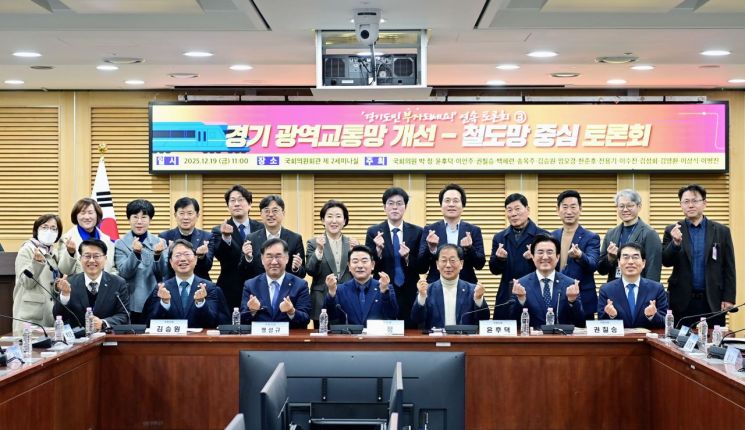 Gyeonggi Province is holding a policy forum titled "Improvement of Gyeonggi Metropolitan Transportation Network - Focusing on the Railway Network" on the 19th at the National Assembly Members' Office Building, Seminar Room 2. Provided by Gyeonggi Province
The province has proposed a total of 40 projects, including 3 high-speed railways, 8 conventional railways, and 29 metropolitan railways-such as the GTX G and H lines and the Gyeonggi Southern Metropolitan Railway-for inclusion in the 5th National Railway Network Construction Plan. In addition, 48 metropolitan railway projects have been proposed for the 5th Metropolitan Area Wide-Area Transportation Implementation Plan.
Gyeonggi Province plans to actively respond and ensure that the establishment of a metropolitan transportation system centered on the railway network is reflected in government policy and national master plans through close cooperation with the National Assembly and related organizations.
© The Asia Business Daily(www.asiae.co.kr). All rights reserved.
![Clutching a Stolen Dior Bag, Saying "I Hate Being Poor but Real"... The Grotesque Con of a "Human Knockoff" [Slate]](https://cwcontent.asiae.co.kr/asiaresize/183/2026021902243444107_1771435474.jpg)
















