Monetary Policy Meeting Held
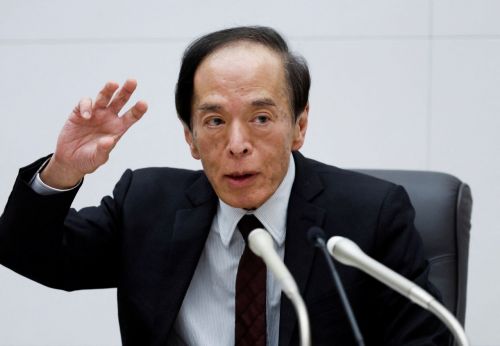
The Bank of Japan (BOJ), Japan's central bank, raised its benchmark interest rate on December 19 during its monetary policy meeting, marking the first increase in 11 months as widely anticipated by financial markets.
According to Kyodo News and other sources, the BOJ decided during the two-day monetary policy meeting that concluded on this day to raise the short-term policy rate, which serves as the benchmark interest rate, by 0.25 percentage points from the current "around 0.5%" to "around 0.75%".
As a result, Japan's benchmark interest rate has reached its highest level in 30 years since September 1995. At that time, the de facto benchmark rate was lowered from 1.0% before August to 0.5% in September.
Under the leadership of Governor Kazuo Ueda, the BOJ ended its negative interest rate policy in March last year for the first time in 17 years, then raised the benchmark rate from 0-0.1% to around 0.25% in July last year, and to around 0.5% in January this year.
Since January, Governor Ueda had indicated that the BOJ would further raise the benchmark rate, given that the real interest rate remained low. However, considering factors such as the tariff policies of the Donald Trump administration in the United States, the BOJ kept the rate unchanged for six consecutive meetings starting from March.
© The Asia Business Daily(www.asiae.co.kr). All rights reserved.
![Clutching a Stolen Dior Bag, Saying "I Hate Being Poor but Real"... The Grotesque Con of a "Human Knockoff" [Slate]](https://cwcontent.asiae.co.kr/asiaresize/183/2026021902243444107_1771435474.jpg)















