National Assembly Free Economy Forum Holds Real Estate Policy Evaluation Seminar
Experts Call for "Redesigning Overall Real Estate Policy"
People Power Party Emphasizes "Private Sector-Led, Deregulation"; Cho Kuk Stresses "Public Land Ownership Concept"
The ruling and opposition parties have begun preparing measures regarding real estate policy, which is considered a key variable that will determine the outcome of next year's local elections. As demands from moderates for housing price stabilization and alleviating the housing burden have grown, both sides are engaging in an early policy competition. The opposition party is targeting the real estate issue, which is regarded as the "weak link" of the Lee Jaemyung administration, and has brought up the expansion of private sector supply, while the ruling party is exploring improvements to the housing supply system and ways to discover new housing sites.
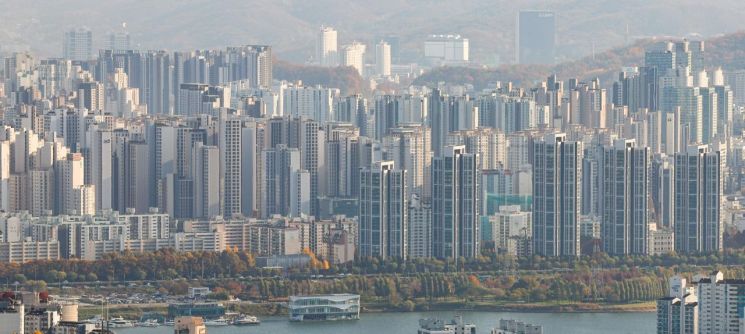
Jang Donghyuk, leader of the People Power Party, stated at the Supreme Council meeting held at the National Assembly main building that morning, "The cumulative annual increase in Seoul apartment prices has reached 8.1%, the highest on record since the Korea Real Estate Board began compiling statistics." He criticized, "Although the record set during the Moon Jaein administration was surpassed within just six months of Lee Jaemyung's presidency, President Lee appears unconcerned, and the Democratic Party's Housing Market Stabilization Task Force has been virtually inactive since its introductory first meeting."
The People Power Party is placing emphasis on expanding private sector supply. Kim Doeup, the party's Policy Committee Chairman, said at the policy seminar titled "Evaluation of the Lee Jaemyung Administration's Real Estate Policy," hosted by the Free Economy Forum at the National Assembly that day, "What the market wants now is neither strengthened regulations nor supply plans that only list numbers," adding, "We must ensure that the private sector can supply housing normally in areas with real demand. Existing real estate measures should be thoroughly reviewed, and regulations on reconstruction and redevelopment must be relaxed."
Professor Jung Sooyeon of Jeju National University's Department of Economics, who attended the seminar, commented, "The government must accurately understand the time structure for policies to translate into actual supply and send consistent policy signals regarding taxation, finance, and regulation," adding, "There is a need to redesign the entire real estate policy." The People Power Party plans to incorporate the points raised at the seminar into its policy platform for next year's local elections.

The Rebuilding Korea Innovation Party, which has recently been pursuing a differentiation strategy from the Democratic Party, has also entered the real estate policy competition. Party leader Cho Kuk wrote on Facebook, a social networking service, the previous day, "The Lee Jaemyung administration must choose bold policies that will change the game," and insisted, "The three laws on the public concept of land, which I have consistently advocated, should be enacted or revised, and policies to supply large-scale, high-quality public rental housing in Seoul's Gangnam 3 districts, Mayongseong (Mapo, Yongsan, Seongdong districts), and Bundang should be implemented."
The Democratic Party is expected to supplement its policies, considering that real estate regulations have intensified market confusion. The Presidential Office, government, and ruling party are scheduled to hold a high-level party-government consultation on the 21st, where additional measures related to the October 15 real estate policy package will reportedly be discussed. The Ministry of Land, Infrastructure and Transport and the Democratic Party are also preparing large-scale additional supply measures, including complex development of idle sites and aging public office buildings.
© The Asia Business Daily(www.asiae.co.kr). All rights reserved.


















