National Strategic Technology Summit Brings Together 1,000 Experts from Industry, Academia, Research, and Government
Responding to the Race for Technological Supremacy with R&D Investment and Regulatory Easing Focused on AI, Semiconductors, and Quantum Technologies
Amid intensifying global competition for technological supremacy, the government has launched an all-out effort to secure "world-first and world-best technologies" centered on national strategic technologies such as AI, semiconductors, and quantum technology. The strategy is to break through the current phase of slowing growth through technological innovation and to take the lead in next-generation industries.
The Ministry of Science and ICT announced on December 18 that it held the "National Strategic Technology Summit" at the COEX Auditorium in Seoul, attended by more than 1,000 experts from industry, academia, research, and government. This event was organized to share the action plan for fostering strategic technologies and implementation measures that have been discussed at the "National Strategic Technology Future Dialogue," the highest-level public-private consultative body launched in April.
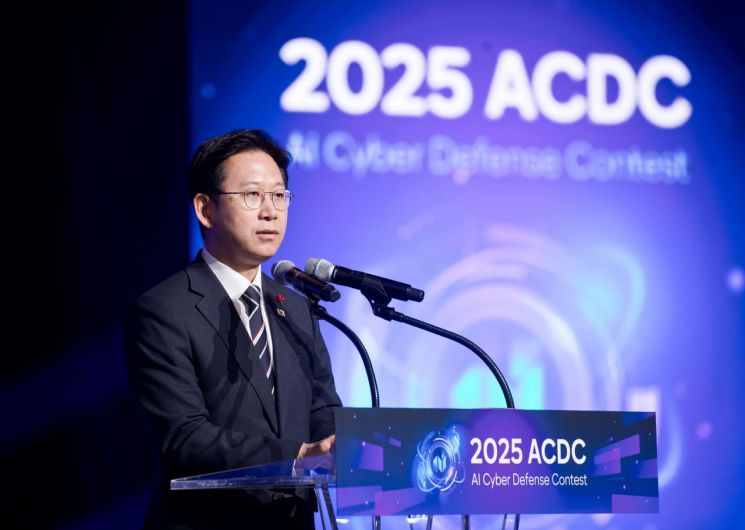 Deputy Prime Minister and Minister of Science and ICT, Hoon Bae, delivered a congratulatory speech at the 2025 Artificial Intelligence (AI) Hacking Defense Competition held on the 1st at COEX in Gangnam-gu, Seoul. Photo by Yonhap News
As the global science, technology, and industrial environment is rapidly changing with AI at its core, strategic technologies are emerging as key assets directly linked not only to industrial competitiveness but also to national security. Based on the "Special Act on the Promotion of National Strategic Technologies" enacted in 2023, the government has selected and supported strategic technologies to focus national-level R&D and innovation capabilities.
Deputy Prime Minister Hoon Bae: "Technological Innovation is the Only Breakthrough"
In his keynote speech, Deputy Prime Minister and Minister of Science and ICT Hoon Bae said, "The global competition for technological supremacy is expanding beyond AI to encompass all areas of science and technology, and the slowdown in growth and decline in potential growth rate are acting as crises. The only solution to reverse this trend is technological innovation."
Deputy Prime Minister Bae identified the following as core missions for securing NEXT strategic technologies: leading the AI transformation, securing leadership in trade and security, and presenting future innovation. To this end, he announced plans to establish a "cross-ministerial innovation pipeline" that will connect each ministry's strategic technology management systems, relevant laws and institutions, and policy tools with a focus on national missions.
The government plans to support companies in their high-risk, high-reward research challenges through the following measures: the largest-ever R&D investment in 2026, the establishment of a national AI computing center, the introduction of an early warning system for strategic technologies, easing the maximum corporate matching ratio to 50%, creating a rapid-response R&D fund, and streamlining government R&D administrative procedures. In addition, the government will gradually strengthen the linkage between tax incentives under the National Strategic Technology Promotion Act and the Restriction of Special Taxation Act.
Deputy Prime Minister Bae emphasized, "With our capabilities in AI, semiconductors, and manufacturing, Korea has sufficient potential to become a leading country in AI transformation. Through collaboration between all ministries and the private sector, we will secure NEXT strategic technologies and achieve technology-driven growth."
Accelerating the Transition to a "Design Nation" and Public-Private Collaboration
During the relay presentations and expert discussions by representatives from industry, academia, and research, various suggestions were made regarding the direction for fostering strategic technologies.
Honglim Yoo, President of Seoul National University, stressed the need to move away from chasing individual technologies and instead transition to a "Design Nation" that independently sets its own future direction, introducing the concept of "question-based innovation."
Suheon Jung, CEO of LG Sciencepark, emphasized the importance of building a public-private collaboration model suitable for the era of large-scale AI, highlighting the need for integrated design, joint investment, joint technology diffusion structures, test and demonstration infrastructure, and talent development.
Sangjin Park, Chairman of Korea Development Bank, stressed the role of finance as a catalyst in the field of strategic technologies, while Sungkeun Kim, President of Pohang University of Science and Technology, pointed out the need to strengthen deep tech capabilities leveraging high-tech, promote venture-type investment, and pursue international cooperation.
The second session focused on discussions about advancing to become one of the top three AI powers, achieving technological independence in the era of supply chain restructuring, and taking the lead in quantum and next-generation strategic technologies. Key mid- to long-term challenges addressed included industrial AI transformation (Industrial AX), AI-based drug development, resolving bottlenecks in semiconductors and energy, securing power grids, and exploring materials using quantum computing and AI.
Experts agreed that securing strategic technologies is possible if the government's institutional and financial support is combined with swift responses from the research and industrial sectors. In particular, they emphasized the need for the early spread of the "K-Strategic Technology" model, which possesses global collaborative competitiveness.
The Ministry of Science and ICT plans to establish a "National Strategic Technology Innovation Roadmap" and jointly implement it with all ministries and the private sector, along with upgrading the national strategic technology system by early next year.
© The Asia Business Daily(www.asiae.co.kr). All rights reserved.
![Clutching a Stolen Dior Bag, Saying "I Hate Being Poor but Real"... The Grotesque Con of a "Human Knockoff" [Slate]](https://cwcontent.asiae.co.kr/asiaresize/183/2026021902243444107_1771435474.jpg)















