Face Value of 5 Yen, But Material Cost Is 5.4 Yen
Driven by a Sharp Rise in Copper Prices, the Main Raw Material
In Japan, the value of the raw materials used to make coins is now matching or even exceeding their face value, a reversal phenomenon driven by the recent sharp increase in the price of these materials.
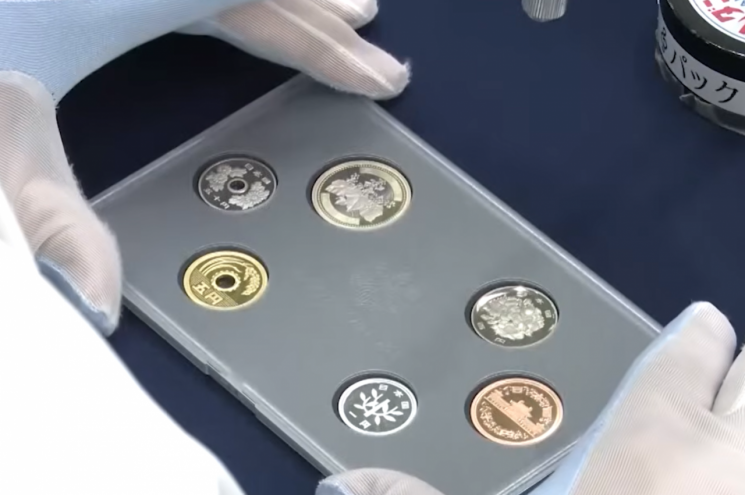
Recently, the Nihon Keizai Shimbun (Nikkei) reported that "as copper, a key raw material, is trading at record-high levels, the market value of the materials in a 5 yen coin now exceeds its face value, while the 10 yen coin's material value has reached about 90% of its face value."
Japanese coins are manufactured by the Japan Mint, which is overseen by the Ministry of Finance. The materials used vary depending on the coin, but non-ferrous metals such as copper, zinc, aluminum, and nickel are commonly used. However, the Ministry of Finance does not disclose the cost of these materials, citing concerns that such information could encourage counterfeiting. Instead, the value of the raw materials is estimated based on market prices.
The composition of the 5 yen coin is about 60-70% copper and 30-40% zinc. The 10 yen coin consists of 95% copper, 3-4% zinc, and 1-2% tin. Based on local prices compiled by Japanese steel companies JX Metals and Mitsui Mining & Smelting, as of December 15, the estimated raw material value of a 5 yen coin was 5.4 yen, and that of a 10 yen coin was 8.7 yen.
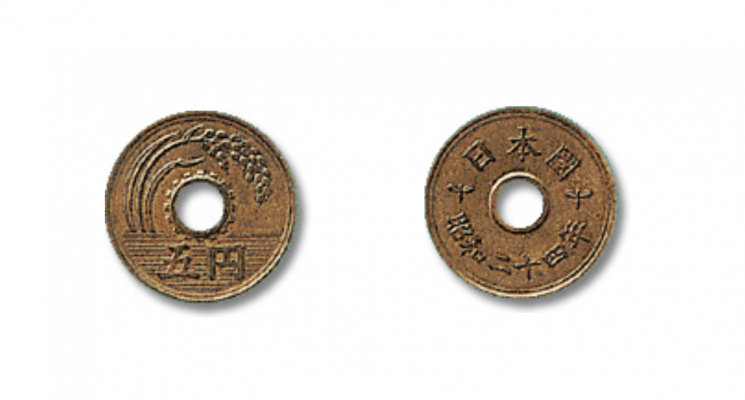
This reversal, where the face value of coins is lower than their material value, is closely related to the recent surge in non-ferrous metal prices. Copper prices have soared due to concerns over supply shortages following accidents at major mines. On December 12, the three-month futures price for copper on the London Metal Exchange (LME), a global benchmark, hit a record high of $11,952 (1,767,000 yen) per ton. This represents an increase of over 30% compared to the end of last year. The weakening of the yen has further pushed up copper prices in Japan, with the domestic price reaching a record 1.9 million yen (1,803,000 yen) per ton on the same day.
The U.S. Halts Production, Japan Sees Declining Use... "Questions About the Role of Coins"
The rise in material prices is not unique to Japan. The United States Mint stopped producing the 1 cent coin in November, citing excessive manufacturing and distribution costs. The cost to make and distribute a 1 cent coin reached 3.69 cents, nearly four times its face value. Earlier, in February, U.S. President Donald Trump also announced an order to end production. The growing prevalence of electronic payments, which has reduced the importance of cash transactions, is believed to be another contributing factor.
Japan is also shifting toward a "cashless" era. According to a survey on household financial behavior conducted by the Financial Literacy and Education Promotion Organization of Japan, as of 2024, only 61.6% of households with two or more members (multiple responses allowed) reported using cash for payments of 1,000 yen or less-a sharp decline from 89.2% ten years ago. Nikkei reported, "As electronic payment methods spread rapidly, questions are being raised about the role of coins."
The Ministry of Finance responded, "We have no plans to stop producing coins for circulation, as they are still needed as a payment method for those who have difficulty using cashless payments." The Ministry also explained that worn coins collected from circulation are being recycled in the manufacturing process. However, due to changing conditions for coin issuance, no new 1 yen coins have been produced for circulation since fiscal year 2016, and no new 5 yen coins since fiscal year 2021.
© The Asia Business Daily(www.asiae.co.kr). All rights reserved.
![Clutching a Stolen Dior Bag, Saying "I Hate Being Poor but Real"... The Grotesque Con of a "Human Knockoff" [Slate]](https://cwcontent.asiae.co.kr/asiaresize/183/2026021902243444107_1771435474.jpg)

















