Houses 1,047 Species of Plant Genetic Resources on a 24-Hectare Site
Transformed from Landfill-Damaged Area into a Forest Welfare Space
Expanding Public Access Through Enhanced Education, Exhibition, and Experience Programs
The Gwangju Municipal Arboretum has been officially registered as the first public arboretum in the Gwangju region and the 38th in the nation.
The Gwangju Arboretum and Garden Office announced on December 18 that the municipal arboretum has been registered as Gwangju’s first and the country’s 38th public arboretum under the “Act on the Creation and Promotion of Arboretums and Gardens.”
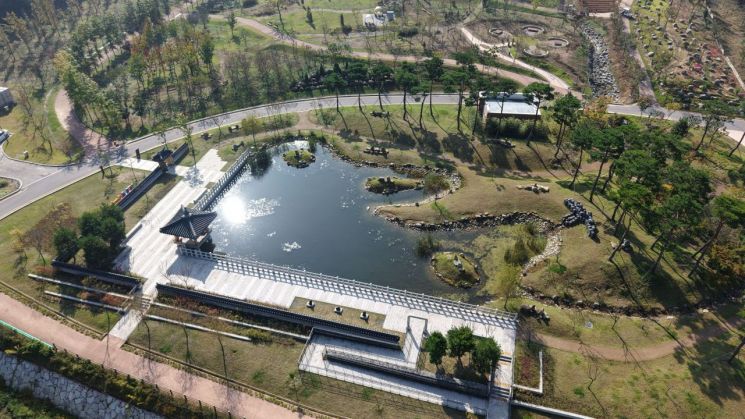
A public arboretum is established and operated by a local government and must meet requirements such as having a site of at least 10 hectares, possessing more than 1,000 species of woody plant genetic resources, employing professional staff, and securing facilities for cultivation, management, and exhibition.
The Gwangju Municipal Arboretum is particularly significant as it was created by planting trees on degraded land surrounding the metropolitan sanitary landfill, which was previously regarded as an undesirable facility, thereby restoring the natural ecological environment and providing a forest welfare space for citizens.
With this registration, Gwangju City plans to expand green public services that allow citizens to enjoy the natural environment, systematically conserve and manage plant genetic resources, and strengthen exhibition, research, and educational functions. The city also intends to develop and operate educational and experiential programs and exhibitions for citizens.
Located in Yanggwa-dong, Nam-gu, the Gwangju Municipal Arboretum covers an area of 240,000 square meters (24 hectares) and houses 1,047 species of woody plant genetic resources. It features ten themed gardens, including a visitor center, management facilities, exhibition greenhouses, a Korean garden, and a lawn plaza, providing spaces for nature appreciation and relaxation for the public.
Since its opening in October 2023, the arboretum has attracted a cumulative total of 450,000 visitors. By offering a variety of educational and experiential programs-such as forest interpretation, ecological environment programs, and special vacation programs-it has broadened opportunities for citizens to learn about the natural ecosystem. In October last year, the arboretum also received official certification for a Barrier-Free (BF) environment, ensuring that all citizens can use the facility safely and conveniently.
The Gwangju Municipal Arboretum originated from a 2008 plan to create an urban park-type arboretum by eco-friendly utilization of degraded land around the metropolitan sanitary landfill. After approving and announcing the arboretum creation plan in 2017, Gwangju City began construction in April 2020, completed it in December 2022, and, following the addition of convenience facilities, officially opened the arboretum on October 20, 2023.
Jung Junho, Director of the Gwangju Arboretum and Garden Office, stated, “With this registration as a public arboretum, we will expand green public services that allow citizens to enjoy the natural environment,” adding, “We will faithfully fulfill the core functions of the arboretum by systematically conserving and managing plant genetic resources, and by strengthening exhibition, research, and learning functions.”
© The Asia Business Daily(www.asiae.co.kr). All rights reserved.
![Clutching a Stolen Dior Bag, Saying "I Hate Being Poor but Real"... The Grotesque Con of a "Human Knockoff" [Slate]](https://cwcontent.asiae.co.kr/asiaresize/183/2026021902243444107_1771435474.jpg)
















