A study has found that participation in therapeutic agriculture programs can reduce depression by up to 58%, increase self-esteem by 24.91%, and improve heart health by 7.02%.
The Gyeonggi-do Agricultural Research and Extension Services announced on December 18 that, based on brainwave analysis and surveys conducted among high-risk mental health groups, seniors, and individuals with high risk of stress who participated in therapeutic agriculture programs, positive changes were observed. These included reductions in stress and depression, as well as improvements in self-esteem and resilience.
The analysis of therapeutic agriculture effects was conducted from April to October, targeting groups of around ten people who participated in resource-specific programs such as food crops, horticultural crops, and emotional insects. The programs included activities such as gardening with soybeans, barley, and potatoes, caring for crickets and tiger swallowtail butterflies, and rural experiences utilizing the natural environment. Each program was conducted for at least eight sessions.
The Agricultural Research and Extension Services analyzed the effects by comparing participants’ brainwave patterns and survey responses before and after the programs.
The results showed that among high-risk mental health participants in the food crop program, the stress index decreased by 32.12%, self-esteem increased by 24.91%, and resilience improved by 9.52%.
For seniors participating in the emotional insect program, depression decreased by 58.33%, and heart health indicators improved by 7.02%.
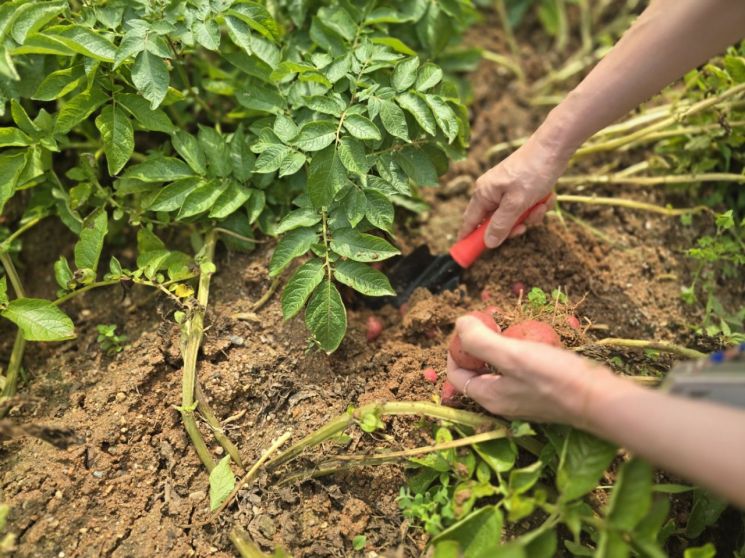 A participant in therapeutic agriculture at the Gyeonggi-do Agricultural Research and Extension Services is harvesting crops. Gyeonggi-do Agricultural Research and Extension Services
Among adults at high risk of stress who participated in the horticultural crop program, perceived stress decreased by 14.21%, and brainwave analysis showed that the brain activity overload index was reduced by 11.97%.
Based on these verified effects, the Agricultural Research and Extension Services published the "2025 Therapeutic Agriculture Specialized Program (by Resource) Implementation Manual" and distributed it to city and county agricultural technology centers and related organizations to enhance the practical application of therapeutic agriculture programs in the field.
Sung Jehun, Director of the Agricultural Research and Extension Services, stated, "This manual is a practical resource compiled based on the characteristics of each resource and the results of effect verification," adding, "We will continue to develop specialized programs and conduct scientific validation to expand therapeutic agriculture models tailored to Gyeonggi-do."
Therapeutic agriculture refers to agricultural activities and related industries that promote physical and emotional recovery through systematic programs utilizing agricultural and rural resources. It is gaining attention as an alternative agricultural model for improving health and quality of life.
© The Asia Business Daily(www.asiae.co.kr). All rights reserved.
![Clutching a Stolen Dior Bag, Saying "I Hate Being Poor but Real"... The Grotesque Con of a "Human Knockoff" [Slate]](https://cwcontent.asiae.co.kr/asiaresize/183/2026021902243444107_1771435474.jpg)















