12 Million Annual Visitors, Driving Regional Tourism
152 Billion Won Invested in Gangneung, Naju, Haman, Haenam, and More
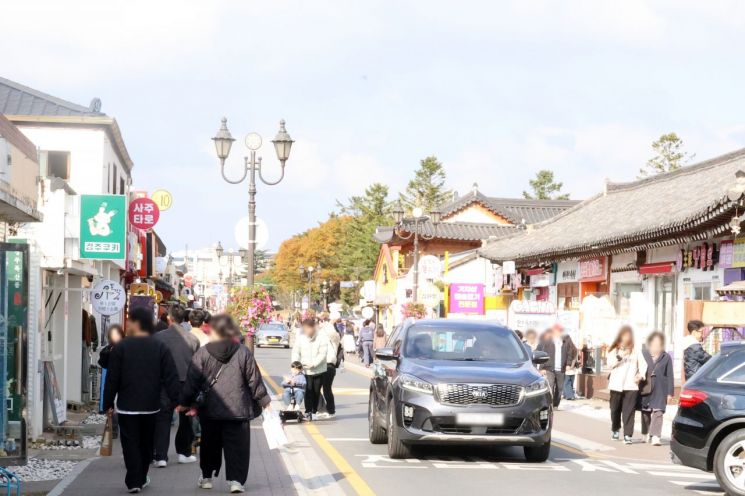
The maintenance model of Hwangridan-gil in Gyeongju, which attracts 12 million visitors annually, is expected to spread nationwide. This approach goes beyond preserving individual cultural assets and instead integrates the maintenance of historical heritage, local landscapes, and living spaces.
On December 17, Huh Min, Administrator of the National Heritage Administration, announced the "Major Work Plan for 2026" at the National Palace Museum of Korea, stating, "We will expand the integrated maintenance model of historical heritage and local landscapes, as seen in Hwangridan-gil, Gyeongju, to nine major historical and cultural zones." The plan targets nine regions-Goguryeo, Baekje, Silla, Gaya, Tamna, Mahan, Jungwon, Yemaek, and Later Baekje-with an investment of 15.2 billion won next year alone.
Hwangridan-gil in Gyeongju is a leading example of a tourist attraction transformed through national heritage maintenance. In 2020, the National Heritage Administration launched the "Restoring Ancient Capital Image" project, supporting the construction and renovation of hanok houses, maintenance of walls and gates, and the creation of traditional parks. As a result, the area has grown into a tourist destination attracting 12 million visitors annually. Similar success stories include Jemicheon in Gongju, the Hanok Village in Buyeo, and the traditional wall and landscape lighting projects in Iksan.
The project will be carried out in three phases. The first phase, basic unit maintenance, will target four local governments: Gangneung, Naju, Haman, and Haenam. A total of 12.5 billion won will be invested to create historical and cultural landscapes centered on historical heritage by next year.
The regional unit maintenance will be promoted through collaboration among six local governments. In two historical and cultural zones, three local governments in each zone will work together, with a total investment of 2.2 billion won. The local government selection process was completed in December of last year, and the implementation plan will be established and approved next year, with the project running for three years from 2026 to 2028.

Small-scale maintenance will focus on major excavation sites such as Bongdae Mountain Fortress in Muan. Five hundred million won will be invested in installing visitor amenities such as drainage systems, tree maintenance, and information centers. After a pilot project, the target areas will be expanded annually.
To support these efforts, the National Heritage Administration will comprehensively investigate and analyze the historical and cultural resources of the nine major historical and cultural zones, review the feasibility of maintenance and utilization promotion projects, and establish a master plan.
Landscape improvement projects will also be actively pursued. Seventy billion won will be invested in five sites: Anheungjin Fortress in Taean (12.2 billion won), Namwon Eupseong Fortress (4 billion won), Naju Eupseong Fortress (5.4 billion won), Cheonghaejin in Wando (4.2 billion won), and Hoeryongpo in Yecheon (3.2 billion won). The projects will upgrade infrastructure such as streetlights and walkways, expand community spaces like visitor shelters and community rooms, and enhance visitor amenities including trails, restrooms, and parking lots.
Construction will begin next year at Anheungjin Fortress in Taean. Work will continue at Namwon Eupseong Fortress and Cheonghaejin in Wando, while Naju Eupseong Fortress and Hoeryongpo in Yecheon are scheduled to complete design in the first half of the year and break ground in the second half.
The National Heritage Administration will also expand maintenance projects that simultaneously improve living environments and restore landscapes. The "Restoring Ancient Capital Image" project will receive an investment of 12.4 billion won. The goal is to improve residential and living environments for residents of ancient capital areas and enhance the landscape value of these historic cities.

Up to 150 million won will be provided for hanok construction, along with support for wall and gate maintenance, the creation of traditional gardens, and improvements to resident amenities. Administrator Huh explained, "Next year, 4 billion won will be invested in the four ancient capitals: Gyeongju, Gongju, Buyeo, and Iksan."
The Modern Historical and Cultural Space Revitalization Project will be carried out in nine regions, including Mokpo, Gunsan, and Yeongju. The project will focus on maintaining cultural resources and improving street landscapes, while also working to discover and register additional modern historical spaces.
The scope of maintenance is not limited to modern historical spaces. The project will also upgrade trails at eleven scenic old roads and develop themed courses. In addition, major fossil sites along the southern coast will be developed as tourism resources based on excavation work.
The National Heritage Visit Campaign will also be expanded. The number of visit courses (passport tours) will increase from 76 bases across 10 courses to 100 bases across 13 courses. Additionally, special programs for the course of the month will be developed, and a special edition of the visitor passport (expanded passport plus case) will be distributed.
The National Heritage Administration will also expand its media art projects. By combining representative local heritage with digital technology, the aim is to create specialized nighttime content that encourages both domestic and international visitors to stay in the region. The number of target sites will increase from eight to thirteen, and the budget will rise from 6.7 billion won to 10.9 billion won.
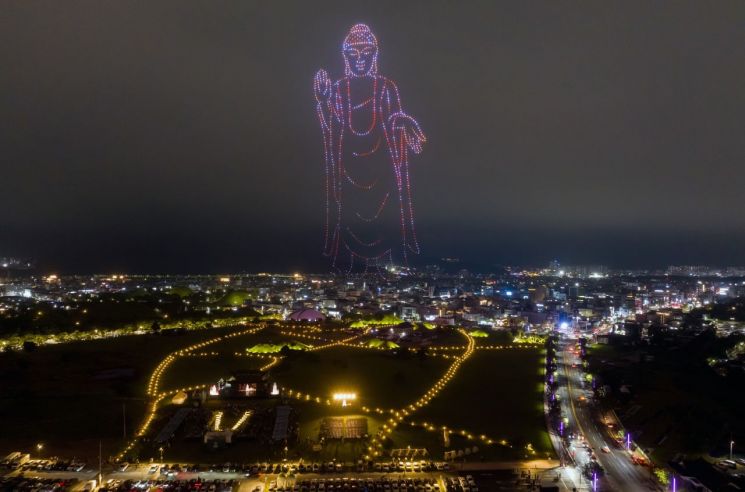
The "World Heritage Festival" will continue to promote world heritage tourism. Fifty-five billion won will be invested in five heritage sites, including Andong and Jeju. In Andong, the festival will focus on "Historic Villages of Korea (Hahoe and Yangdong)," "Mountain Monasteries in Korea (Bongjeongsa)," and "Seowon, Korean Neo-Confucian Academies (Dosan and Byeongsan Seowon)." In Jeju, the focus will be on "Jeju Volcanic Island and Lava Tubes," while in Gimhae, Haman, Changnyeong, Goseong, Hapcheon, Goryeong, and Namwon, the festival will highlight the "Gaya Tumuli."
Administrator Huh stated, "Hwangridan-gil in Gyeongju is a leading example of how national heritage maintenance can drive local tourism," adding, "We will spread this model nationwide to serve as a driving force for balanced regional development."
© The Asia Business Daily(www.asiae.co.kr). All rights reserved.



















