Emphasizing “Cooperation,” Not “Opposition”
“Risk of Taxpayer Waste” Cited
The Ball Returns to the City Council
Reconsideration Request Expected to Trigger Further Disputes
Yeongcheon City (Mayor Choi Kimoon) has officially decided to “disagree” with the city council’s budget increases made during the review of the main budget for 2026, signaling a direct confrontation with the council.
Yeongcheon City plans to request a reconsideration based on the Local Autonomy Act, judging that the council’s decision violates relevant laws.
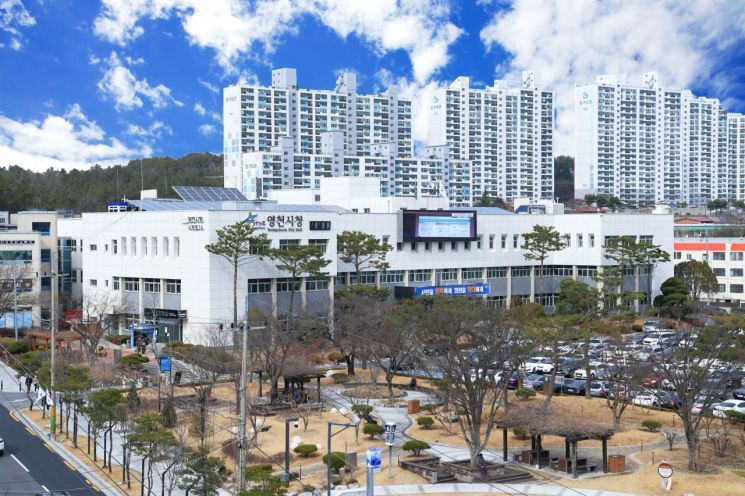
On December 17, Yeongcheon City announced that, after legal and financial review, it had reached this decision regarding certain budget items that the city council increased without the executive branch’s consent.
According to Article 142 of the Local Autonomy Act, a local council must obtain the consent of the head of the local government when increasing the amount of any expenditure or creating a new budget item.
The city made it clear that this decision to disagree is not a simple policy conflict, but a responsible judgment as the authority in charge of budget formulation.
A city official explained, “Some of the increased projects lack stable funding sources or have incomplete administrative procedures, making it practically impossible to implement them within the year. If the budget is finalized as it is, there is a high risk of carryovers or unused funds, leading to waste of taxpayers’ money.”
The city also expressed deep concern that, to increase the budget for certain projects, other essential budgets directly related to people’s livelihoods-such as basic operating expenses, economic and industrial projects, and community-focused programs-were reduced or suspended. The city pointed out that such budget adjustments, made without sufficient review or alternative funding plans, could actually create equity issues within the region.
Yeongcheon City stated that while it respects the council’s right to review and approve the budget, the executive branch bears the legal and financial responsibility for budget execution. Therefore, the city’s disagreement is not “opposition for the sake of opposition,” but a request for improvements to ensure the sound implementation of projects.
The city plans to continue discussions with the council so that, once preparations and funding plans for the relevant projects are in place, these can be reflected in supplementary or next year’s budgets.
Mayor Choi Kimoon emphasized, “Policy and budget should not be subjects of political strife, but means to protect the lives of our citizens,” adding, “We will do our utmost to ensure that essential projects for citizens are not halted and that there is no harm caused by administrative gaps.”
With Yeongcheon City’s official request for reconsideration, the matter now returns to the city council.
For the reconsidered agenda to be finalized, a majority of council members must be present, and at least two-thirds of those present must vote in favor. Intense debate and friction between the city and the council are expected to continue going forward.
© The Asia Business Daily(www.asiae.co.kr). All rights reserved.
![Clutching a Stolen Dior Bag, Saying "I Hate Being Poor but Real"... The Grotesque Con of a "Human Knockoff" [Slate]](https://cwcontent.asiae.co.kr/asiaresize/183/2026021902243444107_1771435474.jpg)















