Ministry Announces Presidential Work Report Today
Five Hubs and Three Special Zones, Manufacturing AI Transformation, and New Trade Strategy
Minister Kim Jeongkwan: "Eliminating 'Fake Labor' to Enhance Policy Implementation"
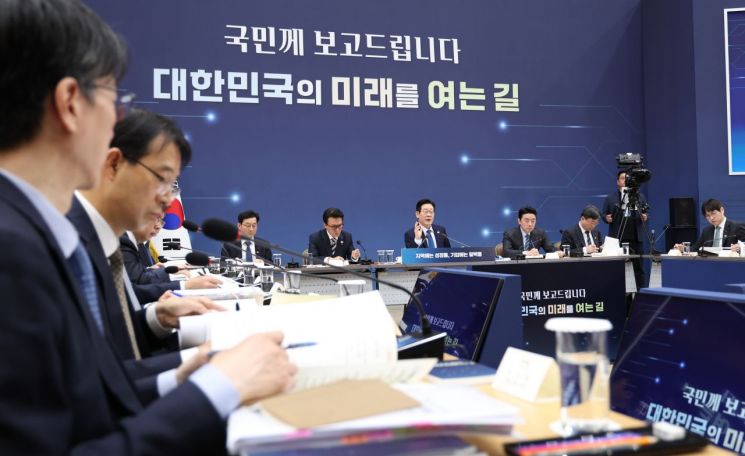
The government will transform regions into centers of industry and economic growth, pursue a major transition by integrating artificial intelligence (AI) across the manufacturing sector, and implement a new trade strategy. The plan aims to ease the concentration of development in the Seoul metropolitan area, revitalize businesses, and rebuild growth engines.
On December 17, at the Government Sejong Convention Center, the Ministry of Trade, Industry and Energy announced three major policy directions under the vision "Growth for Regions, Vitality for Businesses" during the presidential work report. The core pillars of the policy are region-centered economic growth, an advanced manufacturing AI transformation, and a new trade strategy to maximize national interests.
To foster regions as drivers of economic growth, the ministry will finalize the "Five Hubs and Three Special Zones Regional Growth Engines" industries by February next year. Selected industries will receive intensive support through the "Five Growth Packages," which cover regulation, talent, finance, funding, and innovation. The ministry is also considering introducing a "Growth Engine Special Subsidy," similar to the Korean version of the IRA, to attract large-scale regional investments. More than 40% of the National Growth Fund's 150 trillion won will be invested in regional growth engine industries, and the ministry will establish dedicated research and development (R&D) programs.
The ministry will also promote mega-scale industries that transcend regional boundaries. It will establish a "Southern Semiconductor Innovation Belt" to expand the Seoul metropolitan semiconductor ecosystem to Gwangju, Gumi, and Busan, and create a battery triangle belt connecting the Chungcheong, Honam, and Yeongnam regions. The government will also strengthen future industry infrastructure tailored to each region, such as the Gwangju AI autonomous driving demonstration city, the Chungnam Advanced Display Research Institute, and the Daegu AI robotics infrastructure. Additionally, the government will seek to enact special legislation to establish RE100 industrial complexes based on 100% renewable energy, aiming to break ground on a pilot complex next year.
The ministry will also drive industrial innovation by combining manufacturing and AI. Centered on the "Manufacturing AI Transformation (M.AX) Alliance," which includes over 1,000 industry, academia, and research participants, the ministry will build 500 AI factories, develop 15 large and small enterprise collaborative AI leading models, and establish 13 AI demonstration industrial complexes. The goal is to spread AI throughout the entire manufacturing supply chain and simultaneously boost productivity and competitiveness.
The ministry will foster advanced and new industries in parallel. For key industries such as semiconductors, secondary batteries, automobiles, shipbuilding, biotechnology, and defense, it will apply a strategy of building domestic "mother factories" and mass production overseas. The government will continue to make large-scale R&D investments in next-generation batteries, AI semiconductors, LNG cargo holds, and core autonomous driving technologies. To support these efforts, the ministry will amend the National Advanced Strategic Industries Act to introduce special holding company regulations and institutionalize industrial restructuring models.
Expanding into global markets is also a major goal. The ministry will establish a U.S. investment project management system to select projects in which Korean companies can participate and recover their investments, and will link U.S. and domestic investments to ensure returns flow back to Korea. At the same time, the ministry aims to achieve 700 billion dollars in exports for the second consecutive year by considering joining the Comprehensive and Progressive Agreement for Trans-Pacific Partnership (CPTPP), promoting nuclear power exports using the Korea-UAE cooperation model, and diversifying export items such as K-food, defense, and power equipment.
In addition, the ministry plans to expand domestic production of key minerals, materials, parts, and equipment, and build a "K-Industry Breakwater" to enhance economic security by providing timely trade remedies against dumping damages. The ministry also plans to improve organizational culture and restore public trust in public institutions to strengthen policy implementation.
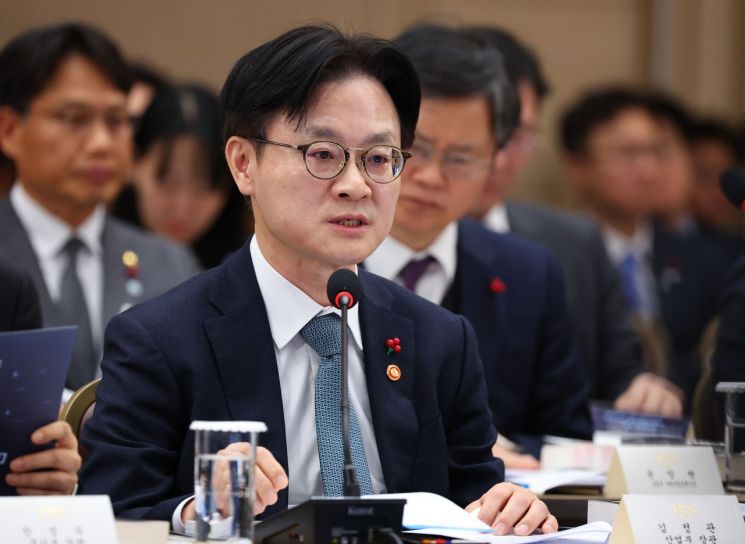
Meanwhile, there was also a consensus on the need for a comprehensive overhaul of work practices in the public sector to reduce unnecessary routines. The aim is to eliminate "fake labor," such as formal reporting and showy events, and focus administrative capabilities on work that genuinely contributes to the public and national development.
Kim Jeongkwan, Minister of Trade, Industry and Energy, said, "When I was in the private sector, I was deeply impressed by a book called 'Fake Labor.' Practices unrelated to customer value and behaviors like trying to please superiors still remain in the public sector." He also shared concerns that the culture of working overtime simply because a supervisor has not left the office, and labeling this as "work," does not meet public expectations.
Minister Kim specifically pointed out unnecessary reporting practices. He noted that even simple matters are repeatedly processed as paper reports instead of being handled via messenger or phone, and that excessive events are held, with ministerial attendance becoming a routine requirement. He said, "Even though the president has called for an end to showy events, in reality, there are far more events than one could imagine. Not creating such events should be the norm."
In response, the ministry will form an internal task force to identify a list of "work that does not help the public or national development" and, through ministerial consensus, decisively discontinue such work. The rationale is that new policy initiatives cannot be pursued without reducing existing work. Minister Kim explained, "This is a structural adjustment to make time for new initiatives."
President Lee Jaemyung also expressed support for the initiative, stating, "In the past, there were even devices to let you know when your boss had left the office. Traces of such outdated practices still remain." He added, "Rather than waiting for the ministry's results, other ministries should proceed simultaneously as well."
© The Asia Business Daily(www.asiae.co.kr). All rights reserved.
![Clutching a Stolen Dior Bag, Saying "I Hate Being Poor but Real"... The Grotesque Con of a "Human Knockoff" [Slate]](https://cwcontent.asiae.co.kr/asiaresize/183/2026021902243444107_1771435474.jpg)
















