"Capturing the Tremor of a Blade of Grass in Poetry"
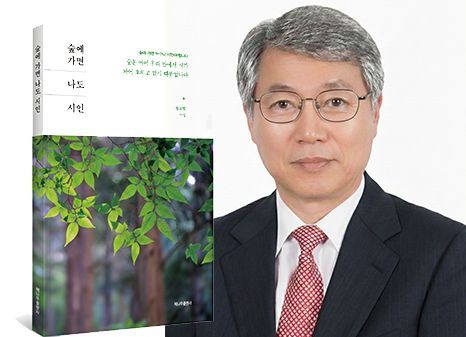 Forest researcher Dr. Ho-rim Hwang has published his first poetry collection, If You Go to the Forest, I Am Also a Poet.
The subtle tremors of the forest, which could not be fully captured by the language of science, have been translated into poetry. Forest researcher and plant taxonomist Dr. Ho-rim Hwang has published his first poetry collection, If You Go to the Forest, I Am Also a Poet.
Dr. Hwang, who is currently an adjunct professor in the Department of Forest Resources at Chonnam National University and the director of the Northeast Asia Forest Culture Institute, has consistently conveyed the value and ecological significance of forests through his professional books and essays such as Raonjena, Our Neighborhood Forest Magnifier, Listening to the Forest, and Prinsepia Tree.
This poetry collection is notable as Dr. Hwang’s first book of poems, in which he sets aside the analytical gaze of a scientist and instead focuses on the language of emotion in observing the forest.
Dr. Hwang is especially recognized in academic circles both in Korea and abroad for his research on the rare plant "Prinsepia Tree." In the preface, he writes, "No matter how sophisticated the language of science may be, it is difficult to capture the subtle tremor of a single nameless blade of grass," adding, "This time, I wanted to record the world through the eyes of a tree, not as a researcher."
The poetry collection goes beyond simple praise for nature, offering a unique perspective that combines plant taxonomic knowledge with humanistic insight. Witty titles such as "The Florist Is a Sadist" and "The Man Who Commutes to the Forest" contain deep reflections on life.
Dr. Hwang states, "By examining the veins of the Prinsepia Tree’s leaves and the fine hairs of the Hepatica, I realized that the weight of life is not in knowledge, but in sharing each other’s breath." This confession is why the book reads not only as a poetry collection, but also as a naturalist’s field notes recording the forest’s intimate whispers.
The book is composed of four parts. The first section, "The Language of Wildflowers," and the second, "Portraits of Trees," personify native plants such as Adonis, Erythronium, and Corylopsis, interpreting their ecological characteristics through literature. The third section, "The Forest of Circulation," and the fourth, "The Forest Path of Memories," calmly reflect humility before the laws of nature and the author’s autobiographical memories.
Currently communicating with the public through the YouTube channel "Forest PRO TV," Dr. Hwang said, "Trees may be silent, but that silence moves the heart even more," and added, "I hope readers will find life’s energy in the aesthetics of slowness and silence that the forest offers."
The green-tinted sentences from an expert who has studied forests for over 25 years are expected to serve as a brief pause for readers at the beginning of winter. If You Go to the Forest, I Am Also a Poet is now available at both online and offline bookstores.
© The Asia Business Daily(www.asiae.co.kr). All rights reserved.
![Clutching a Stolen Dior Bag, Saying "I Hate Being Poor but Real"... The Grotesque Con of a "Human Knockoff" [Slate]](https://cwcontent.asiae.co.kr/asiaresize/183/2026021902243444107_1771435474.jpg)















