“Saechulbal Fund” for Self-Employed During COVID-19
Criteria Based on Net Debt, Considering Increased Debt and Decreased Income
High-Income Earners Excluded from “Saedoyak Fund” Launched in October
Verification of Virtual Asset Holdings to
As the Board of Audit and Inspection pointed out that the "Saechulbal Fund," which supports the recovery of self-employed individuals by restructuring their debts after COVID-19, included borrowers with sufficient repayment capacity among its beneficiaries, the Financial Services Commission stated that the criteria were established under special circumstances at the time. The Commission added that it will strengthen screening standards, such as excluding high-income individuals from eligibility. Regarding the newly launched individual debt restructuring program, the "Saedoyak Fund," the Commission explained that it is based on absolute income, thereby excluding high-income earners.
Jinchang Shin, Secretary General of the Financial Services Commission, made these remarks during a background briefing on the "Response to the Board of Audit and Inspection's Findings on the Saechulbal Fund" held on the afternoon of December 16. Secretary General Shin explained that the Saechulbal Fund was introduced to support small business owners and self-employed individuals who faced excessive debt burdens while cooperating with quarantine measures. He said, "For self-employed individuals, the program was designed based on net debt rather than absolute income, considering the large scale of their liabilities and the significant decline in income due to business restrictions."
He further explained that, given the rapidly fluctuating sales during the COVID-19 period, it was inappropriate to assess repayment capacity based on reported income from the year prior to the application.
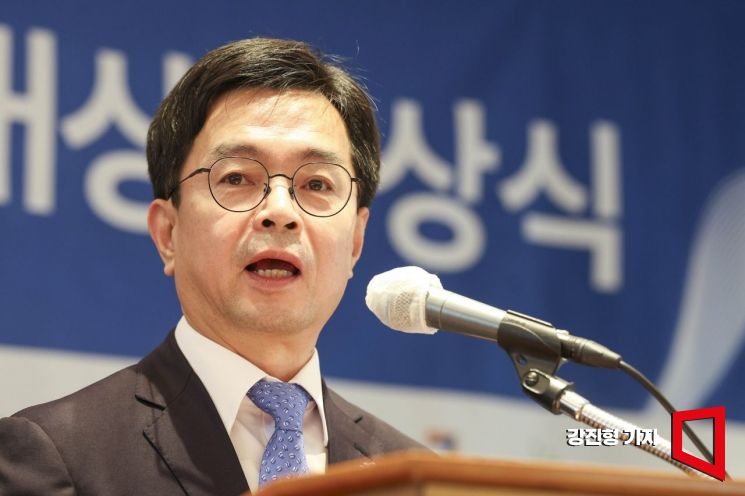
In response to concerns that high-income earners might also benefit from the Saedoyak Fund, which was launched in October, Secretary General Shin said, "The Saedoyak Fund excludes high-income earners based on absolute income, and even if someone qualifies for support, the extent of debt cancellation or restructuring is differentiated according to their repayment capacity, such as income." The Saedoyak Fund is a system that purchases long-term delinquent debts of up to 50 million won that have been overdue for more than seven years, halts collection, and adjusts or cancels debts according to income and assets. If a person is identified as a high-income earner, such as those exceeding 125% of the median income, collection is resumed, and they are excluded from the debt restructuring support of the Saedoyak Fund.
Secretary General Shin added, "Going forward, we plan to strengthen the selection and screening standards (including moral hazard review) so that individuals with excessively high actual income will be excluded from the Saechulbal Fund's beneficiaries, reflecting the Board of Audit and Inspection's findings."
Regarding the Board of Audit and Inspection's observation that there were suspected fraudulent acts, such as applicants for Saechulbal Fund debt relief concealing virtual asset acquisitions, Secretary General Shin said this would be addressed through legal amendments. "The Saechulbal Fund is conducting the most thorough asset investigation possible within the limits of available information, utilizing the government's administrative information sharing network and data held by credit bureaus," he said. "However, under current laws such as the Credit Information Act, it is difficult for Korea Asset Management Corporation to verify applicants' virtual asset holdings."
He continued, "Within the current legal framework, we are discussing ways to confirm applicants' asset holdings by linking with virtual asset service providers, and we are also planning to verify asset details with the applicant's consent. We are pursuing amendments to the Credit Information Act so that financial and virtual asset information can be obtained collectively from financial institutions. This will be applicable not only to the Saechulbal Fund but also to the Saedoyak Fund."
Meanwhile, Secretary General Shin commented on the recovery of assets from those who received benefits despite not being eligible for the Saechulbal Fund, saying, "We will take into account legal constraints and practical difficulties, but if it is legally possible, we will recover all such assets."
© The Asia Business Daily(www.asiae.co.kr). All rights reserved.
![Clutching a Stolen Dior Bag, Saying "I Hate Being Poor but Real"... The Grotesque Con of a "Human Knockoff" [Slate]](https://cwcontent.asiae.co.kr/asiaresize/183/2026021902243444107_1771435474.jpg)
















