An amendment to the enforcement decree is being pursued to require prior impact assessments for development projects and transportation facility construction that could affect UNESCO World Heritage sites.
The National Heritage Administration announced on the 16th that it will re-announce for public comment, starting on the 18th, a partial amendment to the enforcement decree of the "Special Act on the Conservation, Management, and Utilization of World Heritage" (World Heritage Act). This amendment, following the revision of the World Heritage Act in November last year, specifies the scope and procedures of the Heritage Impact Assessment (HIA).
According to the amendment, a Heritage Impact Assessment will be required for national and regional land-use and urban development projects, industrial and port redevelopment projects, and transportation facility construction projects such as urban railways built by the state, if the development site includes a World Heritage district. Project operators subject to assessment must submit a preliminary review request that includes the project location and area, total project cost, maximum height of planned buildings, and the distance from the World Heritage site, among other details.
The impact assessment will examine the scale and scope of effects on the World Heritage site's "Outstanding Universal Value" (OUV), as well as direct and indirect impacts on landscape, environment, society, and economy. The enforcement decree also covers the designation and operation of Heritage Impact Assessment agencies, procedures for reviewing, supplementing, and adjusting assessment reports, and the designation of a Heritage Impact Assessment Support Center.
The World Heritage Act mandates impact assessments for projects within World Heritage districts that may have a negative effect on OUV, and allows the head of the National Heritage Administration to request an assessment even for projects outside the district if they could have an impact. However, the previous enforcement decree lacked specific standards for the scope and procedures of assessments, leading to concerns about the effectiveness of the system. The National Heritage Administration had announced two rounds of amendments to the enforcement decree last year, but was unable to implement them due to disagreements among related ministries.
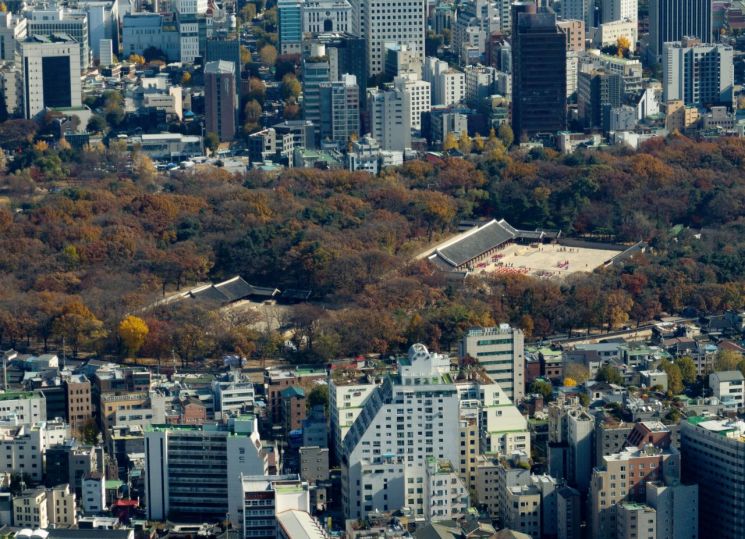
In this context, the Seoul Metropolitan Government did not respond to the request for a Heritage Impact Assessment regarding the redevelopment of the Sewoon District 4 area in front of Jongmyo. UNESCO recently delivered a diplomatic note to the Korean government expressing concerns that the high-rise redevelopment could negatively affect the value of Jongmyo, and reportedly recommended halting project approval until the impact assessment is completed.
The National Heritage Administration plans to collect opinions until January 27 next year and to promulgate the amended enforcement decree around March. A separate notification is also being prepared to allow for necessary measures to be taken if a project has a significant impact on cultural heritage, even outside of historical and cultural preservation zones.
© The Asia Business Daily(www.asiae.co.kr). All rights reserved.
![Clutching a Stolen Dior Bag, Saying "I Hate Being Poor but Real"... The Grotesque Con of a "Human Knockoff" [Slate]](https://cwcontent.asiae.co.kr/asiaresize/183/2026021902243444107_1771435474.jpg)















