Overcoming Suspension Crisis by Securing 30% Provincial Funding
Stabilizing the Project’s Financial Structure

The pilot project for basic income in farming and fishing villages in Cheongyang County, South Chungcheong Province, which had faced the risk of being derailed due to the issue of provincial funding, has returned to normal operations after a comprehensive response and persistent persuasion by Governor Kim Donggon.
On December 15, the decision was made for the province to cover 30% of the funding. With this, Cheongyang County turned a crisis into an opportunity, simultaneously resolving the dual challenges of policy continuity and fiscal stability.
Cheongyang County announced on December 16 that the pilot project for basic income in farming and fishing villages would proceed as planned, following South Chungcheong Province’s decision to cover 30% of the funding.
As a result, the project, which had been suspended up until just before resident applications due to confusion over the provincial funding rate, was revived through Governor Kim's proactive response and political persuasion.
Governor Kim Taeheum ultimately decided that the province would cover 30% of the funding to ensure the smooth implementation of Cheongyang County’s basic income pilot project for farming and fishing villages.
Accordingly, the county secured an additional 20% in provincial funding, increasing the share from the previous 10%. The funding structure was reorganized to 40% from the central government, 30% from the province, and 30% from the county.
With this, the previously unstable fiscal structure became much more stable, further solidifying the foundation for the pilot project’s implementation.
Previously, the central government had notified that “a 30% provincial funding share from metropolitan governments” would be a prerequisite for central government support for the pilot project, based on a supplementary opinion from the National Assembly. As a result, Cheongyang County, which had prepared for a funding structure of 40% from the central government, 10% from the province, and 50% from the county, faced a crisis and had to temporarily suspend the project just before accepting resident applications.
In response, Governor Kim has consistently explained the region’s fiscal conditions, the realities of rural areas, and the policy significance of basic income for farming and fishing villages directly to both the provincial and central governments, strongly emphasizing the need for the project to proceed as planned.
In particular, he stressed that if the pilot project were abandoned due to the provincial funding burden, it could undermine both the autonomy of local governments and trust in government policy, ultimately persuading South Chungcheong Province to make its decision.
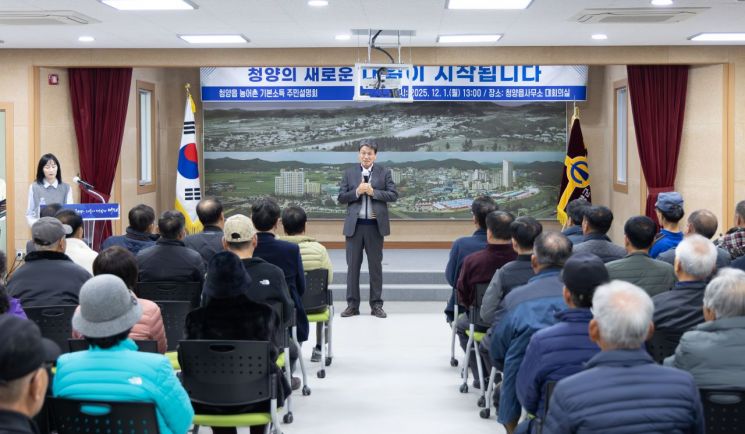
It is reported that even over the weekend, Governor Kim held a series of meetings with key officials of the province-including the Vice Governor for Administrative Affairs, the Vice Governor for Political Affairs, and the Director of Planning and Coordination-directly conveying Cheongyang County’s position and determination to proceed. This was more than a simple request; it was a political response, with the policy leader taking the initiative.
Governor Kim stated, “This decision by South Chungcheong Province is more than just budgetary support; it is an important turning point in restoring trust in overall rural policy. It is the result of persistent persuasion and negotiation without ever giving up.”
He added, “We will do our utmost to ensure that the basic income pilot project for farming and fishing villages leads to stability in residents’ lives and the recovery of the local economy.”
The county plans to soon resume the resident application process, which had been suspended, and to proceed as originally planned with the pilot project, providing local gift certificates worth 150,000 won per month for two years starting next year.
In addition, the county will closely analyze the project’s effectiveness and consider ways to develop it into a sustainable rural policy model in the future.
© The Asia Business Daily(www.asiae.co.kr). All rights reserved.


















