Samsung Electronics to Hold Global Strategy Meeting Starting December 16
Accelerating Transition to an "AI-Driven Company"
Reviewing Next Year's AI-Centered Strategies and Mid- to Long-Term Plans
Hyundai Motor Group to Formulate Strategies Following Executive Appointments
SK and LG Also Drive AI Transformation
Major South Korean companies are convening executive meetings this week to accelerate the establishment of their business strategies for the coming year. With the global supply chain being reorganized, high exchange rates, and an economic slowdown making it difficult to predict next year's business environment, these companies are focusing on developing strategies to strengthen their growth foundation, particularly centered around artificial intelligence (AI).
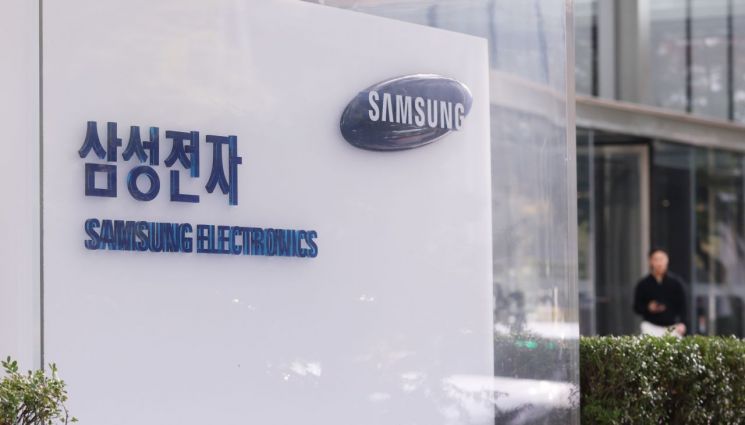
According to the business community on December 15, Samsung Electronics will hold a global strategy meeting starting on December 16 to review its business strategies and mid- to long-term direction for next year. The Device eXperience (DX) division, which is responsible for home appliances and smartphones, will meet on December 16-17, while the Device Solutions (DS) division, which leads the semiconductor business, is scheduled to meet on December 18.
As Samsung Electronics is promoting a company-wide transition to an "AI-driven company," it is expected that AI will be at the core of next year's strategy.
The DS division is expected to focus on AI semiconductor competitiveness and responses to geopolitical variables as its main agenda items. The memory business unit is likely to discuss customized strategies for clients, centering on the sixth-generation High Bandwidth Memory (HBM4). With various AI chips such as Google Tensor Processing Units (TPUs) emerging alongside Nvidia, the importance of memory design and supply strategies tailored to each customer is growing.
The System LSI business unit is likely to discuss strategies to expand sales of its self-developed mobile application processor (AP), the Exynos 2600. In the foundry division, stabilizing mass production of the 2-nanometer process is considered the top priority. The company is also expected to discuss how to utilize 50,000 Nvidia graphics processing units (GPUs), which will be introduced in earnest starting next year.
For the DX division, the main topics are expected to include the enhancement of AI features in major product lines such as smartphones, TVs, and home appliances, as well as global sales strategies. The company will also review strategies to expand user experience through AI and differentiate itself in the global market.
Company-wide, Samsung Electronics is expected to examine risk management strategies in response to changes in the global business environment, such as high exchange rates. As the relationship between the United States and China enters a phase of easing-evidenced by the approval of Nvidia H200 exports to China-the company may also reconsider its strategy for the Chinese market.
Other affiliates such as Samsung Display, Samsung Electro-Mechanics, and Samsung SDI will also hold strategy meetings around the same time to establish their business plans for next year. Early next year, Samsung Electronics Chairman Lee Jae-yong is expected to convene all affiliate CEOs for a group dinner, during which he and the executives will continue discussions on business strategies for the coming year, as they did this year.
Hyundai Motor Group is expected to begin formulating its management strategies in earnest after announcing executive appointments this week. The group plans to respond to U.S. tariffs through strategies for each market, such as diversifying supply chains and implementing flexible production and sales. It also intends to expand its hybrid lineup and launch extended-range electric vehicles (EREVs) and hydrogen electric vehicles. In particular, Hyundai Motor has set a policy to maintain overall competitiveness in eco-friendly vehicles by focusing on hybrids and EREVs. Accordingly, by 2030, it will expand its hybrid lineup to more than 18 models, including entry-level, mid-size, large, and luxury vehicles. Kia plans to expand its lineup to 10 hybrid models by 2030. In addition, Hyundai Motor Group will continue to invest in future mobility sectors such as hydrogen and robotics to secure future competitiveness.
On December 10, LG Group held a meeting of about 40 CEOs, presided over by Chairman Koo Kwang-mo. Chairman Koo and the CEOs agreed that survival would be difficult without agile responses to the rapidly changing business environment, and they had in-depth discussions on key management tasks to be pursued next year. Specifically, they discussed strategies to foster new growth businesses such as AI, bio, and clean tech (ABC), and shared opinions on accelerating the AI transformation (AX).
Earlier, SK Group held its annual CEO seminar in early November to discuss next year's business strategy. SK Group Chairman Chey Tae-won emphasized the need to strengthen fundamental competitiveness by continuously pursuing operational improvement (O/I) to gain the upper hand in the AI race. The CEOs agreed to strengthen the group's overall AI execution capabilities and create collaborative synergies by sharing and reviewing each affiliate's AI achievements and challenges.
© The Asia Business Daily(www.asiae.co.kr). All rights reserved.


















