Alcohol and Tobacco Spending Drops with Wegovy Use
Analysis of Data from 200,000 Households in the United States
Research has found that Wegovy, an anti-obesity drug developed by Danish pharmaceutical company Novo Nordisk, has brought about changes in overall lifestyle habits, including reducing household spending on alcohol and tobacco, beyond just weight loss. The analysis suggests that anti-obesity drugs can influence not only individual eating habits but also consumption patterns and health behaviors at the family level.
 A study has found that the obesity treatment drug Wegovy not only aids in weight loss but also brings about changes in overall lifestyle habits, such as reducing household spending on alcohol and tobacco. Getty Images
Novo Nordisk presented the results of a real-world study analyzing consumption data from households in the United States that use Wegovy and those that do not at the Obesity Society's annual meeting held in Atlanta, USA, last month.
According to the study, the annual increase rate in grocery spending for households using Wegovy was 1.1 percentage points lower than that of non-user households. The difference was especially notable in alcohol and tobacco expenditures. The average annual change rate in alcohol spending for Wegovy user households was 4.7 percentage points lower than non-user households, and the change rate in tobacco spending was 17.8 percentage points lower on average.
In the most recent survey period, alcohol spending in Wegovy user households decreased compared to the previous year, while it increased in non-user households, further widening the gap.
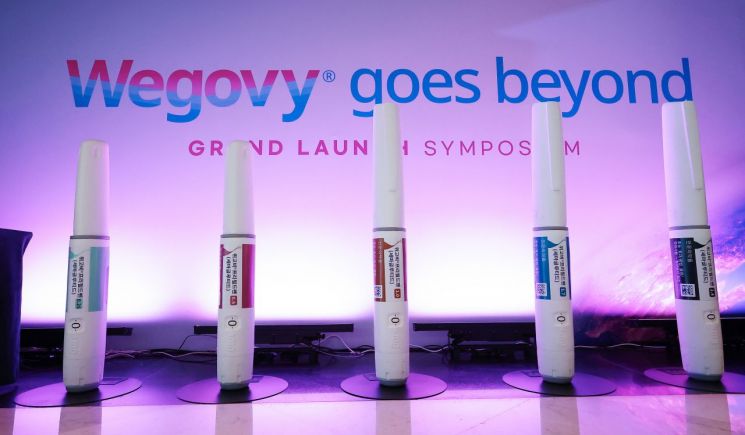
The research team explained that these changes are difficult to attribute solely to a reduction in food intake. They analyzed that glucagon-like peptide-1 (GLP-1) drugs may act on the brain's reward circuitry, potentially affecting not only food consumption but also other addictive behaviors such as alcohol and nicotine use.
Previous studies have also reported that GLP-1 treatment can reduce so-called "food noise," decrease cravings for alcohol, and improve mental health indicators, showing positive effects in both behavioral and emotional aspects.
Philip K. Knop, Chief Medical Officer at Novo Nordisk, explained, "The reduction in alcohol and tobacco spending shows that Wegovy users are forming behavioral patterns that lead to healthier choices, and that this influence can spread to the entire household."
This study also identified an income gap between Wegovy user and non-user households. The proportion of households with an annual income of $125,000 (approximately 184 million won) or more was 46.6% in the Wegovy user group, higher than the 38.3% in the non-user group.
© The Asia Business Daily(www.asiae.co.kr). All rights reserved.
![Clutching a Stolen Dior Bag, Saying "I Hate Being Poor but Real"... The Grotesque Con of a "Human Knockoff" [Slate]](https://cwcontent.asiae.co.kr/asiaresize/183/2026021902243444107_1771435474.jpg)
















