Nikkei: "Majority of 9 Policy Board Members Support Rate Hike... Growing Acceptance Within Government"
The Nihon Keizai Shimbun (Nikkei) reported on December 12, 2025, that the Bank of Japan, the country's central bank, has entered final coordination to raise its benchmark interest rate at the upcoming monetary policy meeting scheduled for next week.
According to the report, the Bank of Japan is likely to raise the benchmark rate, currently around 0.5%, by 0.25 percentage points at the meeting on December 18-19. If the Japanese benchmark interest rate is increased to 0.75%, it will reach its highest level in 30 years since September 1995, Nikkei noted.
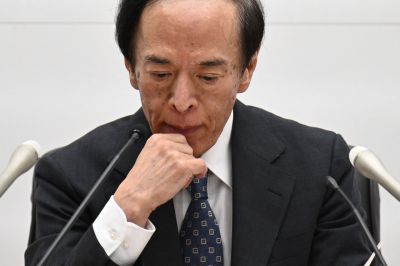
The newspaper stated that more than half of the nine policy board members support a rate hike, and no member has explicitly expressed opposition. The proposal to raise the benchmark rate will be approved if it receives a majority vote.
The Bank of Japan ended its negative interest rate policy in March last year for the first time in 17 years, then raised the benchmark rate from 0-0.1% to around 0.25% in July last year, and again to around 0.5% in January this year.
Kazuo Ueda, Governor of the Bank of Japan, has indicated that he would further raise the benchmark rate, considering that the real interest rate remains low. However, taking into account the tariff policies of the Donald Trump administration in the United States, the central bank kept rates unchanged for six consecutive meetings since March.
However, within the Bank of Japan, there is a growing view that the impact of the Trump administration's tariff policies on the economy and prices has not been as significant as expected. Additionally, even within the administration of Sanae Takaichi, which advocates for "responsible active fiscal policy," there is a spreading acceptance of a rate hike.
Furthermore, the continued weakness of the yen, with the yen-dollar exchange rate reaching the 155-yen level, is also strengthening expectations that the Bank of Japan will move to raise rates. It is known that the yen's depreciation becomes more pronounced when the interest rate gap between the United States and Japan widens.
Nikkei observed that if the Bank of Japan raises rates, it will first assess the possibility of turmoil in financial markets, such as a sharp stock market decline or a sudden surge in the yen, before making a final decision on whether to proceed with the hike.
The newspaper reported that, as of the afternoon of December 12, financial markets were putting the probability of a Bank of Japan rate hike at over 90%.
In a lecture on December 1, Governor Ueda stated, "We will make an appropriate judgment regarding whether to raise (rates)," adding, "Even if we raise the policy rate, it would be an adjustment to the accommodative financial environment and not an attempt to put the brakes on the economy."
© The Asia Business Daily(www.asiae.co.kr). All rights reserved.
![Clutching a Stolen Dior Bag, Saying "I Hate Being Poor but Real"... The Grotesque Con of a "Human Knockoff" [Slate]](https://cwcontent.asiae.co.kr/asiaresize/183/2026021902243444107_1771435474.jpg)















