President Lee Attends Ministry of Science and ICT Work Report
President Lee: "Don't Just Talk About Inclusive Finance?Make It a Reality"
"Accelerate Development and Education of Universal AI; Strong Leadership from Relevant Ministries Needed"
On December 12, President Lee Jaemyung criticized the financial sector, stating, "Finance is the most survival-of-the-fittest industry in our society." He reiterated his call for the rapid establishment of an "inclusive finance" environment so that low-income and vulnerable groups can also access financial services. He also urged the swift development of artificial general intelligence (AGI) that all citizens can use without barriers.
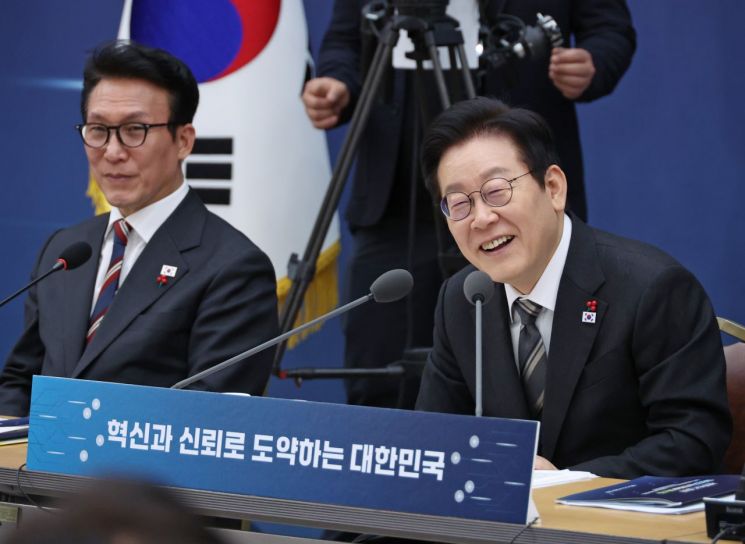
President Lee made these remarks at a work report session held at the Government Sejong Convention Center in Sejong City under the theme "Korea Leaping Forward Through Innovation and Trust," attended by the Ministry of Science and ICT, the Personal Information Protection Commission, the Broadcasting and Media Communications Commission, and other related agencies. The Korea Post Financial Development Institute, which operates under the Postal Service Headquarters of the Ministry of Science and ICT, also participated in the work report.
After reviewing the work report from the Korea Post Financial Development Institute, President Lee highlighted the section stating that "support for inclusive finance for low-income and vulnerable groups is one of the purposes of Korea Post Finance," saying it was "the most notable." President Lee pointed out, "Finance in our society is the most liberal, the most exclusive, and the most survival-of-the-fittest. There are many cases where ordinary people are excluded and lose opportunities." He emphasized, "The attitude of inclusive finance-making sure that even low-income and vulnerable groups can access financial services without exclusion-is truly important. Don't just talk about it; please make it a reality."
President Lee has consistently criticized the current financial system in public forums such as Cabinet meetings and roundtables. At the "Digital Talk Live" event in October, he said, "Although it is inevitable due to market principles, the extent is a matter of policy judgment," and added, "From my perspective, finance is too ruthless." On November 13, he also remarked, "The current (financial) system is like a 'financial caste system' where the poor are forced to pay high interest rates."
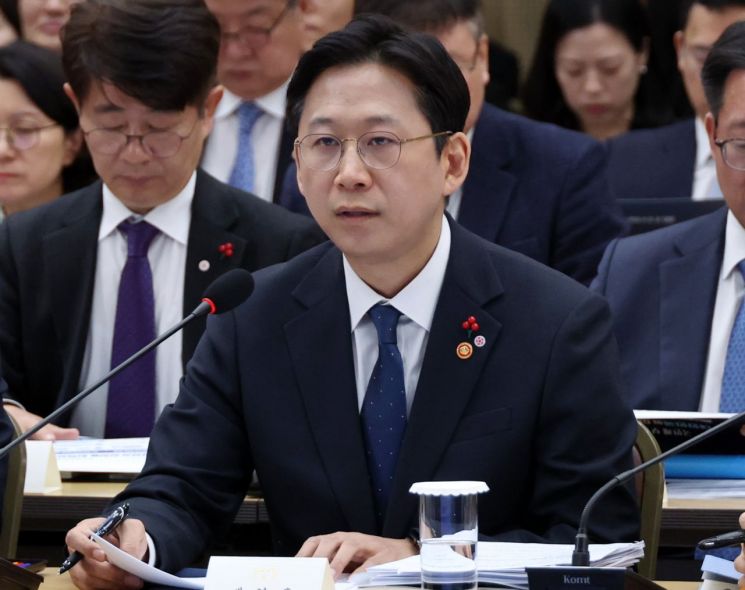
He also called for the rapid development of AGI and related education that all citizens can use without barriers. President Lee said, "If we do not utilize artificial intelligence (AI), it could become as if one cannot learn arithmetic or the Korean alphabet. We need to prepare quickly," urging the Ministry of Science and ICT and related ministries to show strong leadership in developing AGI models. The Ministry of Science and ICT plans to select some of the five consortia participating in the "AI Foundation Model Project" after performance evaluations by January 15 next year.
President Lee continued, "Korea has a high level of literacy, and there are almost no illiterate people-very few countries are like this," adding, "Going forward, at least 90% of the population should be equipped with the ability to recognize the importance and usage of AI." He said, "Everyone-local men, women, grandfathers, and grandmothers-should be able to use AI." In response, Baek Kyunghoon, Deputy Prime Minister and Minister of Science and ICT, said that a nationwide AI competition tailored to all citizens would be held and that the number of digital learning centers offering AI education would be increased from the current 34 to 69 by next year.
"Science and Technology Agencies Are the Vanguard for Market Economy and Democracy"... Importance Emphasized Again
In his opening remarks, President Lee once again stressed the importance of investment in science and technology. He said, "Societies and nations that respect science and technology and invest in it have prospered," and added, "People often talk about the reigns of King Sejong or King Jeongjo-during those times, scientists and engineers were appointed regardless of social status, leading to significant social and political progress." He cited the United States' long-term investment in basic science and technology as the reason for its global leadership, and noted that China is also catching up through bold investment in science and technology.
He emphasized that only when science, technology, and digital policies are combined with the principles of democracy can fair market order and shared growth be achieved. President Lee said, "Just as market economies and democracy go hand in hand, when democracy develops properly, so does the market economy," adding, "The agencies responsible for advancing science and technology play a vanguard role in this process."
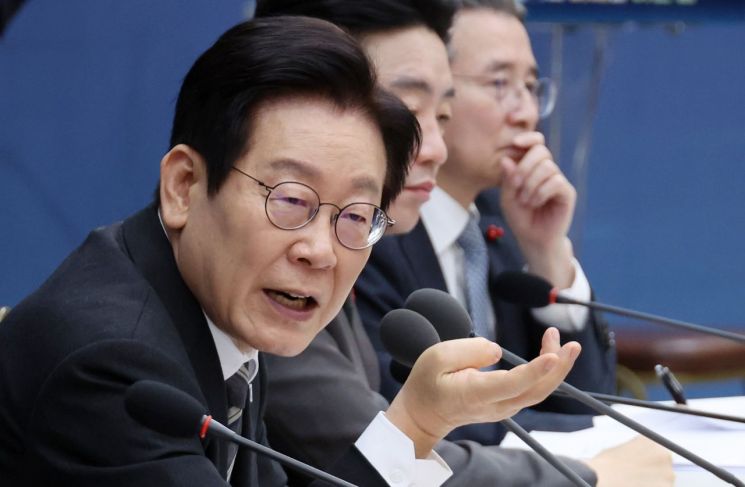
At the Ministry of Economy and Finance's work report the previous day, President Lee made it clear that expansionary fiscal policy would be maintained for the time being. He stated, "The economic situation continues to trend downward, and national efforts are needed to ensure we hit bottom and then move toward an upward curve. The budget for the year after next (2027) will also need to be formulated based on expansionary policy."
He also called for faster implementation of economic policies. In particular, he singled out "Coupang," which recently suffered a large-scale personal data breach, stressing that the "Task Force for Rationalizing Economic Criminal Penalties" must deliver results more quickly. President Lee believes that criminal punishment, which is centered on criminal law, often results in only frontline managers being penalized rather than company executives or those who benefit financially, and since investigations and trials can take five to six years, expanding civil liability for damages and correcting issues through economic sanctions is necessary. He said, "Didn't 'something-pang' violate the rules this time as well? Those people are not afraid of punishment at all," he criticized.
The work report from the Ministry of Employment and Labor also revisited Coupang's work practices. President Lee said, "Isn't the issue of night workers' health rights essentially due to Coupang?" and added, "New forms of labor require new regulations." He emphasized, "My younger sister died in a restroom while working at dawn, and when we applied for industrial accident compensation, it was denied, so we filed a lawsuit and lost. For those affected, it is a harsh reality."
During the work report from the Korea Customs Service, President Lee criticized, "It makes no sense to say that necessary work cannot be done due to lack of personnel." When Commissioner Lee Myunggu cited legal issues and manpower shortages as reasons for difficulties in addressing drugs and firearms, President Lee asked, "What is the problem?" President Lee pointed out, "The problem is the smuggling of drugs into the country, often using the express mail system and international parcels. How do you control this?" When Commissioner Lee replied, "It is only being done at the East Seoul Post Office," President Lee responded, "Didn't I tell you to do it? Why hasn't additional manpower been provided?" When Yoon Changryul, Minister for Government Policy Coordination, added that "there are issues with inspecting each individual's belongings," President Lee retorted, "Then is it a violation for sniffer dogs to smell for drugs? That makes no sense. Are we still struggling with legal concerns? It's been months since I raised this issue," he criticized again.
The issue was discussed again on this day. When President Lee pointed out, "In fact, it may be a problem with the postal concentration center rather than the Korea Customs Service," an official from the Korea Post Logistics Support Group explained, "We have never conducted drug inspections before," and added, "It took time to review the matter." He continued, "We plan to conduct a pilot operation at the East Seoul Concentration Center at the end of this month, and in consultation with the Office for Government Policy Coordination, we will prepare measures to expand nationwide within three months."
Regarding the pilot project for basic income in rural and fishing communities, President Lee called for speeding up the project even if it means holding an additional open call. After receiving a progress report from Minister Song Miryung of the Ministry of Agriculture, Food and Rural Affairs, President Lee made this request. The National Assembly, when passing the budget, added a condition that if local governments do not cover at least 30% of the costs for the basic income project in rural and fishing areas, the allocation of national funds will also be withheld. President Lee said, "Although there is ongoing debate, it would be good to give more opportunities by holding an additional open call for local governments that agree to the 30% local funding allocation. If we are to implement this, we need to move quickly."
© The Asia Business Daily(www.asiae.co.kr). All rights reserved.



















