Following the Primary Union, Second and Third Unions Also Reach Agreement
Wages, Staffing, and Expanded Benefits Including Parental Leave
Primary Union: "Management Proposed System Deterioration,
But Withdrew, Leading to Final Settlement"
Seoul's subway system narrowly avoided a "commuting chaos" scenario. After more than 14 hours of negotiations between Seoul Metro and its labor unions over wage and collective bargaining agreements, talks broke down at one point but reached a dramatic resolution in just over two hours, leading the union to withdraw its planned strike.
Seoul Metro and its primary union, the Seoul Metro Union under the Korean Confederation of Trade Unions, signed a wage and collective bargaining agreement at around 6 a.m. on December 12, 2025. The second union, the Seoul Metro Integrated Union, and the third union, the Right Union, also finalized their agreements with management between 6 and 7 a.m. that day.
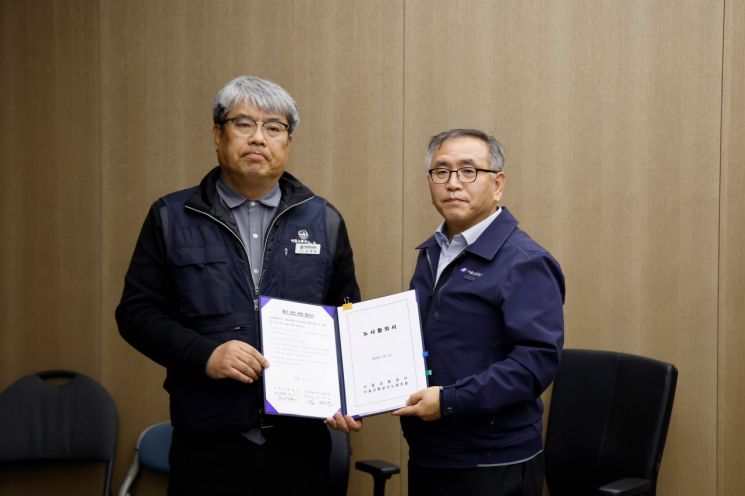
The main point of contention-personnel replenishment-was resolved through an agreement to hire replacements for those reaching retirement age and to expand recruitment for vacant positions, resulting in the hiring of approximately 820 new employees. The parties also agreed to restore wage increases to the 3% range, in line with public institution guidelines.
Other key points included: ▲ normalizing regular wage calculations in accordance with changes in the Supreme Court's standards; ▲ improving working conditions related to the group outbreak of occupational cancer (hematologic cancer); and ▲ creating a work environment supportive of pregnancy and childbirth. All of these were included in the collective bargaining agreement.
The second union included independent proposals for workplace environment improvements in its supplementary agreement, such as the installation of new elevators at worksites and improvements to sleeping quarters in response to an increase in female employees. The third union stated that its supplementary agreement included independent proposals such as securing a call center outsourcing budget following the abolition of direct station phone numbers, and the integration of employee IDs with mobile wearable devices.
Previously, the primary union began main negotiations at 1 p.m. the previous day, but adjourned after just 40 minutes. Although practical negotiations continued, the gap between the parties remained wide. At around 3:30 a.m. on December 12, the primary union declared the breakdown of negotiations and announced a general strike. As of July this year, the primary union accounted for 57.4% of all union members and included about 90% of train operators, meaning a strike would have had a significant impact on subway operations.
However, after management presented an improved proposal, negotiations resumed within two hours and ultimately resulted in an agreement. A representative of the primary union stated, "We reached common ground on key issues such as staffing and wages after midnight, but management's proposals to advance train schedules by 30 minutes and to worsen the leave system led us to declare a strike. Management later withdrew these proposals, which enabled us to reach a settlement."
Kim Taegyun, head of the primary union, met with reporters after the agreement was signed and said, "We regret that years of labor-management conflict and severe turmoil have been caused by the city's misguided restructuring policies. We urge the city and Seoul Metro to shift away from repeated labor-management conflict and workforce reduction-driven management innovation plans, and instead focus on a management policy that prioritizes safe operations."
© The Asia Business Daily(www.asiae.co.kr). All rights reserved.
![Clutching a Stolen Dior Bag, Saying "I Hate Being Poor but Real"... The Grotesque Con of a "Human Knockoff" [Slate]](https://cwcontent.asiae.co.kr/asiaresize/183/2026021902243444107_1771435474.jpg)















