K-Food Exports Surpass 10 Billion Dollars
Korea Customs Service Expands Customs Support
As of November this year, K-food exports surpassed 10 billion dollars, marking the highest figure ever recorded for the same period. This achievement is attributed to the growing global popularity of Korean culture, such as K-pop and K-dramas, which has led to increased demand for Korean food and beverages like ramen and kim.
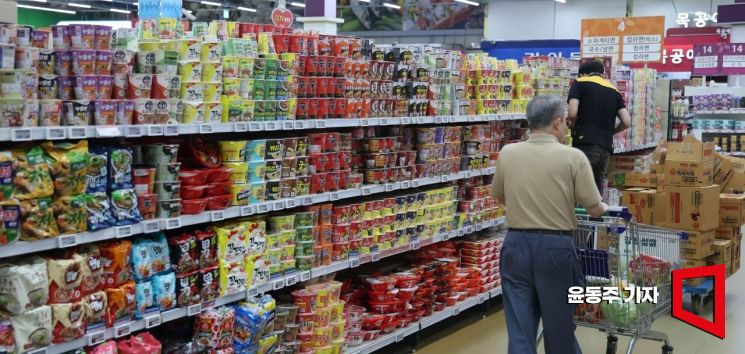
Ramen and Kim Drive Record-High K-Food Exports, Surpassing 10 Billion Dollars
According to the Korea Customs Service on December 9, K-food exports from January to November this year reached 10.375 billion dollars, a 7.0% increase compared to the same period last year and the highest figure on record. The Korea Customs Service expects that, with December’s figures included, the annual total will surpass last year’s record of 10.663 billion dollars.
By export category, processed foods accounted for a dominant share of 6.307 billion dollars (60.8%). This was followed by seafood at 2.852 billion dollars (27.5%), agricultural products at 819 million dollars (7.9%), and livestock products at 360 million dollars (3.5%).

Among specific items, ramen made up 1.382 billion dollars (13.3%) and kim 1.041 billion dollars (10.0%) of total exports. Ramen exports increased by 21.4% year-on-year, while kim exports rose by 13.3%. Experts note that, following K-pop and K-dramas, Korean food has firmly established itself as a mainstream product in global consumer markets.
Korea Customs Service Implements Seven Key Initiatives, Including New HS Codes for Major Export Items
On this day, Lee Myunggu, Commissioner of the Korea Customs Service, held a meeting with K-food export companies at the headquarters of CJ CheilJedang in Seoul and announced measures to support export expansion. The Korea Customs Service plans to introduce new international product codes for key items such as kimchi and ramen, reducing uncertainty in product classification and establishing a more predictable customs environment. For high-potential items like gimbap and dumplings, new Korean product codes (HSK) will be created to better track trade volumes and strengthen industrial support policies.
Additional measures include publishing a product classification guidebook for major foods and ingredients, supporting the use of advance ruling systems for food ingredients with significant tariff differences, strengthening the enforcement of country-of-origin labeling for K-food items, and streamlining the issuance process for certificates of origin.

Commissioner Lee stated, "K-food is a core growth engine of Korea's export industry," adding, "The Korea Customs Service will continue to focus our support capabilities on listening directly to the voices of the field and expanding practical support so that K-food exporters can overcome challenges in the export process and secure sustainable global market competitiveness."
K-Food Becomes a Global Daily Staple
Experts emphasize that the global expansion of K-food is not a temporary trend. Overseas consumers are increasingly purchasing Korean foods they have seen in K-dramas, YouTube mukbangs, and social media short-form content, either through direct online orders or at local supermarkets. This phenomenon of "direct consumption," where consumers immediately buy products they have seen in content, has become firmly established worldwide.
Experts state, "K-food has grown beyond being simply a 'Korean Wave' item and has developed into a category with clear global competitiveness in terms of taste, cooking convenience, and product diversity." They add, "Korean food, especially among Millennials & Gen Z, is becoming a daily staple, indicating strong long-term growth potential."
© The Asia Business Daily(www.asiae.co.kr). All rights reserved.



















