National Pension Service Pursues Investment Recovery Over "Information Leak"
If Realized, Assets Under Management Will Shrink... Impact on Company Value
Heungkuk Life Insurance Announces Legal Action Over "Unfair Competition"
Aggressive Sale Push
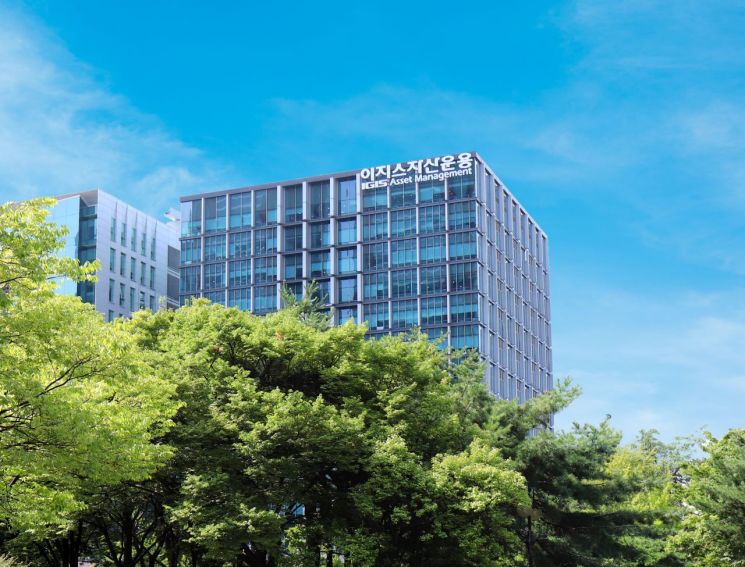
The sale of IGIS Asset Management has become uncertain as various controversies have emerged during the process. Heungkuk Life Insurance, a key acquisition candidate, has announced plans for legal action, claiming the bidding process was unfair. The National Pension Service, a core investor, also notified the company that it would seek to recover its investment, citing inadequate reporting.
Corporate Value at Risk If National Pension Service Recovers Investment
According to investment banking industry sources on December 11, the National Pension Service's Fund Management Division held an investment committee meeting the previous day to discuss recovering its investment in IGIS Asset Management. It is reported that IGIS Asset Management’s management has already been notified of this decision. The National Pension Service has entrusted approximately 2 trillion won to IGIS Asset Management, with the market valuation of these assets reaching between 7 trillion and 8 trillion won.
The decisive factor was IGIS Asset Management’s unauthorized disclosure of information related to the National Pension Service’s entrusted assets to potential buyers during the sale process. Reports indicate that related fund reports were provided to Hanwha Life Insurance, Heungkuk Life Insurance, and Hillhouse Investment-participants in the main bidding-without the prior consent of the investor. At the start of the sale process, IGIS Asset Management reportedly neither provided proper reports to nor sought approval from the National Pension Service. It is also said that the sudden emergence of foreign private equity fund managers like Hillhouse as candidates was communicated to the National Pension Service only belatedly and without prior notice.
Since IGIS Asset Management, founded in 2010, experienced explosive growth based on public funds from the National Pension Service, a withdrawal of investment by the National Pension Service could significantly destabilize the company’s value. This is because assets under management (AUM) would shrink, friction with key investors would arise, and the company’s reputation could suffer. There is also a considerable possibility that other institutional investors, such as mutual aid associations and pension funds, may make similar decisions. As a result, the sale may face renegotiation of the bid price or even risk being canceled altogether.

"Unfair Bidding Process"... Heungkuk Life Insurance Also Announces Strong Response
Heungkuk Life Insurance has also declared its intention to respond forcefully. The company is preparing legal action against the sale managers, Goldman Sachs and Morgan Stanley, as well as Son Hwaja, the main seller. Initially, Heungkuk Life Insurance plans to file for an injunction to prohibit contract negotiations on grounds of unfair bidding procedures and breach of confidentiality obligations. If the injunction is not granted, the company is reportedly considering both civil and criminal lawsuits.
On December 9, Heungkuk Life Insurance issued a statement criticizing the selection of the preferred bidder as a joint effort between the sale managers (Goldman Sachs and Morgan Stanley) and a Chinese private equity fund. In the main bidding held on November 11, Heungkuk Life Insurance offered 1.05 trillion won, but Hillhouse raised its bid to between the high 900 billion won range and approximately 1.1 trillion won, thereby outbidding Heungkuk Life Insurance. Because the transaction was conducted as a "progressive deal," it was effectively possible to increase the price through an additional round of bidding.
Heungkuk Life Insurance claims that the shareholder representative and the sale managers had initially stated they would not conduct a progressive deal, but then violated this promise. The company pointed out, "The sale managers repeatedly delayed the announcement of the preferred bidder after the main bid, then proposed a progressive deal to Hillhouse, asking them to increase their acquisition price. During this process, we suspect that the amount bid by Heungkuk Life Insurance may have been leaked."
In fact, although the main bidding was conducted on November 11, the sale managers did not select Hillhouse as the preferred bidder until December 8, nearly a month later. Industry insiders believe there would have been no reason for such a delay unless the sale managers were encouraging the three candidates to raise their bids.
Hillhouse issued a statement after being selected as the preferred bidder but did not comment on the switch to a progressive deal. The company merely stated, "We have strictly followed the standards and regulations of the sale managers throughout all procedures," and added, "As investors who prioritize sustainable growth over short-term profits, we will continue to support IGIS Asset Management’s long-term development."

The Sale Driven by the Founder's Family Sparked the Controversy
The controversy reportedly arose as Son Hwaja, the spouse of the late founder Kim Daeyoung, and their eldest daughter Kim Aemi, an outside director at Twosome Place, actively sought to raise the sale price. Kim, who worked at McKinsey & Company from 2001 until earlier this year and was the first Korean woman to become a partner at McKinsey, leveraged her strong connections in global investment banking and private equity. The sale of IGIS Asset Management reportedly gained momentum about a year ago when Kim personally contacted Goldman Sachs. It is also known that Hillhouse was brought in as a candidate directly by Kim.
Given these controversies, there is now a significant possibility that the sale may collapse altogether. In order for Hillhouse to acquire IGIS Asset Management, it must pass the financial authorities’ review of major shareholder eligibility under the Financial Company Governance Act. While Hillhouse is likely to pass quantitative review criteria such as investment capacity and capital soundness, issues such as being labeled "Chinese capital" and the withdrawal of the National Pension Service could become obstacles in qualitative areas, such as financial market stability and public interest considerations.
© The Asia Business Daily(www.asiae.co.kr). All rights reserved.



















